
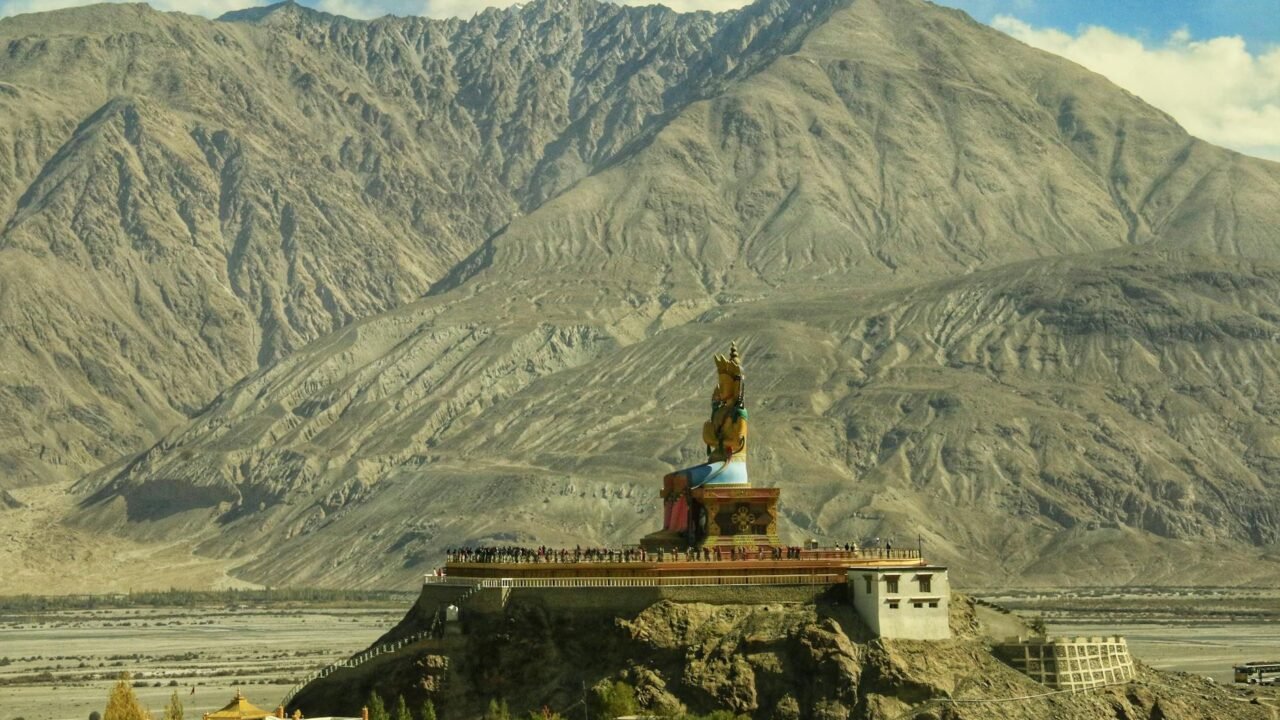
Union Home Minister Amit Shah on Friday presided over the inauguration of an exposition of sacred relics of Lord Buddha in Leh, an event coinciding with the auspicious occasion of Buddha Purnima. The ceremony was attended by a distinguished gathering, including the Lieutenant Governor of Ladakh, VK Saxena, the Union Home Secretary, and several other dignitaries. The presence of these relics, returning to Ladakh after a span of 75 years, was described by Shah as a moment of profound significance for the region and a source of inspiration for individuals across all faiths, not solely for followers of Buddhism.
Addressing the assembled attendees, Shah characterized the day as a “historic and truly golden occasion” for the people of Ladakh. He emphasized that the return of the sacred relics after seven and a half decades would serve as a potent source of inspiration for people of all religious persuasions. The Union Home Minister further noted the unique auspiciousness of Buddha Purnima, a day that marks the birth, enlightenment, and Mahaparinirvana of Lord Buddha. “This is not only a religious event but a historic reunion,” he stated, adding that the repatriation of the relics to Ladakh, a region he identified as one of the most revered lands associated with the Buddha, was a matter of immense good fortune.
Information reaching TahirRihat.com suggests that Shah underscored Ladakh’s long-standing and integral role as a global center for Buddhist learning and practice. He invoked the words of the Dalai Lama, quoting him as describing the region not merely as a geographical entity but as a “living laboratory of Buddhist culture and compassion.” The Home Minister elaborated that Ladakh has demonstrated a remarkable capacity to preserve and nurture Buddhist knowledge through periods marked by both significant challenges and peaceful coexistence, thereby facilitating its dissemination to China and other parts of the world. This enduring legacy positions Ladakh as a critical custodian of Buddhist heritage.
Shah also shed light on the spiritual traditions deeply embedded within Ladakh, referencing the four major schools of Tibetan Buddhism: Nyingma, Kagyu, Sakya, and Gelug. He outlined their core teachings, which collectively emphasize the perception of reality as it truly is, the paramount importance of the Guru, the practice of self-reflection, the cultivation of a balance between intellectual knowledge and practical application, and the fundamental necessity of moral discipline for leading a meaningful and purposeful life. These principles, he asserted, continue to offer guidance and wisdom to people across the globe, transcending geographical and cultural boundaries.
The Union Home Minister highlighted that the presence of the sacred relics served as a tangible reminder of India‘s enduring message of peace and coexistence. He noted that this message holds particular relevance in diverse regions such as Ladakh and Kargil, offering a pathway of compassion amidst the complexities and potential conflicts inherent in such areas. The exposition, therefore, transcends a mere religious event, acting as a symbol of India’s commitment to universal harmony and understanding. The historical narrative of Buddhism’s spread in Ladakh was also a focal point of Shah’s address, as he detailed the region’s historical significance as a crucial hub for Buddhist studies, encompassing profound aspects of Mahayana philosophy and art. He pointed out that the initial foundations of Buddhist influence in the region were laid during the reign of Emperor Ashoka, with further significant development occurring during the Kushan period, spanning the first to the third centuries CE, as evidenced by the discovery of ancient stupas, idols, and inscriptions that bear testament to this rich past.
Shah observed that Ladakh’s contributions to the global understanding and preservation of Buddhist knowledge continue to be recognized worldwide. He cited Mahayana texts, which posit that the act of viewing sacred relics is considered equivalent to having the direct ‘darshan’ or sight of Lord Buddha himself. This belief underscores the profound spiritual significance attached to the relics and their return to Ladakh. The Home Minister urged the administration to ensure that comprehensive and adequate arrangements are made for the influx of visitors, emphasizing that individuals of all faiths should be afforded the opportunity to pay their respects to the sacred relics. In his concluding remarks, Shah underscored the enduring relevance of Lord Buddha’s teachings, asserting that even after 2,500 years, these principles continue to offer a path towards balance and provide effective solutions for the multifaceted challenges of the modern world. The exposition is expected to draw pilgrims and scholars from across the globe, further cementing Ladakh’s status as a spiritual epicenter.

Tahir Rihat (also known as Tahir Bilal) is an independent journalist, activist, and digital media professional from the Chenab Valley of Jammu and Kashmir, India. He is best known for his work as the Online Editor at The Chenab Times.




Leave a Reply