
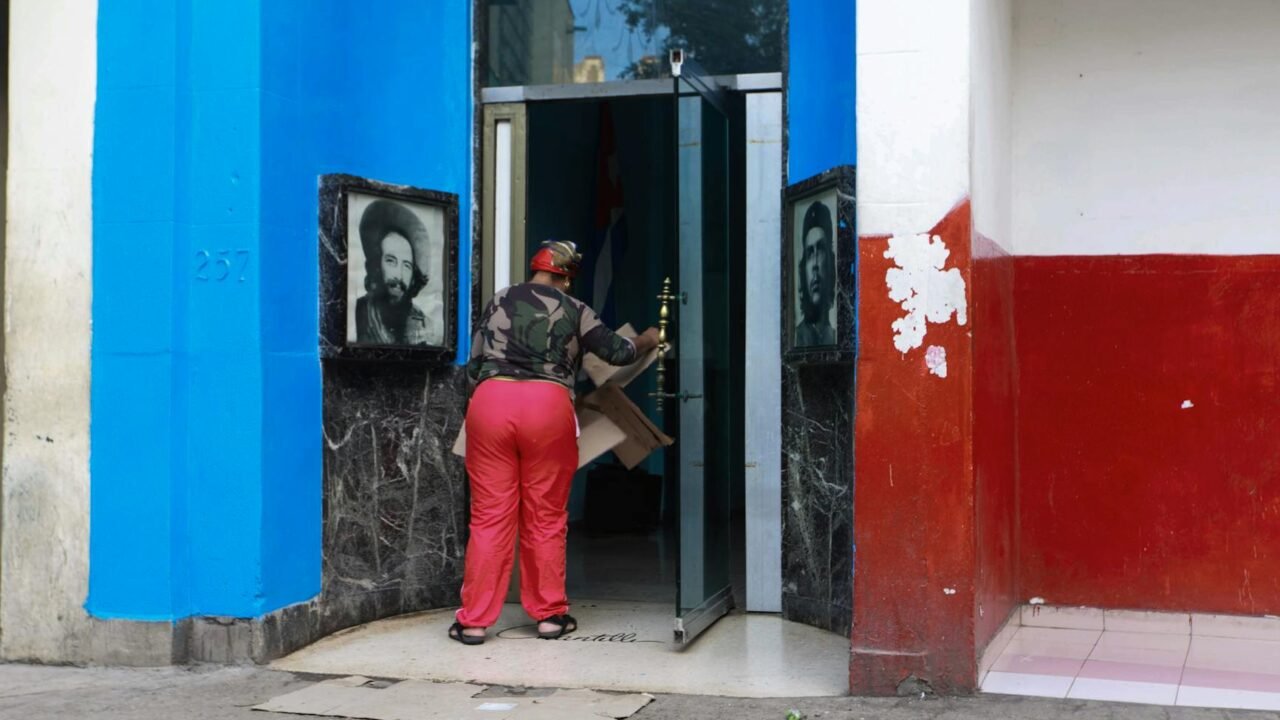
Cuban officials have presented a united front in defense of former President Raúl Castro, who has been formally indicted on murder charges related to the 1996 downing of two civilian planes. The charges, which have resurfaced three decades after the incident, allege Castro’s complicity in the deaths of 32 people aboard the aircraft. The Cuban government has vehemently denied these accusations, framing them as a politically motivated attack by the United States.
The indictment, revealed by the U.S. Justice Department, centers on the actions of the Cuban air force, which shot down two planes belonging to the exile group Brothers to the Rescue. The group was engaged in humanitarian missions and aerial protests against the Cuban government at the time. Information reaching Tahir Rihat suggests that the U.S. indictment is based on evidence gathered over years of investigation, including testimony from former Cuban officials and intelligence operatives. The U.S. asserts that the order to shoot down the planes, which were flying in international airspace, originated from the highest levels of the Cuban government.
In response, Cuban authorities have launched a counter-narrative, portraying the indictment as a baseless smear campaign aimed at destabilizing the island nation and undermining its leadership. State media has broadcast extensive reports highlighting the humanitarian work of Brothers to the Rescue and questioning the timing and validity of the U.S. charges. The Cuban Ministry of Foreign Affairs issued a strong statement denouncing the indictment as a “legal and political aggression” orchestrated by Washington. According to the Ministry of Foreign Affairs, “This is an attempt to rewrite history and to criminalize a sovereign state’s right to defend its airspace.” The ministry further emphasized that the planes were in Cuban-controlled airspace when they were intercepted and that warnings were issued prior to the engagement.
The incident has long been a point of contention between Cuba and the United States, particularly during the administration of Fidel Castro, Raúl’s elder brother. Brothers to the Rescue, founded by Cuban exiles in Miami, had a history of provocative actions, including dropping leaflets and flying over Havana. However, the group maintained that its missions were primarily humanitarian and aimed at advocating for democracy in Cuba. The downing of the planes led to a significant deterioration in U.S.-Cuba relations and contributed to the strengthening of the U.S. embargo against the island.
The U.S. indictment names Raúl Castro, who was then Cuba’s minister of the armed forces and is widely seen as the architect of the country’s military strategy, as well as other high-ranking military officials. The U.S. Justice Department stated that the charges were brought under a federal law that allows for prosecution of individuals who commit murder or other violent crimes outside the jurisdiction of the United States. The indictment was unsealed in Miami, where many of the victims’ families reside and have long sought justice. According to the U.S. Justice Department, “The evidence is clear that these were deliberate acts of murder, and those responsible must be held accountable.” The department also indicated that it would pursue all legal avenues to bring the accused to justice, despite the challenges posed by Castro’s current status and the diplomatic complexities involved.
The Cuban government’s response has been swift and comprehensive, mobilizing its state-controlled media apparatus to discredit the U.S. claims. Reports have focused on the alleged provocative nature of Brothers to the Rescue’s flights and the perceived threat they posed to Cuban sovereignty. Cuban analysts, often reflecting official government positions, have argued that the U.S. is using the indictment to exert political pressure and to further isolate Cuba internationally. They point to the long delay in bringing these charges as evidence of their political motivation, suggesting that the U.S. waited for an opportune moment to revive the issue.
The implications of this indictment extend beyond the immediate legal ramifications. It has reignited a painful chapter in the history of U.S.-Cuba relations, which have seen periods of both thawing and renewed tension. For the Cuban diaspora, particularly in Florida, the charges represent a long-awaited acknowledgment of the tragedy and a potential step towards accountability. However, for the Cuban government, it is seen as another attempt by the U.S. to interfere in its internal affairs and to undermine its political system. The situation is likely to further complicate any prospects for improved diplomatic ties between the two nations.
The U.S. indictment is unlikely to lead to the immediate extradition or arrest of Raúl Castro, given his age and the fact that he is no longer in a position of direct power, though he remains an influential figure. However, the legal action serves as a symbolic condemnation and could have implications for Cuba’s international standing and its relationships with countries that adhere to international law and human rights principles. The Cuban government’s robust defense strategy indicates its determination to resist what it perceives as foreign interference and to protect its national narrative.

Tahir Rihat (also known as Tahir Bilal) is an independent journalist, activist, and digital media professional from the Chenab Valley of Jammu and Kashmir, India. He is best known for his work as the Online Editor at The Chenab Times.


Leave a Reply