
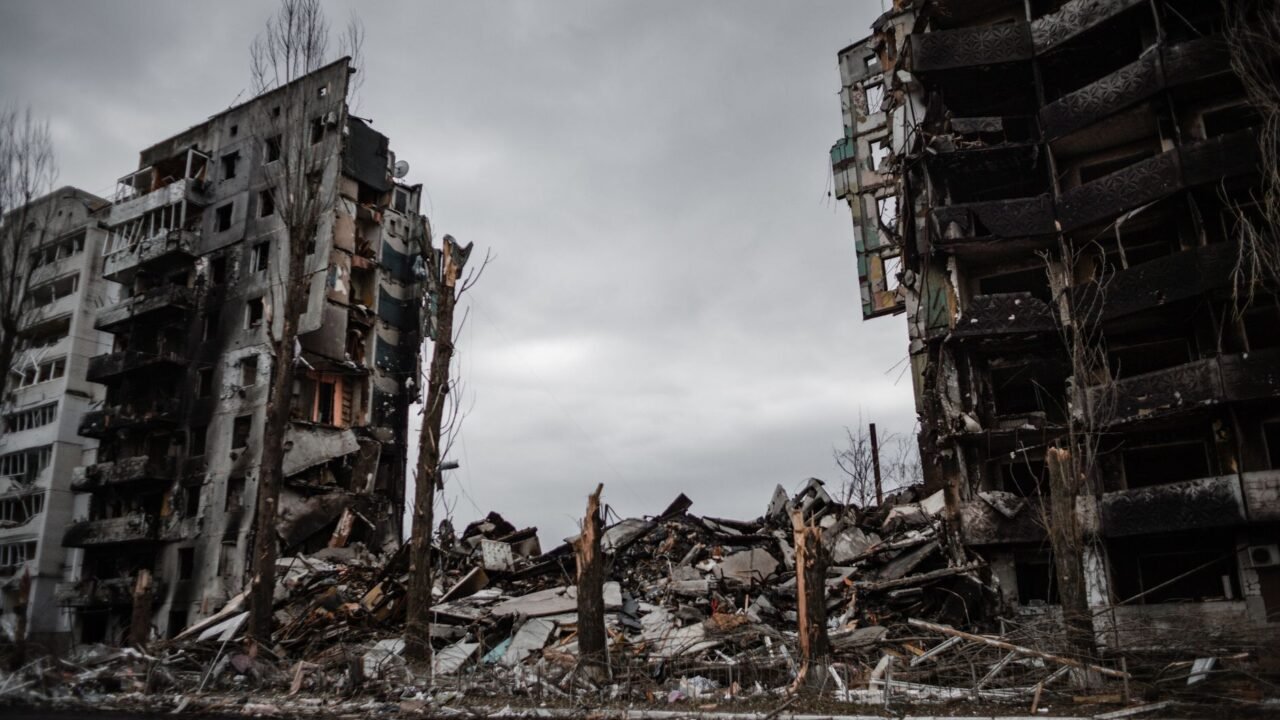
Kostiantynivka, a city once home to tens of thousands, now stands as a stark testament to the relentless nature of the conflict in eastern Ukraine. Little remains of its former self, with buildings reduced to rubble and streets scarred by constant shelling. The city, situated perilously close to the front lines, has become a de facto ‘kill zone,’ where survival is a daily gamble for the dwindling population.
Rescuers, operating under the constant threat of incoming fire, continue to risk their lives to reach the few remaining residents. These brave individuals navigate treacherous debris-strewn paths, their efforts focused on extracting those who, for various reasons, have been unable or unwilling to flee the escalating violence. Information reaching Tahir Rihat suggests that the humanitarian situation is dire, with essential services severely disrupted and access to aid becoming increasingly perilous.
The once-bustling city center is now a landscape of destruction. Apartment blocks, shops, and public buildings have been reduced to skeletal remains, their facades pockmarked by shrapnel and their interiors exposed to the elements. The air is often thick with dust and the acrid smell of smoke, a constant reminder of the ongoing hostilities. The sounds of artillery fire and explosions have become the grim soundtrack to the lives of those who remain, a persistent threat that dictates every moment.
Eyewitness accounts paint a harrowing picture of life in Kostiantynivka. Residents describe a pervasive sense of fear and uncertainty, where seeking shelter has become a routine, and the simple act of stepping outside carries immense risk. Many have lost their homes, their livelihoods, and tragically, their loved ones. The psychological toll on those who have endured months, if not years, of bombardment is immeasurable, with many exhibiting signs of trauma and deep distress.
The decision to stay in Kostiantynivka is often born out of a complex mix of factors. For some, it is a matter of deep-rooted connection to their homes and a refusal to be displaced. Others may lack the financial means or the physical ability to undertake the arduous journey to safer regions. Elderly residents, in particular, often find themselves isolated and vulnerable, reliant on the goodwill of neighbors and the sporadic assistance of aid workers.
The efforts of the rescue teams are fraught with danger. They operate with limited resources, often under duress, and must constantly assess the risks involved in entering damaged structures or venturing into areas known to be active combat zones. Each successful extraction is a small victory against overwhelming odds, a testament to the resilience of the human spirit in the face of unimaginable adversity. However, for every person they manage to save, there are likely many more trapped by the relentless nature of the fighting.
The international community has largely condemned the ongoing attacks on civilian infrastructure and populations. However, the practicalities of providing sustained humanitarian assistance in active conflict zones remain a significant challenge. The destruction of Kostiantynivka serves as a microcosm of the broader devastation unfolding across various regions of Ukraine, where cities and towns are caught in the crossfire, their populations bearing the brunt of the military campaign.
The resilience of the people of Kostiantynivka is remarkable, yet it is a resilience forged in the crucible of war. Their continued presence in what is effectively a combat zone underscores the profound impact of the conflict on civilian lives. The future of the city remains uncertain, its fate inextricably linked to the broader trajectory of the war. For now, the focus remains on the immediate task of survival, with rescuers working tirelessly against the backdrop of destruction, a beacon of hope in a landscape of despair.
The sheer scale of the destruction in Kostiantynivka is difficult to comprehend. Entire neighborhoods have been leveled, leaving behind only twisted metal and piles of concrete. The once-vibrant streets are now silent, save for the distant rumble of artillery and the occasional cry of a distressed resident. The infrastructure that once supported a thriving community – power lines, water pipes, communication networks – has been systematically obliterated, plunging the city into a state of near-total collapse.
Aid organizations face immense hurdles in reaching those who need it most. The constant threat of shelling makes it dangerous for convoys to travel, and the damaged road networks further impede access. When aid does arrive, it is often in limited quantities, barely enough to meet the most basic needs of the remaining population. The psychological support required for those who have witnessed such widespread destruction is also a critical, and often unmet, need.
The stories emerging from Kostiantynivka are a stark reminder of the human cost of protracted conflict. They speak of loss, of fear, and of an enduring will to survive against all odds. The efforts of the rescuers, operating in such perilous conditions, highlight the best of humanity in the darkest of times. Their work, however, is a constant race against time and the ever-present danger of the ‘kill zone’ they navigate.

Tahir Rihat (also known as Tahir Bilal) is an independent journalist, activist, and digital media professional from the Chenab Valley of Jammu and Kashmir, India. He is best known for his work as the Online Editor at The Chenab Times.




Leave a Reply