
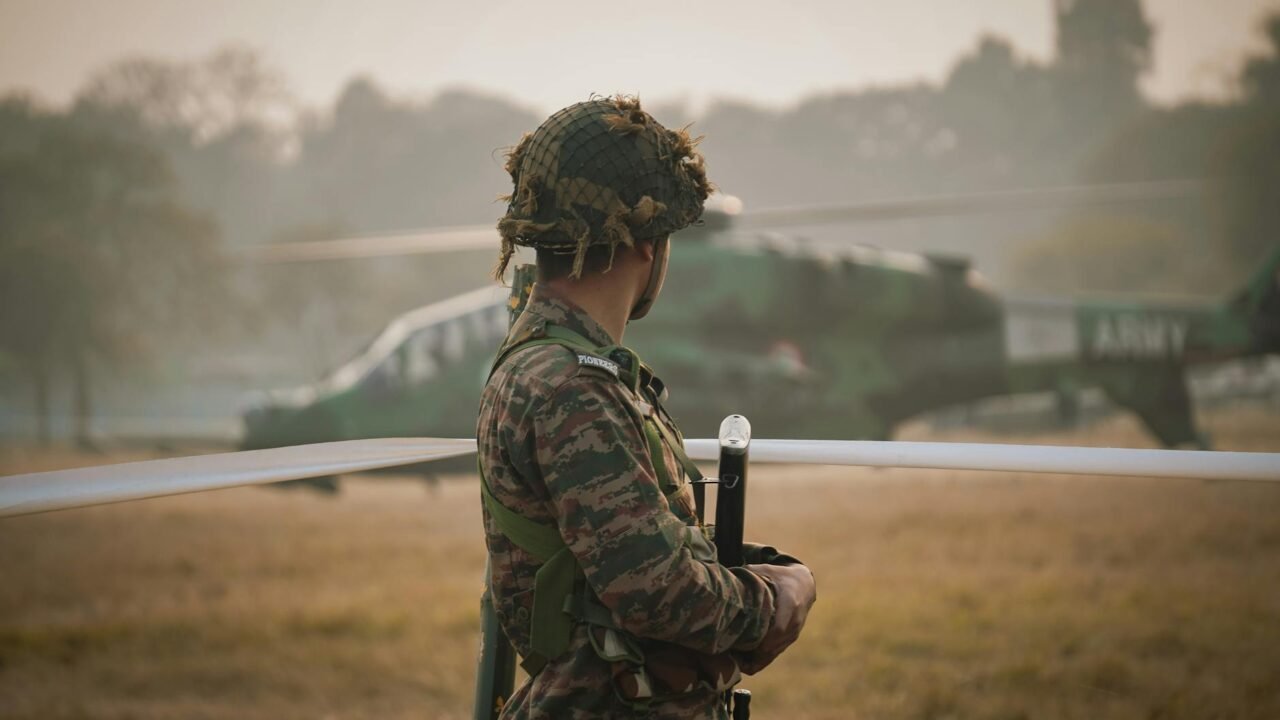
Lieutenant General Balbir Singh has taken over the command of the strategically vital Chinar Corps, headquartered in Srinagar, succeeding Lieutenant General Prashant Srivastava. The change of command ceremony marked the culmination of Lieutenant General Srivastava’s 19-month tenure, during which the security apparatus in the Kashmir Valley underwent significant consolidation and enhancement. His leadership was characterized by efforts to make the security architecture more responsive and synergized, thereby contributing to the prevailing peace and stability in the region.
Information reaching TahirRihat.com suggests that Lieutenant General Srivastava’s tenure was notably marked by the successful execution of operations such as Operation Sindoor and Operation Mahadev. These operations were instrumental in bringing to justice those responsible for the Pahalgam attack. Furthermore, his command oversaw the incident-free conduct of the Amarnath Yatra in 2025, a significant undertaking that requires meticulous planning and execution to ensure the safety and security of pilgrims. Several other initiatives aimed at bolstering security and fostering goodwill were also implemented under his guidance.
An official spokesperson elaborated on Lieutenant General Srivastava’s contributions, stating that under his astute stewardship, the Chinar Corps achieved notable operational successes. These included effective counter-infiltration operations along the Line of Control and robust counter-terrorism operations within the hinterland, which collectively delivered a decisive and debilitating blow to inimical elements. The spokesperson also highlighted the commendable sustained outreach initiatives undertaken during his command. These efforts were crucial in fostering trust and goodwill among the local populace, earning him widespread admiration for his humane and affable approach to command. Lieutenant General Prashant Srivastava is now slated to assume the prestigious appointment of the Quarter Master General at the Integrated Headquarters of the Ministry of Defence (Army) in New Delhi.
Upon assuming his new responsibilities, Lieutenant General Balbir Singh paid homage at the Chinar War Memorial in Srinagar. This act underscored his respect for the supreme sacrifice made by soldiers in the line of duty. Lieutenant General Balbir Singh is a highly decorated officer with an extensive service record spanning over 34 years. His career is distinguished by considerable operational experience, particularly in counter-infiltration and counter-terrorism operations conducted across both the Jammu and Kashmir region and the North East of India. Prior to this appointment, he commanded the Counter Insurgency Force (Victor) in South Kashmir, a formation deeply involved in maintaining security in a sensitive area.
In his inaugural address to the Corps, Lieutenant General Balbir Singh articulated his commitment to working in close synergy with the civil administration and the people of Kashmir. His stated objective is to further strengthen the foundations of peace, stability, and prosperity within the region. He extended an earnest appeal to all sections of society, urging them to join hands with the security forces in confronting and overcoming the persistent challenges that continue to affect the Valley. The spokesperson further conveyed that as the leadership transitions, the Chinar Corps remains an enduring emblem of unity, resilience, and an unwavering commitment to its mission. This mission encompasses ensuring lasting peace and stability, nurturing the rich cultural heritage of Kashmir, and actively working to meet the aspirations of the Kashmiri youth for a brighter future and the realization of a ‘Vikasit Kashmir’ or developed Kashmir.
The Chinar Corps, often referred to as the ’15 Corps’, plays a pivotal role in maintaining the security and territorial integrity of the Kashmir Valley. Its operational mandate is extensive, covering counter-insurgency, counter-terrorism, and border management duties. The corps is responsible for a vast and complex area of operations, including the Line of Control with Pakistan-administered Kashmir, and the hinterland of the Kashmir Valley, which has been the scene of prolonged periods of militancy and counter-militancy operations. The strategic importance of this command cannot be overstated, given the geopolitical significance of the region and its impact on national security.
The transition in command often brings with it a renewed focus on existing strategies and the potential introduction of new approaches. Lieutenant General Balbir Singh’s background, particularly his command of the Counter Insurgency Force (Victor), suggests a deep understanding of the nuances of counter-terrorism operations in the Valley. His emphasis on synergy with the civil administration and the local populace indicates a continuation of the policy of winning the hearts and minds of the people, a critical component of long-term stability in counter-insurgency environments. This approach recognizes that security operations are most effective when they are supported by the community and integrated with broader developmental and administrative efforts.
The mention of specific operations like Operation Sindoor and Operation Mahadev, and their success in bringing perpetrators of the Pahalgam attack to justice, highlights the operational effectiveness of the Chinar Corps under Lieutenant General Srivastava. The Pahalgam attack, a significant security incident, would have necessitated a thorough investigation and decisive action, the successful outcome of which reflects positively on the intelligence gathering and operational capabilities of the forces. The incident-free Amarnath Yatra is another testament to the meticulous security arrangements and the coordination between various security agencies and civil authorities.
The role of the Chinar Corps extends beyond purely military operations. Its outreach initiatives, as noted by the spokesperson, are designed to build confidence and foster a sense of security among the civilian population. This includes engagement with local communities, support for developmental projects, and efforts to address the concerns of the youth. In a region that has experienced decades of conflict and instability, such initiatives are crucial for creating an environment conducive to peace and economic development. The admiration earned by Lieutenant General Srivastava for his humane and affable approach underscores the importance of leadership that combines operational effectiveness with a sensitive understanding of the local context.
Lieutenant General Balbir Singh’s commitment to working with the civil administration and the people of Kashmir signals a continuation of this integrated approach. His call for collective action in overcoming challenges suggests a belief in the power of partnership between security forces and the civilian population. The aspiration for a ‘Vikasit Kashmir’ is a broad goal that encompasses not only security but also economic prosperity, social development, and the empowerment of its people. The Chinar Corps, under his command, is expected to play a significant role in facilitating these aspirations, working in tandem with governmental agencies and civil society to achieve a stable and prosperous future for the region.

Tahir Rihat (also known as Tahir Bilal) is an independent journalist, activist, and digital media professional from the Chenab Valley of Jammu and Kashmir, India. He is best known for his work as the Online Editor at The Chenab Times.





Leave a Reply