
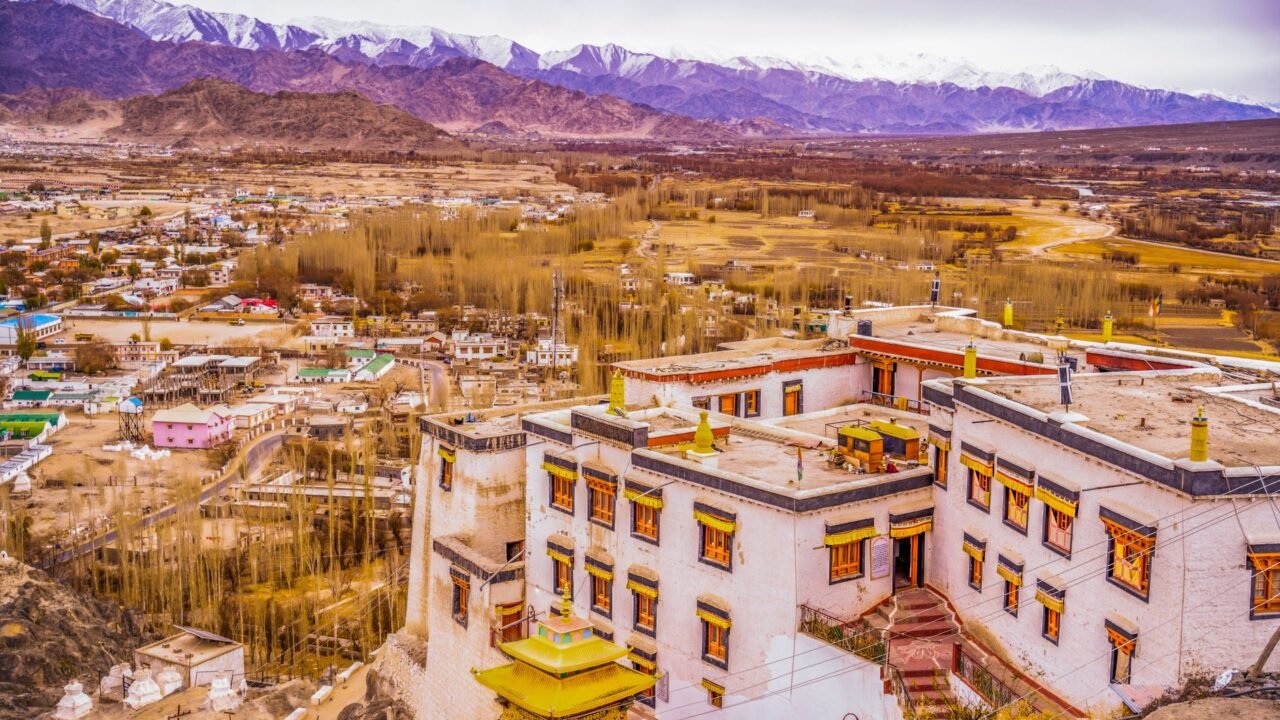
The Ladakh Administration has significantly restructured its administrative framework by approving the creation of 17 new tehsils, a move designed to enhance grassroots governance and bring public services closer to citizens. This comprehensive reorganisation and rationalisation of tehsils and revenue villages follows the recent establishment of five new districts within the Union Territory. The decision, approved by Lieutenant Governor Vinai Kumar Saxena, effectively doubles the number of tehsils from 15 to 32, aiming to streamline operations and improve accessibility across the vast and challenging terrain of Ladakh.
Information reaching Tahir Rihat suggests that the initiative stems from recommendations made by a UT-level committee. This committee was constituted by the Lieutenant Governor shortly after the notification of the new districts on April 27. The committee identified critical shortcomings in the existing administrative setup, noting that several tehsils and revenue villages lacked clear demarcation. A significant issue highlighted was the extensive boundaries of some tehsils that spanned across multiple districts, leading to administrative overlap and operational inefficiencies.
The reorganisation ensures that each revenue village is now mapped to a single tehsil, and each tehsil is assigned to a single district. This has created a transparent, logical, and efficient administrative structure without altering the territorial boundaries of any existing district. The Lieutenant Governor has also directed the Chief Secretary to expedite the appointment of tehsildars for these newly established tehsils, with each tehsil to be under the independent charge of an officer to boost administrative effectiveness. This strategic move is expected to significantly improve administrative efficiency, enhance the delivery of public services, and strengthen local governance mechanisms throughout Ladakh.
Ladakh, known for its immense geographical area, has historically grappled with administrative challenges due to its difficult terrain, sparse population, and the remoteness of many habitations. The creation of these 17 new tehsils is anticipated to drastically reduce the often arduous travel distances, which can exceed 300 kilometers, for citizens seeking essential government services. This geographical expansion of administrative units is a direct response to the need for more accessible and responsive governance in remote and border areas.
Following the administrative overhaul, the district of Leh will now comprise five tehsils, Kargil will have seven, Changthang four, Nubra six, Zanskar four, Sham five, and Drass will have one tehsil. This distribution aims to ensure more equitable administrative coverage across the diverse regions of Ladakh. Lieutenant Governor Vinai Kumar Saxena stated that the creation of new districts was fundamentally intended to bring governance closer to the people, making the administration more accessible, responsive, and citizen-centric. He further elaborated that the operationalisation of these districts through the comprehensive reorganisation of tehsils and revenue villages establishes a robust administrative framework. This framework is poised to improve revenue administration, fortify grassroots governance, and accelerate the implementation of developmental programmes across the Union Territory.
Saxena emphasized that the objective is to ensure that every citizen, particularly those residing in remote and border areas, benefits from easier access to government services. This, he added, will enable balanced, inclusive, and sustainable development throughout Ladakh. The reorganisation establishes a clear and unambiguous revenue administrative hierarchy, with each tehsil to be headed by a tehsildar or naib tehsildar. In instances where naib tehsildars are in charge, they will exercise the powers of Assistant Collector Class-I, further empowering local administrative units.
The restructuring has been undertaken in accordance with Section 5 of the Jammu & Kashmir Land Revenue Act, 1996, which remains applicable to the Union Territory of Ladakh through the J&K Reorganisation Act, 2019. This legal provision empowers the administration to alter the limits and number of tehsils through official notification. The move is seen as a critical step towards modernizing the administrative machinery and ensuring efficient governance in a region that presents unique geographical and logistical challenges.

Tahir Rihat (also known as Tahir Bilal) is an independent journalist, activist, and digital media professional from the Chenab Valley of Jammu and Kashmir, India. He is best known for his work as the Online Editor at The Chenab Times.




Leave a Reply