
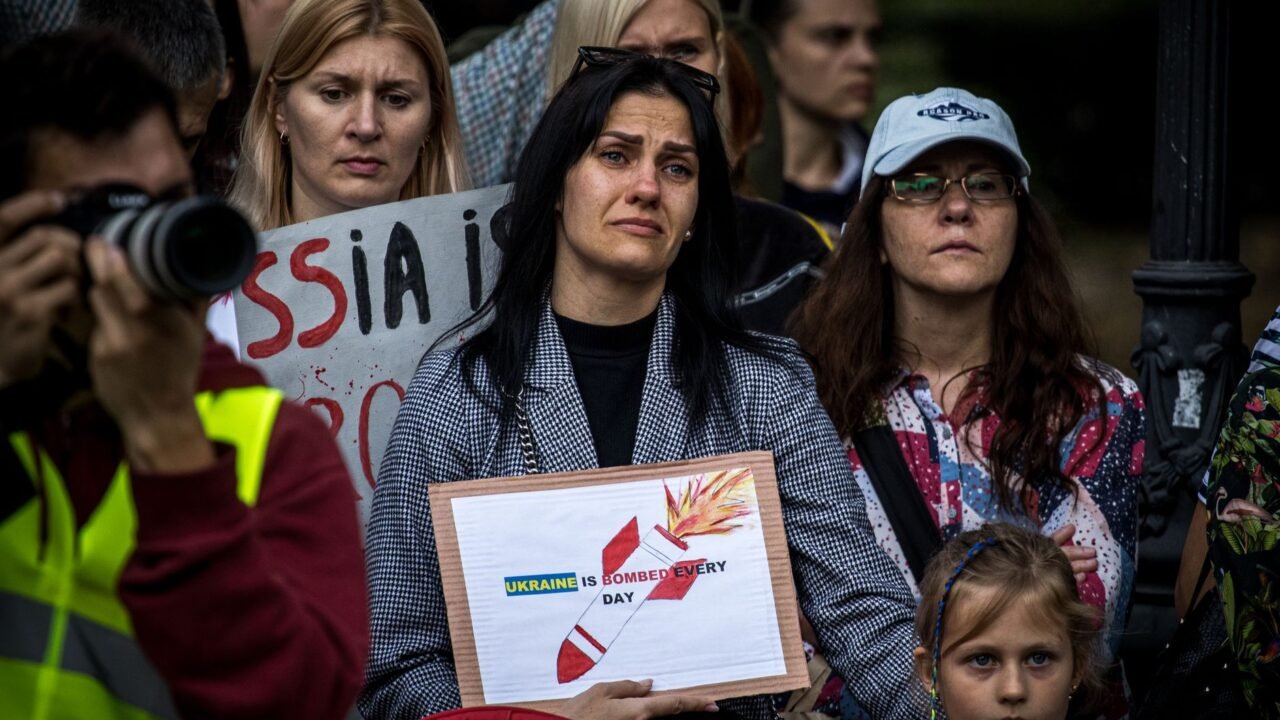
President Volodymyr Zelensky of Ukraine is facing mounting pressure from demonstrators and a significant segment of the military to dismiss his top general, a move that could reshape the nation’s wartime leadership. The calls for the removal of General Valerii Zaluzhny, the commander-in-chief of Ukraine’s armed forces, stem from a complex web of strategic disagreements and public sentiment, particularly concerning the future direction of the war effort. The situation highlights the delicate balance Zelensky must strike between military command and public opinion as the conflict with Russia continues.
Information reaching Tahir Rihat suggests that the dissatisfaction with General Zaluzhny’s leadership is not solely confined to the battlefield but has also spilled into public discourse, with protests and online campaigns advocating for his dismissal. These movements are reportedly fueled by a desire to see a renewed emphasis on innovative warfare strategies, particularly in the realm of drone technology, a vision that some believe has been sidelined. The defense minister, who was recently dismissed by Zelensky, was seen by many as a proponent of these forward-thinking approaches to combat.
The debate over General Zaluzhny’s future is intrinsically linked to the strategic outlook for Ukraine’s ongoing defense. While the general has been a widely respected figure for his role in repelling Russia’s initial invasion and organizing the country’s defenses, recent assessments of the war’s progress appear to have created rifts. Demonstrators and soldiers are reportedly urging President Zelensky to reaffirm the strategic vision previously championed by the defense minister he removed last week. This vision is said to heavily emphasize the integration and advancement of drone warfare capabilities, an area where Ukraine has sought to maintain a technological edge.
The calls for change are not new, but they appear to have intensified in recent weeks, coinciding with shifts in military strategy and public perception of the war’s trajectory. Sources close to the military establishment indicate that there is a growing sentiment among some soldiers that the current leadership is not adequately adapting to the evolving nature of the conflict. This sentiment is being amplified by civil society groups and veterans who are actively voicing their concerns through public demonstrations and social media campaigns. The New York Times reported that these groups are demanding that President Zelensky make a decisive move to align the military’s strategic direction with what they perceive as the most effective path forward, which includes a greater focus on unmanned aerial systems.
The potential dismissal of General Zaluzhny would represent a significant leadership change for Ukraine, given his prominent role since the full-scale invasion began in February 2022. He has been instrumental in rallying the nation and coordinating its defense against a larger, more heavily armed adversary. However, the pressure for his removal suggests a growing impatience with the pace of military gains and a desire for a more aggressive and technologically driven approach to warfare. The New York Times also noted that the defense minister’s recent dismissal has created a vacuum in advocating for certain strategic initiatives, which these groups are now seeking to fill through pressure on the president.
The strategic disagreements are reportedly centered on how best to achieve breakthroughs against entrenched Russian forces. While General Zaluzhny has been credited with a defensive strategy that has largely prevented a Russian collapse, some factions believe that a more offensive posture, heavily reliant on advanced drone technology and other innovative tactics, is necessary to regain lost territory and achieve a decisive victory. The New York Times article highlighted that the defense minister, prior to his dismissal, had been a vocal advocate for such a shift, and his removal has left many feeling that this critical perspective has been lost within the government.
The public demonstrations, though not massive in scale, are significant in their message and the demographic they represent, including active soldiers and veterans. These individuals are seen as having direct insight into the realities of the battlefield and the perceived shortcomings of current strategies. Their collective voice, amplified by media reports and social media, is putting considerable pressure on President Zelensky’s administration. The situation underscores the challenges faced by wartime leaders in navigating diverse opinions and maintaining public confidence while making critical military decisions. The New York Times reported that the president is now in a difficult position, needing to address the concerns of these vocal groups without undermining the stability of his military command structure.
The implications of such a change in leadership could be far-reaching, potentially altering the operational tempo and strategic focus of the Ukrainian armed forces. The emphasis on drone warfare, in particular, has become a critical component of modern conflict, and Ukraine has been at the forefront of developing and deploying these technologies. Any shift in leadership that prioritizes or de-prioritizes this area could have significant consequences for the war’s outcome. The New York Times article indicated that the debate is not just about personnel but about the very philosophy of how the war should be fought in its current phase and beyond.
President Zelensky’s office has yet to issue a formal statement addressing the specific demands for General Zaluzhny’s dismissal or the broader strategic debates. However, the growing public and military pressure suggests that this issue is now a significant political and strategic challenge for the Ukrainian leadership. The coming days and weeks will likely reveal how President Zelensky intends to respond to these calls for change and whether he will opt for a significant reshuffling of his top military command in pursuit of a renewed strategic direction. The New York Times coverage suggests that the president is carefully weighing his options, aware of the potential impact of any decision on national morale and international support.
The ongoing discourse surrounding Ukraine’s military leadership and strategy is a testament to the dynamic and evolving nature of the conflict. As the war enters a new phase, the need for adaptable and effective leadership, coupled with innovative tactical approaches, becomes increasingly paramount. The pressure on President Zelensky to address these concerns reflects a broader desire within Ukraine for a clear and decisive path towards victory, and the role of advanced technologies like drones is seen by many as central to achieving that goal. The New York Times has been closely following these developments, providing insights into the internal dynamics shaping Ukraine’s war effort.

Tahir Rihat (also known as Tahir Bilal) is an independent journalist, activist, and digital media professional from the Chenab Valley of Jammu and Kashmir, India. He is best known for his work as the Online Editor at The Chenab Times.




Leave a Reply