
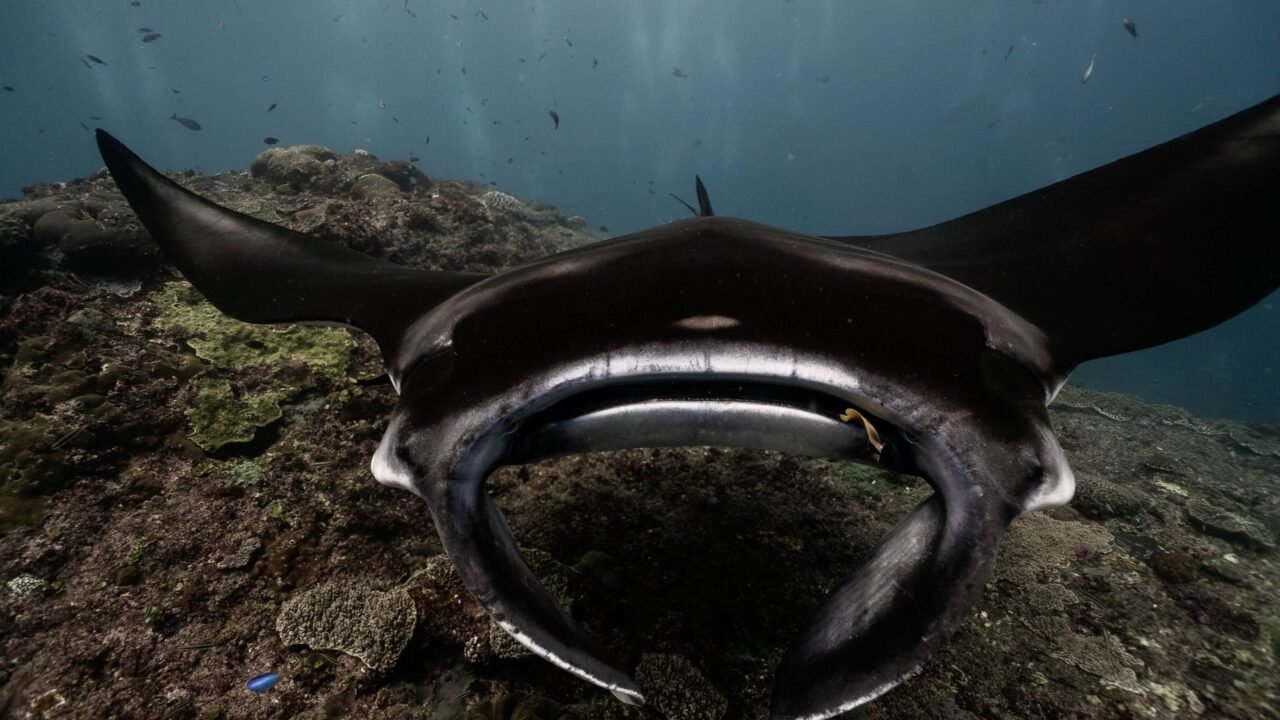
Scientists have successfully employed underwater ultrasound technology to confirm pregnancies in three giant manta rays, a breakthrough that offers unprecedented insights into the reproductive behaviors of these enigmatic marine giants. This innovative application of medical imaging in a challenging oceanic environment marks a significant advancement in marine biology research.
The development, as reported by The New York Times, signifies a crucial step forward in understanding the reproductive cycles and gestation periods of manta rays, species whose breeding habits have remained largely mysterious due to their vast oceanic habitats and elusive nature. Information reaching Tahir Rihat suggests that the successful scans were conducted by a team of researchers who utilized specialized equipment adapted for underwater use, allowing them to visualize the internal reproductive organs of the rays without causing undue stress or disruption to the animals.
The use of ultrasound in marine mammal research is not entirely new, but its application to giant manta rays presents unique challenges. These creatures are among the largest fish in the world, inhabiting tropical and subtropical oceans globally. Their sheer size and the dynamic nature of their environment necessitate robust and adaptable imaging techniques. The researchers were able to identify developing fetuses and assess the overall health of the reproductive systems, providing concrete evidence of successful pregnancies.
Prior to this advancement, much of what was known about manta ray reproduction was based on indirect observations, such as the presence of pups or the examination of deceased specimens. The ability to non-invasively confirm pregnancies in live animals opens up new avenues for studying maternal care, birth processes, and the early development of manta ray offspring. This research is vital for conservation efforts, as understanding reproductive success is key to managing and protecting vulnerable populations.
The implications of this technological leap extend beyond mere confirmation of pregnancy. Researchers anticipate that this method will allow for more detailed studies on gestation length, the number of pups per litter, and potential complications during pregnancy. Such data is invaluable for assessing the reproductive potential of manta ray populations and identifying factors that may influence their breeding success in the wild. The team’s findings could also shed light on the social structures and mating behaviors that precede and follow successful conception.
Giant manta rays (Mobula birostris) are known for their long lifespans and slow reproductive rates, making them particularly susceptible to population declines. Factors such as overfishing, bycatch in fisheries, and habitat degradation pose significant threats to their survival. Therefore, any research that enhances our understanding of their reproductive biology is of paramount importance for their long-term conservation. The successful implementation of underwater ultrasounds by the research team, as detailed by The New York Times, demonstrates a commitment to employing cutting-edge science to address critical conservation challenges.
The researchers involved in this groundbreaking study are hopeful that this technique will become a standard tool for marine biologists studying other large, elusive marine species. The ability to gather direct physiological data from wild populations without invasive procedures is a significant ethical and scientific advantage. This approach minimizes disturbance to the animals while maximizing the quality and quantity of data collected, contributing to a more comprehensive understanding of marine ecosystems and the species that inhabit them.
Further research utilizing this ultrasound technology is expected to focus on monitoring pregnant individuals over extended periods, tracking their movements, and observing their behavior during gestation. This could reveal crucial information about their dietary needs, preferred habitats during pregnancy, and the birthing grounds, if such specific locations exist. The data gathered will be instrumental in developing targeted conservation strategies that address the specific needs of pregnant manta rays and their young.
The scientific community has long recognized the challenges in studying the reproductive biology of large pelagic species. Their vast ranges, deep-diving capabilities, and often solitary nature make direct observation and data collection exceedingly difficult. The development and successful deployment of underwater ultrasound technology represent a significant stride in overcoming these obstacles. The ability to obtain such detailed internal information non-invasively is a testament to scientific ingenuity and perseverance in the face of complex research questions.
The findings from this study are anticipated to be published in a peer-reviewed scientific journal, providing the broader research community with the detailed methodologies and results. This will enable other institutions and researchers to replicate and build upon this work, further advancing the field of marine megafauna reproductive biology. The collaborative spirit within the scientific community, often facilitated by outlets like The New York Times in disseminating such findings, is crucial for accelerating progress in conservation science.
The successful confirmation of pregnancies in giant manta rays through underwater ultrasound is more than just a scientific achievement; it is a beacon of hope for the conservation of these magnificent creatures. It underscores the power of innovation in scientific research and highlights the ongoing efforts to unravel the mysteries of the ocean’s most remarkable inhabitants. The insights gained are expected to inform policy decisions and conservation actions aimed at ensuring the survival of giant manta rays for future generations.

Tahir Rihat (also known as Tahir Bilal) is an independent journalist, activist, and digital media professional from the Chenab Valley of Jammu and Kashmir, India. He is best known for his work as the Online Editor at The Chenab Times.






Leave a Reply