

The annual Amarnath Yatra faced a temporary suspension from its Jammu base camp on Wednesday, a move authorities implemented as part of heightened security measures across Jammu and Kashmir. The halt coincided with the seventh anniversary of the abrogation of Article 370, a significant political event that led to the reorganization of the erstwhile state into two Union Territories.
While official statements did not explicitly detail the reasons for suspending the pilgrimage from the Bhagwati Nagar base camp in Jammu for the day, sources familiar with the matter indicated that the decision was a precautionary step taken in response to the prevailing security situation. Information reaching Tahir Rihat suggests that no new batches of pilgrims were permitted to depart from the Jammu base camp for the twin base camps located in Pahalgam in Anantnag district and Baltal in Ganderbal district on Wednesday morning. This suspension underscores the sensitive nature of the security arrangements surrounding the pilgrimage, especially during periods of heightened political commemoration.
Further reinforcing the security posture, authorities also temporarily halted the movement of security convoys along the vital Jammu-Srinagar National Highway. This measure is typically employed when security agencies aim to minimize traffic on this crucial all-weather road, which serves as the sole land link connecting the Kashmir Valley with the rest of the country. The synchronized suspension of both the yatra and highway convoys points to a comprehensive security strategy being enacted across the region.
The timing of these security actions is particularly noteworthy, as it aligns with the observance of August 5 as a “Black Day” by several political parties in Jammu and Kashmir. These parties, including the National Conference, the Indian National Congress, and the Peoples Democratic Party (PDP), have been vocal in their opposition to the 2019 decision to revoke the special status of Jammu and Kashmir. Their planned protest programs across Jammu and other areas were aimed at demanding the restoration of the region’s constitutional autonomy and full statehood. The yatra’s suspension, therefore, occurred against a backdrop of political dissent and heightened security vigilance.
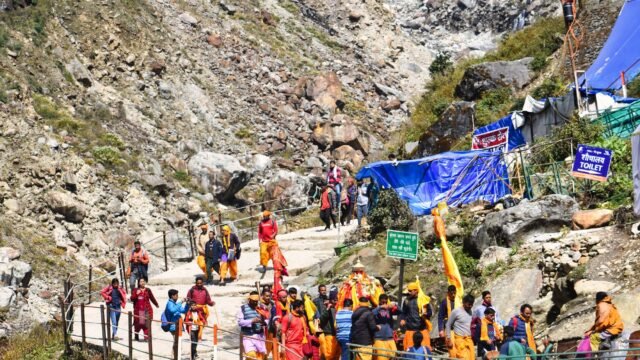
The Amarnath Yatra, recognized as one of India’s most significant annual religious pilgrimages, operates under extensive multi-layered security protocols. Authorities regularly assess and adjust movement plans based on evolving security assessments and intelligence inputs. This year’s pilgrimage, which commenced on July 3, is scheduled to conclude on August 28, coinciding with the Raksha Bandhan festival. As of the latest reports, over 4.60 lakh pilgrims have already paid their respects at the revered cave shrine, situated at an altitude of 3,880 meters in the southern Himalayas. The ongoing security measures are designed to ensure the safety and smooth conduct of the pilgrimage for the remaining duration, while also addressing broader security concerns in the region.
The decision to suspend the yatra from Jammu, even for a day, highlights the intricate balance authorities must maintain between facilitating religious tourism and ensuring the security of pilgrims and the region. The Jammu-Srinagar National Highway’s importance as a lifeline for Kashmir cannot be overstated, and any disruption or heightened security on this route has ripple effects on transportation and logistics. The precautionary measures taken by the administration are indicative of a proactive approach to potential security challenges, particularly in the context of anniversaries that often see heightened political activity and public gatherings.
The security apparatus in Jammu and Kashmir is constantly being reviewed and adapted to the dynamic situation on the ground. The multi-agency coordination involved in managing events like the Amarnath Yatra requires meticulous planning and execution. The suspension of the yatra and convoy movements, as reported by official sources, is a testament to the complex security environment that prevails in the region. The authorities’ commitment to pilgrim safety remains paramount, and such decisions are made after careful consideration of all available intelligence and operational factors. The annual pilgrimage, a major contributor to the local economy and a significant cultural event, continues to be a focal point for security operations, especially during sensitive periods.
The political landscape of Jammu and Kashmir continues to be shaped by the events of August 5, 2019. The anniversary of the abrogation of Article 370 is consistently marked by observances from political groups seeking the restoration of special status. This year’s anniversary saw these political sentiments expressed through various means, including calls for protest and remembrance. The security forces, in anticipation of any potential law and order issues, have been on high alert across the Union Territory. The suspension of the Amarnath Yatra from Jammu is one facet of these broader security arrangements, aimed at preventing any untoward incidents and ensuring the overall stability of the region.
The Amarnath Yatra has historically been a target for security threats, necessitating robust security arrangements. The current year’s pilgrimage has seen a significant number of pilgrims undertaking the journey, reflecting a growing confidence in the security measures in place. However, the authorities remain vigilant, understanding that the security situation can change rapidly. The precautionary halt of the yatra from Jammu is a clear indication of the administration’s readiness to take decisive action when deemed necessary for the safety of the public. The ongoing efforts to ensure the successful completion of the yatra, while managing security challenges, are a continuous priority for the government and security agencies operating in Jammu and Kashmir.

Tahir Rihat (also known as Tahir Bilal) is an independent journalist, activist, and digital media professional from the Chenab Valley of Jammu and Kashmir, India. He is best known for his work as the Online Editor at The Chenab Times.




Leave a Reply