
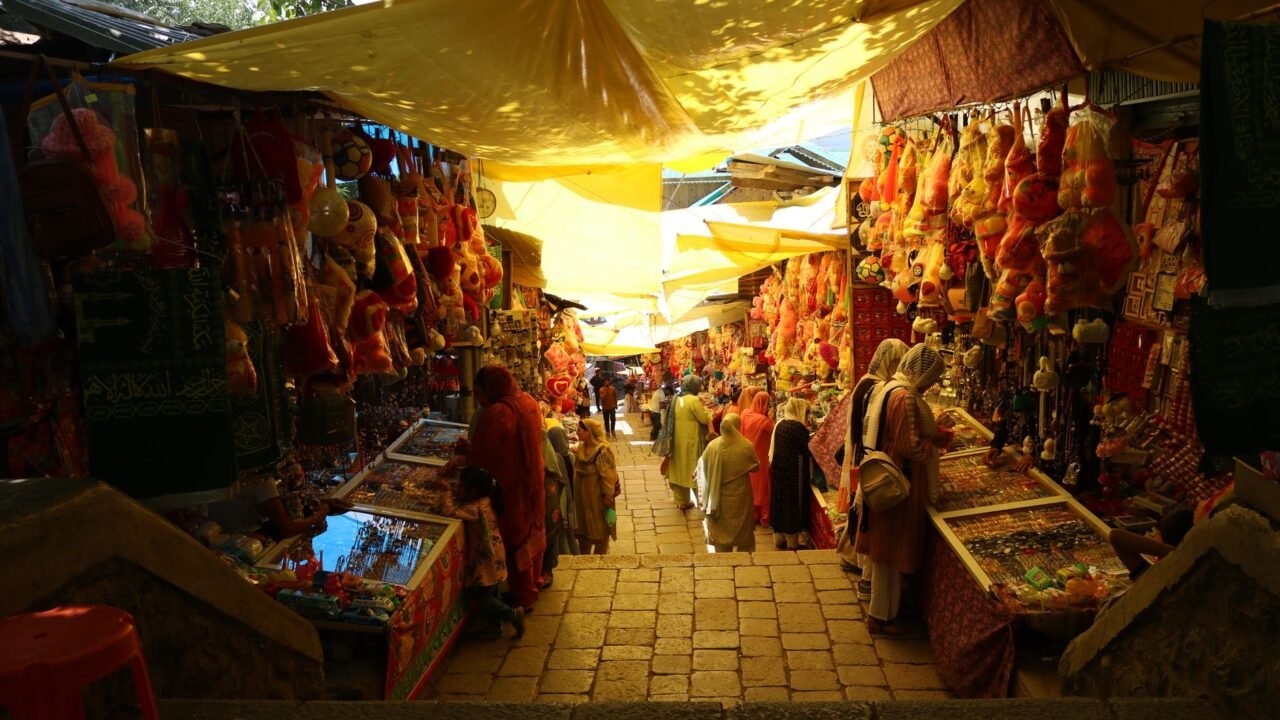
Hundreds of women residing in villages situated near the Indo-Pak border in Jammu are actively constructing new economic identities by transforming their traditional handicraft skills into viable and sustainable sources of income. These women are leveraging their earnings to provide crucial support for their families, demonstrating a significant shift in their economic roles.
These initiatives are largely facilitated by the National Rural Livelihoods Mission (NRLM), which is implemented in Jammu and Kashmir through the Jammu and Kashmir Rural Livelihoods Mission (JKRLM), a program locally recognized as UMEED. This comprehensive initiative has been instrumental in equipping these women with the necessary training to become skilled workers and budding entrepreneurs. Their success extends beyond mere household support, as they are now actively marketing their handcrafted products in fairs and markets situated not only within Jammu and Kashmir but also in regions beyond the Union Territory.
One such inspiring figure is Preeti Devi, a cluster coordinator hailing from Khour block, an area situated close to the border. Preeti specializes in macramé, an intricate craft that involves creating decorative and functional items through the art of hand-tied knots. Information reaching Tahir Rihat suggests that Preeti, a mother of three, faced significant personal restrictions after her marriage in 2012, being initially confined to her home and not permitted to venture out alone. Despite these constraints, she harbored a strong aspiration to become an entrepreneur.
Preeti Devi shared her personal journey, stating, “The financial situation of my family was not stable at that time as my husband worked as an Army porter. However, in 2018, we were made aware by UMEED about the possibilities and opportunities women could achieve by working on their own.” This pivotal moment marked the beginning of her transformation from a homemaker with aspirations to an active economic contributor.
The JKRLM-UMEED program has demonstrably succeeded in bringing over 8.14 lakh women into approximately 97,000 Self-Help Groups (SHGs) spread across the entire Union Territory. This widespread network has established a robust grassroots platform, fostering financial independence and creating substantial opportunities for livelihood generation among rural women. Preeti Devi herself plays a crucial role in this ecosystem, currently managing the sourcing of raw materials for various handicrafts utilized by nearly 3,000 women in her locality. She further elaborated that approximately 250 groups in her area are actively engaged in manufacturing diverse handicraft products. These women are reportedly earning more than Rs 10,000 per month, a financial achievement that has significantly altered the trajectory of their lives, as reported by Preeti Devi.
Dr. Shubhra Sharma, the Mission Director of JKRLM, highlighted the transformative impact of the UMEED initiative. According to Dr. Shubhra Sharma, “UMEED has emerged as a catalyst for livelihood generation, financial inclusion and women’s empowerment, enabling thousands of rural women to achieve economic self-reliance and contribute to the socio-economic development of their communities.” She further articulated the mission’s core objectives, stating, “Our objective is to ensure that women in rural areas become financially independent and emerge as successful entrepreneurs capable of managing sustainable enterprises. JKRLM continues to strengthen women through financial inclusion, bank credit linkage, livelihood promotion, leadership development and capacity building, enabling them to become financially independent while playing a pivotal role in community development and inclusive rural growth.”
While traditional crafts, including wool spinning, and small-scale agricultural activities continue to be significant avenues for income generation, the JKRLM is actively encouraging women to explore and diversify into more contemporary commercial sectors. These emerging opportunities include ventures in the hospitality and food services industries. A notable example of this diversification is the ‘Umeed Ka Zaika’ initiative. This brand represents a community-led food service enterprise, owned by an SHG, which has been specifically developed to showcase and promote the authentic culinary heritage of Jammu and Kashmir. This strategic expansion into new sectors aims to broaden the economic horizons for these women, moving beyond traditional crafts.
For women residing in the border villages, these multifaceted initiatives are progressively converting skills that were once confined to the domestic sphere into marketable enterprises. This transition is not only providing them with a steady source of income but is also fostering greater financial independence and elevating their standing within the economic fabric of their respective communities. The program’s success underscores the potential of skill development and entrepreneurial support in empowering women, particularly in remote and border regions, to achieve economic self-sufficiency and contribute meaningfully to regional development.

Tahir Rihat (also known as Tahir Bilal) is an independent journalist, activist, and digital media professional from the Chenab Valley of Jammu and Kashmir, India. He is best known for his work as the Online Editor at The Chenab Times.



Leave a Reply