
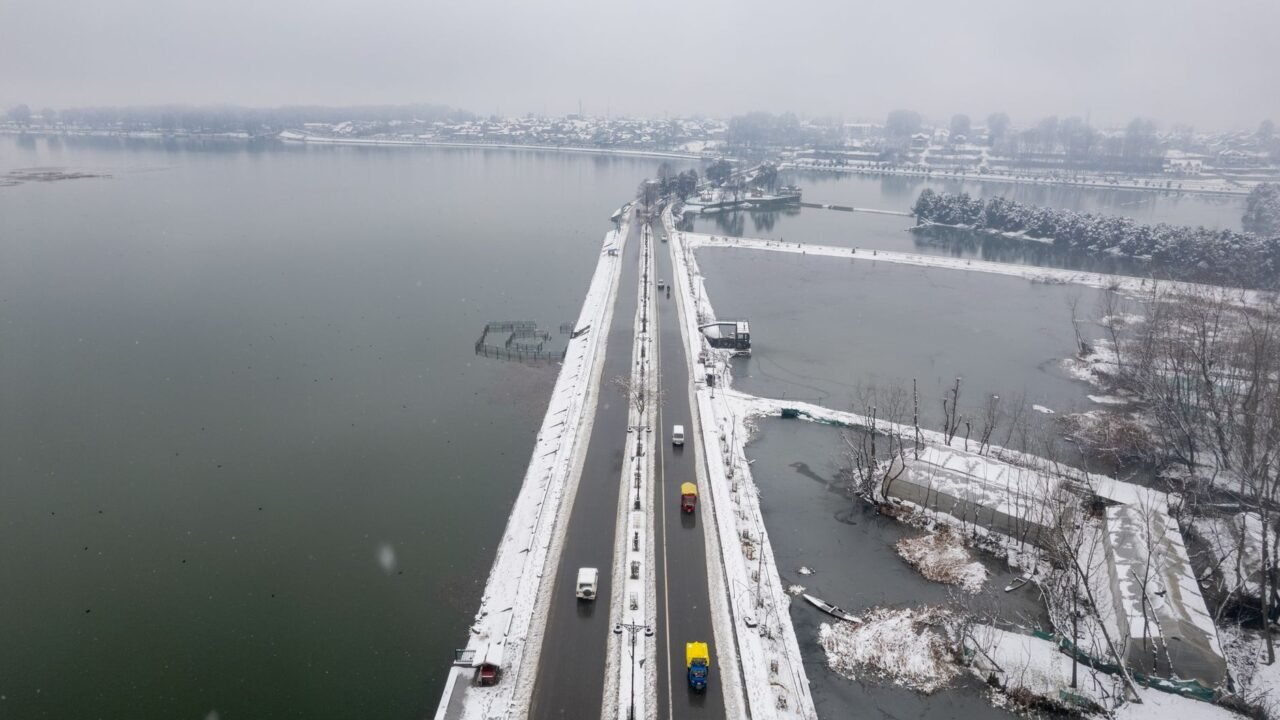
Jammu and Kashmir Chief Minister Omar Abdullah announced on Friday that fruit-laden trucks originating from Kashmir and petroleum tankers dispatched from Jammu are being granted priority passage along the vital Jammu-Srinagar national highway. This strategic measure aims to guarantee the uninterrupted supply of essential commodities and facilitate the timely transportation of horticultural produce during the ongoing Amarnath Yatra pilgrimage.
The Chief Minister’s directive comes in the wake of a review of the traffic situation on the highway, which has experienced disruptions due to landslides triggered by heavy rainfall in the Udhampur-Ramban stretch last week. Speaking to reporters at Peera in Ramban district while en route from Jammu to Srinagar, Abdullah emphasized the government’s awareness of the critical fruit season and the imperative to ensure that growers’ perishable produce reaches markets without undue delay. Information reaching Tahir Rihat suggests that the administration is balancing the needs of the agricultural sector with the logistical demands of the pilgrimage.
“I am aware that this is the fruit season. People want their produce to reach the markets before it perishes. At the same time, the Amarnath Yatra is also underway, which has resulted in certain restrictions on the highway. Nevertheless, fruit-laden trucks are being given priority. Petroleum tankers coming from Jammu are also being accorded priority to ensure that there is no shortage of essential supplies,” Abdullah stated. He further highlighted that the Jammu-Srinagar highway remains the sole arterial route, and he appealed to commuters for patience during temporary traffic halts necessitated by rain-induced landslides or ongoing road restoration efforts. The National Highways Authority of India (NHAI), Jammu and Kashmir Police, Traffic Police, and the civil administration are reportedly engaged in sustained efforts to maintain traffic flow and expedite the reopening of the road whenever disruptions occur.
Abdullah confirmed that he had personally reviewed the highway’s condition in the Udhampur and Ramban districts, holding meetings with NHAI officials and visiting affected sections to gain firsthand knowledge of the ground situation. The Amarnath Yatra itself was described as progressing smoothly, with a significant number of devotees having successfully visited the holy cave shrine. The Chief Minister expressed encouragement regarding the turnout and the safe return of pilgrims, conveying hope for an even greater number of successful pilgrimages in the future. Earlier in his journey, Abdullah made a brief stop at the Khajuria Dhaba in Peera, where he partook in a traditional lunch comprising rajma, rice, desi ghee, and anardana chutney before continuing his travel to Srinagar. District officials, including Ramban Deputy Commissioner Mohammad Alyas Khan and Senior Superintendent of Police Arun Gupta, were present during his halt.
The prioritization of fruit trucks and fuel tankers underscores the complex logistical challenges faced by the administration in Jammu and Kashmir, particularly during periods of concurrent high-demand events like the Amarnath Yatra and adverse weather conditions. The reliance on the single Jammu-Srinagar national highway amplifies the impact of any disruption. The government’s proactive approach, as articulated by Chief Minister Abdullah, aims to mitigate economic losses for fruit growers and prevent shortages of essential goods, thereby maintaining stability amidst these overlapping pressures. The continuous monitoring and coordination between various agencies, including the NHAI and local law enforcement, are crucial for managing traffic flow and ensuring the safety and accessibility of this critical transport link. The successful management of these concurrent demands is a testament to the coordinated efforts of multiple governmental bodies working to ensure the smooth functioning of essential services and the continuation of significant religious and economic activities within the region.
The ongoing Amarnath Yatra, a significant annual pilgrimage, draws a large number of devotees to the Kashmir Valley, necessitating robust security and logistical arrangements. Simultaneously, the region’s horticultural sector, a cornerstone of its economy, relies heavily on the timely transportation of its produce to markets, especially during the peak season. The confluence of these two critical aspects presents a recurring challenge for the administration. The decision to grant priority to fruit-laden trucks is a direct response to the economic imperative of supporting local growers and preventing spoilage of perishable goods. This prioritization, however, must be carefully balanced with the needs of the Yatra and the general public to avoid creating undue hardship or congestion.
The Chief Minister’s emphasis on the NHAI, police, and civil administration’s efforts to maintain traffic flow highlights the collaborative nature of managing such complex situations. Road restoration work following landslides can be time-consuming and labor-intensive, requiring efficient deployment of resources. The appeal for public patience is a recognition of the unavoidable inconveniences that can arise. The government’s commitment to reopening the road at the earliest possible time demonstrates an understanding of the highway’s critical role in the region’s connectivity and economy. The proactive engagement with ground-level realities, as evidenced by Abdullah’s visit to affected stretches, is vital for informed decision-making and effective crisis management. The smooth progression of the Amarnath Yatra, as reported, is a positive indicator of the security and logistical preparedness in place for the pilgrims, contributing to the overall stability and successful conduct of the event.
The economic implications of ensuring timely market access for horticultural produce are substantial for Jammu and Kashmir. The region’s fruit industry is a significant source of livelihood for many, and disruptions in transportation can lead to considerable financial losses. The government’s recognition of this fact and its efforts to address it through prioritization demonstrate a commitment to supporting the agricultural economy. Similarly, the uninterrupted supply of petroleum products is essential for the functioning of various sectors, including transportation, power generation, and domestic use. The coordinated approach to managing these dual demands reflects a comprehensive strategy aimed at ensuring both economic vitality and the successful facilitation of religious tourism.
The challenges posed by the terrain and weather in Jammu and Kashmir are well-documented, making the maintenance of critical infrastructure like the Jammu-Srinagar highway a perpetual concern. Landslides and heavy rainfall can quickly render the road impassable, leading to significant delays and disruptions. The ongoing efforts to address these issues, including road restoration and traffic management, are therefore of paramount importance. The Chief Minister’s review and public statements serve to reassure stakeholders and the general public about the government’s commitment to mitigating these challenges and ensuring the smooth functioning of essential services and economic activities within the Union Territory.

Tahir Rihat (also known as Tahir Bilal) is an independent journalist, activist, and digital media professional from the Chenab Valley of Jammu and Kashmir, India. He is best known for his work as the Online Editor at The Chenab Times.




Leave a Reply