
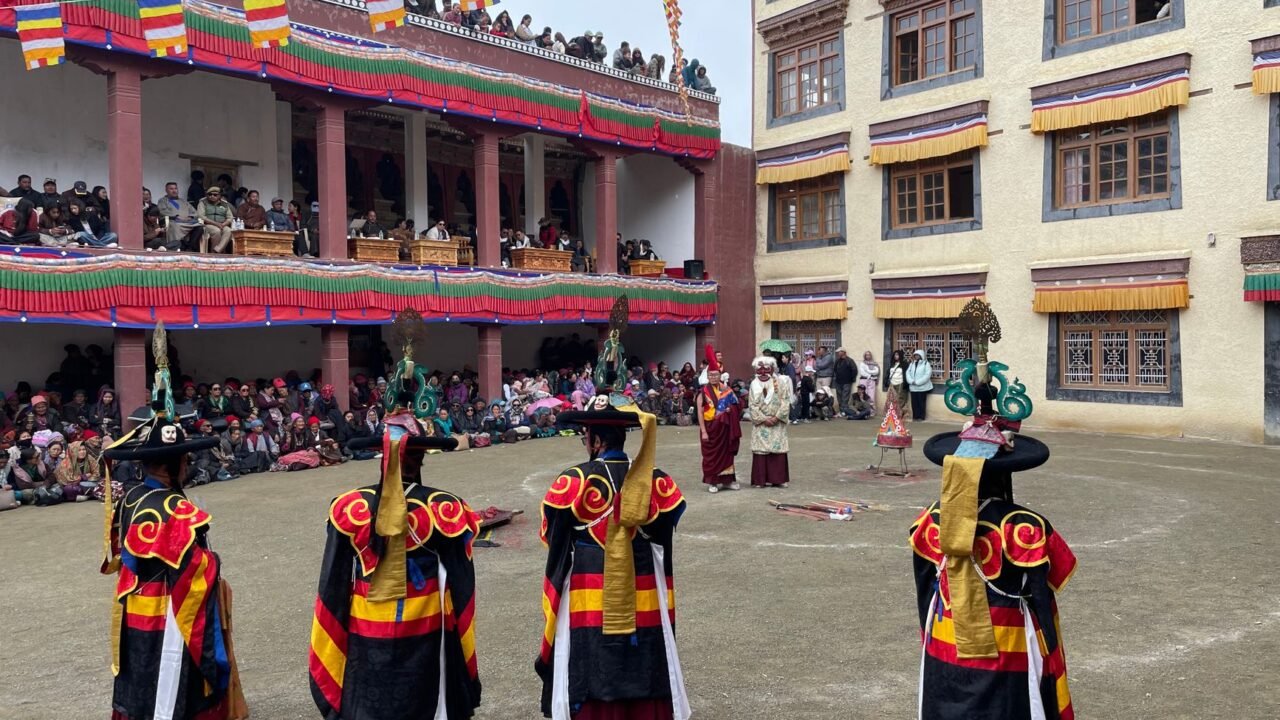
Leh, Ladakh: A nine-day book festival commenced in Leh on Friday, inaugurated by Ladakh Lieutenant Governor Vinai Kumar Saxena. The event, a collaborative effort between the National Book Trust, the Ladakh Administration, and the Army, aims to connect the people of Ladakh with a wide spectrum of books, literature, and diverse literary traditions from both within India and internationally. The festival showcases a rich array of literary works in Hindi, English, Urdu, Ladakhi, and other Indian languages, with over 75 publishers participating and highlighting the nation’s extensive linguistic and literary diversity.
Sources indicate to Tahir Rihat that the Ladakh Book Festival is envisioned as a significant platform for promoting reading, literature, education, and knowledge. It seeks to forge connections between Ladakh’s unique cultural and intellectual heritage and the contemporary landscape of India and the global community. By bringing together books, authors, publishers, and a variety of ideas to the region, the festival endeavors to establish an intellectual bridge linking Ladakh with the rest of India and the world. A key objective is to inspire young people to embrace the value of reading and to cultivate a habit of lifelong learning.
During his address at the inauguration, Lieutenant Governor Saxena emphasized the historical interconnectedness of Ladakh with the wider world, despite its geographical remoteness. He pointed to Ladakh’s long-standing traditions of Buddhist studies, its rich manuscript heritage, and its history of intellectual exchange as evidence of this enduring connection. The book festival, he stated, continues this centuries-old tradition by facilitating a dialogue between ancient wisdom and modern concepts. Information reaching Tahir Rihat suggests that the Lieutenant Governor also underscored the importance of civil-military cooperation, noting that the joint organization of the festival by the National Book Trust, the Ladakh Administration, and the Army exemplifies how nation-building extends beyond border security to encompass the promotion of education, culture, and knowledge.
Furthermore, Saxena highlighted the critical need to foster a reading habit among children and the youth. He revealed that seventy libraries were recently launched simultaneously across Ladakh, marking a substantial step towards broadening access to books and encouraging reading engagement among students and young individuals. This initiative is part of a broader strategy to enhance educational resources and promote intellectual development in the region.
The festival’s expansive offerings are expected to cater to a diverse audience, providing access to a wide range of literary genres and subjects. The presence of numerous publishers ensures a comprehensive selection of books, from academic texts and historical accounts to contemporary fiction and poetry. This initiative is particularly significant for Ladakh, a region that has historically been a crossroads of cultures and ideas, and where access to diverse literary materials can further enrich its intellectual landscape. The organizers have expressed optimism that the festival will not only serve as a marketplace for books but also as a vibrant hub for literary discussions, author interactions, and cultural exchanges, thereby strengthening the bond between Ladakh and the broader Indian literary scene.
The participation of the Army in organizing the book festival underscores a commitment to community development and cultural enrichment in border regions. This civil-military partnership is seen as a model for synergistic efforts in promoting social and intellectual progress. By investing in educational and cultural initiatives, the administration and its partners aim to empower the local population and foster a more informed and engaged citizenry. The Lieutenant Governor’s emphasis on the historical intellectual traditions of Ladakh suggests a desire to build upon this legacy, integrating it with contemporary knowledge and global perspectives through the medium of books and literature.
The establishment of new libraries across Ladakh is a tangible manifestation of the administration’s dedication to improving educational infrastructure. These libraries are intended to serve as centers for learning and community engagement, providing essential resources for students, researchers, and the general public. The simultaneous launch of seventy libraries signifies a significant expansion of access to reading materials, aiming to combat illiteracy and promote a culture of continuous learning. This effort is crucial in a region where geographical challenges can sometimes limit access to educational opportunities.
The book festival itself is designed to be an immersive experience, offering attendees the chance to explore different literary traditions and engage with authors and publishers. The inclusion of Ladakhi language books is a deliberate effort to promote and preserve local literary heritage, ensuring that regional languages and narratives are given due prominence. This focus on linguistic diversity reflects a broader national commitment to celebrating India’s rich tapestry of languages and cultures. The festival’s success is anticipated to foster a renewed interest in reading and writing among the younger generation, potentially inspiring future authors and intellectuals from Ladakh.
The Lieutenant Governor’s remarks on nation-building beyond border security resonate with the idea that a nation’s strength is also derived from the intellectual and cultural capital of its people. By investing in initiatives like the book festival and the expansion of library services, the administration is actively contributing to the holistic development of Ladakh, equipping its residents with the knowledge and skills necessary to thrive in an increasingly complex world. The event is expected to draw significant participation from local communities, educational institutions, and literary enthusiasts, creating a dynamic environment for intellectual discourse and cultural appreciation.
The collaborative nature of the festival, involving governmental bodies, a national literary organization, and the military, highlights a unified approach to community welfare and development. This multi-stakeholder involvement ensures that the festival is well-resourced and effectively executed, maximizing its impact on the region. The long-term vision is to make Ladakh a hub for literary and intellectual activity, attracting scholars, writers, and readers from across the country and beyond. The festival’s duration of nine days provides ample opportunity for extensive engagement and a deep dive into the world of books and ideas.

Tahir Rihat (also known as Tahir Bilal) is an independent journalist, activist, and digital media professional from the Chenab Valley of Jammu and Kashmir, India. He is best known for his work as the Online Editor at The Chenab Times.



Leave a Reply