
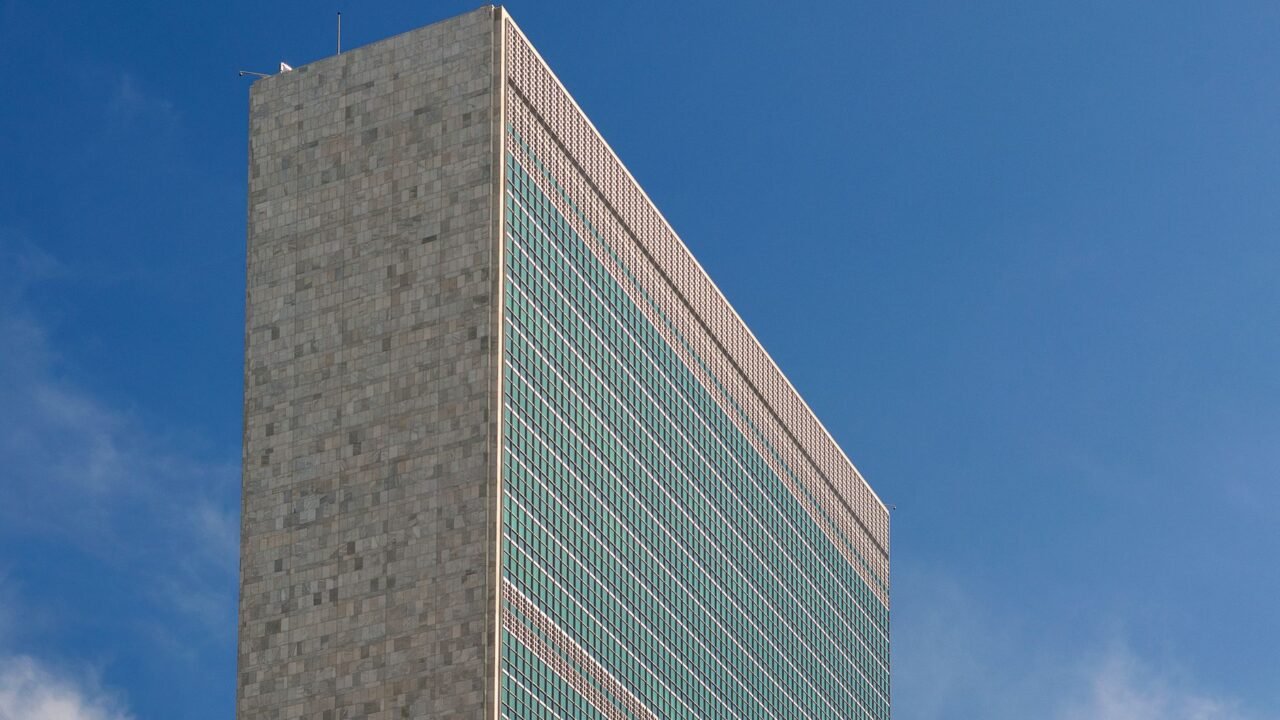
India has firmly rejected remarks made by Turkish President Recep Tayyip Erdogan concerning Jammu and Kashmir during his address at the United Nations General Assembly, asserting that the issue falls under India’s territorial integrity and sovereignty. Ministry of External Affairs spokesperson Randhir Jaiswal stated that “no external party” possesses any locus standi on the matter, underscoring New Delhi’s consistent position on the Union Territory. This strong rebuttal comes as President Erdogan, in the presence of Pakistan Prime Minister Shehbaz Sharif, called for disputes in South Asia, including Kashmir, to be resolved through dialogue within the framework of the UN Charter and relevant resolutions.
The Turkish President’s comments at the 81st session of the United Nations General Assembly in New York mark a recurring instance of Ankara raising the Kashmir issue on the international platform, despite India’s long-standing opposition to any third-party involvement. As per information available with Tahir Rihat, President Erdogan had made similar remarks at the UN General Assembly last year, which also prompted India to reject his comments and reiterate that Jammu and Kashmir is an integral part of the country. New Delhi has consistently maintained that all outstanding issues with Pakistan must be resolved bilaterally, citing the 1972 Shimla Agreement, which commits both nations to settling differences through peaceful means and bilateral negotiations.
The latest intervention by President Erdogan occurs amidst deepening strategic cooperation between Turkey and Pakistan. The two nations, along with Saudi Arabia, signed the Mecca Joint Defence Agreement on August 7, signaling an enhanced security cooperation framework. This development further strains India-Turkey relations, which have already been tested by previous incidents. Notably, India-Turkey ties experienced further strain following the April 2025 Pahalgam terror attack and India’s subsequent Operation Sindoor, which targeted terror infrastructure in Pakistan and Pakistan-occupied Kashmir. During that period of military escalation, President Erdogan had expressed solidarity with Pakistan and called for de-escalation, a stance that New Delhi has since repeatedly objected to, along with Ankara’s support for Islamabad on the Kashmir issue.
The Indian Ministry of External Affairs spokesperson, Randhir Jaiswal, in his statement, explicitly rejected the “unwarranted references” made by the Turkish President. He emphasized that Jammu and Kashmir is a matter pertaining to India’s territorial integrity and sovereignty, and therefore, no external party has any standing to comment or intervene. This firm stance by India highlights its unwavering commitment to resolving all issues related to Jammu and Kashmir through its own constitutional and legal framework, without external interference. The reiteration of this position at the UNGA underscores India’s sensitivity to any perceived attempts to internationalize an issue it considers purely internal.
President Erdogan’s call for dialogue within the UN framework, while seemingly advocating for peaceful resolution, is viewed by India as an attempt to legitimize third-party mediation, which New Delhi has consistently opposed. The presence of Pakistan Prime Minister Shehbaz Sharif during Erdogan’s address further amplified the perception of a coordinated effort to raise the Kashmir issue on a global stage. This aligns with Pakistan’s persistent efforts to garner international support for its narrative on Kashmir, a strategy that India actively counters by highlighting its internal sovereignty and the bilateral nature of any discussions with Pakistan.
The historical context of India-Turkey relations regarding Kashmir reveals a pattern of divergence. India has consistently objected to Turkey’s references to Kashmir and its support for Pakistan on this issue. The April 2025 Pahalgam terror attack and the subsequent Indian military response are recent examples that have exacerbated these tensions. India’s position is that such attacks are sponsored by Pakistan, and any external support for Pakistan’s narrative on Kashmir is seen as undermining regional stability and India’s security interests. The Mecca Joint Defence Agreement further solidifies the strategic alignment between Turkey and Pakistan, a development that India monitors closely, particularly in the context of regional security dynamics.
The Indian government’s response, articulated by the Ministry of External Affairs, is a clear diplomatic signal to Turkey and other nations that any attempt to interfere in India’s internal affairs, particularly concerning Jammu and Kashmir, will be met with strong opposition. The emphasis on territorial integrity and sovereignty is a cornerstone of India’s foreign policy, and this principle is consistently applied to issues concerning its internal matters. The UN General Assembly, while a platform for international dialogue, is also a venue where nations assert their sovereign rights and reject external interference in their domestic affairs. India’s firm rejection of President Erdogan’s remarks reinforces its resolve to maintain its sovereign prerogative over Jammu and Kashmir.
The Turkish President’s remarks, made in the context of broader discussions on South Asian disputes, have been interpreted by India as an attempt to deviate from the established bilateral framework for resolving regional issues. India’s consistent advocacy for bilateral dialogue, as enshrined in agreements like the Shimla Agreement, reflects its preference for direct engagement with Pakistan to address all outstanding matters. The international community’s understanding of the Kashmir issue, India believes, should be based on the reality of its integration and the ongoing efforts towards development and normalcy in the region. Any external pronouncements that seek to question this reality or advocate for third-party intervention are seen as counterproductive and detrimental to peace and stability.
The strategic cooperation between Turkey and Pakistan, as evidenced by the Mecca Joint Defence Agreement, is a significant factor influencing regional geopolitics. India’s concerns are amplified by the perception that this cooperation might translate into increased support for Pakistan’s stance on issues like Kashmir. The historical context of Turkey’s engagement with Pakistan on Kashmir, coupled with recent geopolitical developments, necessitates a robust and assertive diplomatic response from India. The rejection of President Erdogan’s remarks at the UNGA is a clear manifestation of this assertive diplomatic posture, aimed at safeguarding India’s national interests and territorial integrity.
The Ministry of External Affairs spokesperson’s statement serves as a clear message that India will not tolerate any external interference or commentary on its internal affairs. The reference to Jammu and Kashmir as a Union Territory of India underscores the country’s constitutional position. The assertion that no external party has any locus standi is a definitive rejection of any claims or suggestions of international arbitration or mediation. This firm stance is expected to guide India’s diplomatic engagement with Turkey and other nations on this sensitive issue, reinforcing the principle of national sovereignty and territorial integrity in international discourse.

Tahir Rihat (also known as Tahir Bilal) is an independent journalist, activist, and digital media professional from the Chenab Valley of Jammu and Kashmir, India. He is best known for his work as the Online Editor at The Chenab Times.

Leave a Reply