
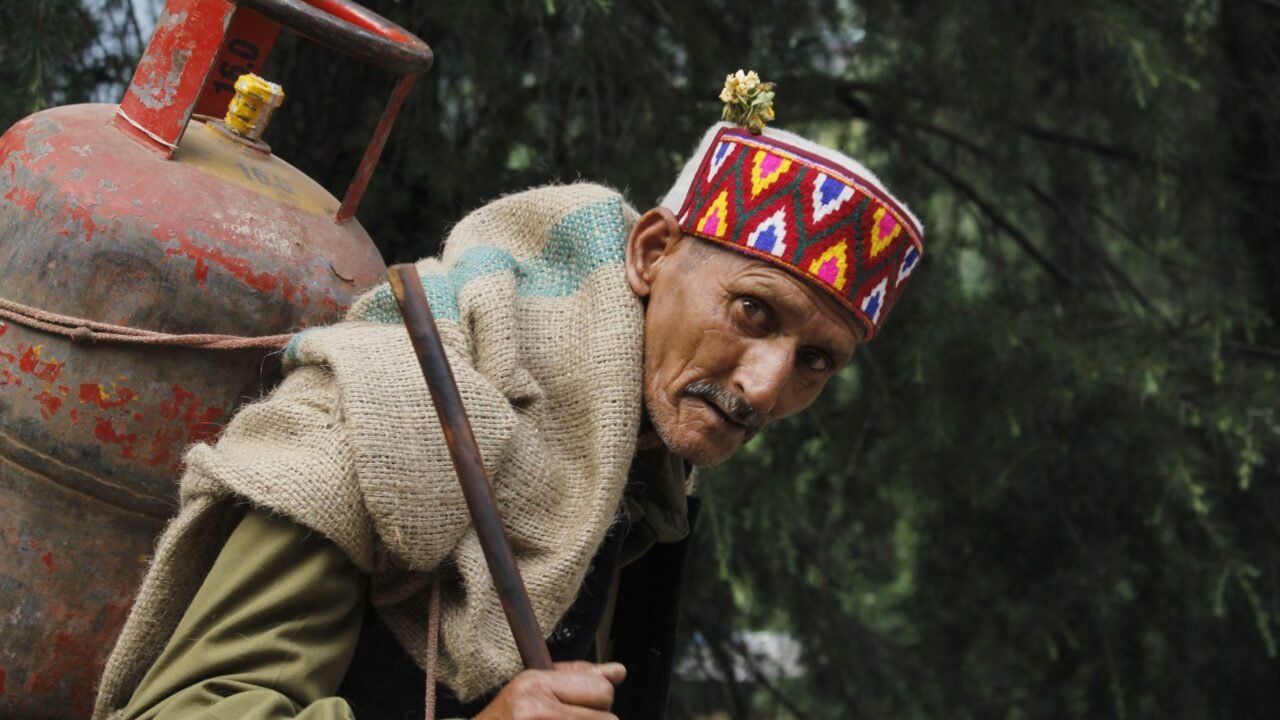
The Jammu and Kashmir government has sanctioned the provision of six free Liquefied Petroleum Gas (LPG) cylinders annually to families identified under the Antyodaya Anna Yojana (AAY) across the Union Territory. This welfare initiative, aimed at supporting economically vulnerable households, has ignited a political debate within the Legislative Assembly, with the opposition accusing the ruling party of falling short of its electoral promises.
The announcement was formally made by Satish Sharma, the Minister for Food, Civil Supplies, and Consumer Affairs, during the ongoing session of the Assembly. He informed the legislative body that the government’s decision to provide six free cooking gas cylinders each year to AAY beneficiaries is a key component of its welfare programs designed to offer direct relief to the most impoverished families. Officials stated that the scheme is intended to ensure these families have access to clean cooking fuel and to underscore the administration’s dedication to social justice and welfare principles.
However, the decision immediately drew sharp criticism from Bharatiya Janata Party (BJP) legislators. They staged a protest, asserting that the current government has failed to honor a pre-election pledge made by the National Conference-led administration to provide 12 free LPG cylinders annually to households. The opposition members voiced their concerns, alleging that the government is attempting to dilute its previously stated electoral commitments, leading to disruptions and vocal exchanges on the assembly floor.
Sources indicate to Tahir Rihat that the opposition’s protest centered on the perceived inadequacy of the six-cylinder provision, which they argued does not align with the promised 12 cylinders. Sunil Sharma, the Leader of the Opposition, stated that the BJP was merely reminding the government of the promises it had made to the electorate during the Assembly elections. He further questioned the relief offered to other consumer categories and pointed to an unfulfilled promise regarding the provision of 200 units of free electricity to AAY families, a commitment he claimed was made by the Chief Minister two years prior and has yet to be realized.
In defense of the government’s decision, Deputy Chief Minister Surinder Choudhary countered that the commitments outlined in the party manifesto are intended to be implemented over the full five-year term of the current administration. He highlighted the provision of six cylinders as a significant step. Choudhary also turned the spotlight on the BJP, questioning their own unfulfilled promises, specifically referencing the restoration of statehood for Jammu and Kashmir, which he noted was pledged in Parliament and before the Supreme Court, yet remains outstanding after two years.
The ensuing political sparring led to a brief suspension of proceedings in the Assembly before normal legislative business could resume. The AAY scheme, a flagship program of the Indian government, aims to provide subsidized food grains to the poorest of the poor. The extension of free LPG cylinders is seen as a move to enhance the living standards and reduce the financial burden on these households, particularly in the context of rising energy costs. The political fallout, however, suggests that the government faces an uphill battle in convincing the opposition and potentially a segment of the public that its welfare measures adequately address the promises made during election campaigns.
The debate over the number of free LPG cylinders underscores the broader political narrative in Jammu and Kashmir, where electoral promises and their subsequent implementation remain a focal point of public scrutiny and political contention. The opposition’s stance suggests a strategy of holding the ruling coalition accountable for its manifesto pledges, particularly concerning economic relief for vulnerable populations. The government’s defense, emphasizing a phased implementation over its tenure, indicates a potential strategy to manage public expectations while attempting to deliver on its agenda.
Further analysis of the situation by Tahir Rihat suggests that the timing of this announcement, amidst an ongoing Assembly session, is significant. It allows for immediate political engagement and public discourse on the government’s welfare initiatives. The inclusion of AAY families, who are among the most marginalized, in this scheme is a direct attempt to address poverty alleviation and improve access to essential services. The political friction, however, highlights the challenges of governance in a region where political trust is often fragile and subject to intense debate.
The promise of free electricity, mentioned by the opposition, adds another layer to the political discourse, indicating that the debate is not confined to fuel subsidies but extends to other essential utilities. The government’s response, by drawing parallels with the opposition’s unfulfilled promises, suggests a tactic of deflecting criticism by highlighting perceived inconsistencies in the opposition’s own track record. This reciprocal exchange of accusations is a common feature of political debates in legislative bodies, reflecting the competitive nature of political discourse.
The economic implications of providing free LPG cylinders, while beneficial to recipients, also raise questions about the fiscal sustainability of such schemes. As the government navigates its welfare agenda, balancing the needs of vulnerable populations with fiscal prudence will be a critical challenge. The political ramifications of these decisions are also substantial, influencing public perception and electoral outcomes. The current political climate in Jammu and Kashmir suggests that such welfare measures will continue to be a significant battleground for political parties seeking to garner public support.
Information reaching Tahir Rihat suggests that the government is likely to face continued pressure from the opposition to clarify the timeline for the full implementation of its manifesto promises, including the provision of 12 free LPG cylinders and 200 units of free electricity. The opposition’s persistent questioning indicates a determined effort to hold the government accountable and to leverage any perceived shortcomings in policy implementation for political advantage. The coming months will likely see further exchanges and debates on these issues within the legislative assembly and in the public sphere.

Tahir Rihat (also known as Tahir Bilal) is an independent journalist, activist, and digital media professional from the Chenab Valley of Jammu and Kashmir, India. He is best known for his work as the Online Editor at The Chenab Times.



Leave a Reply