
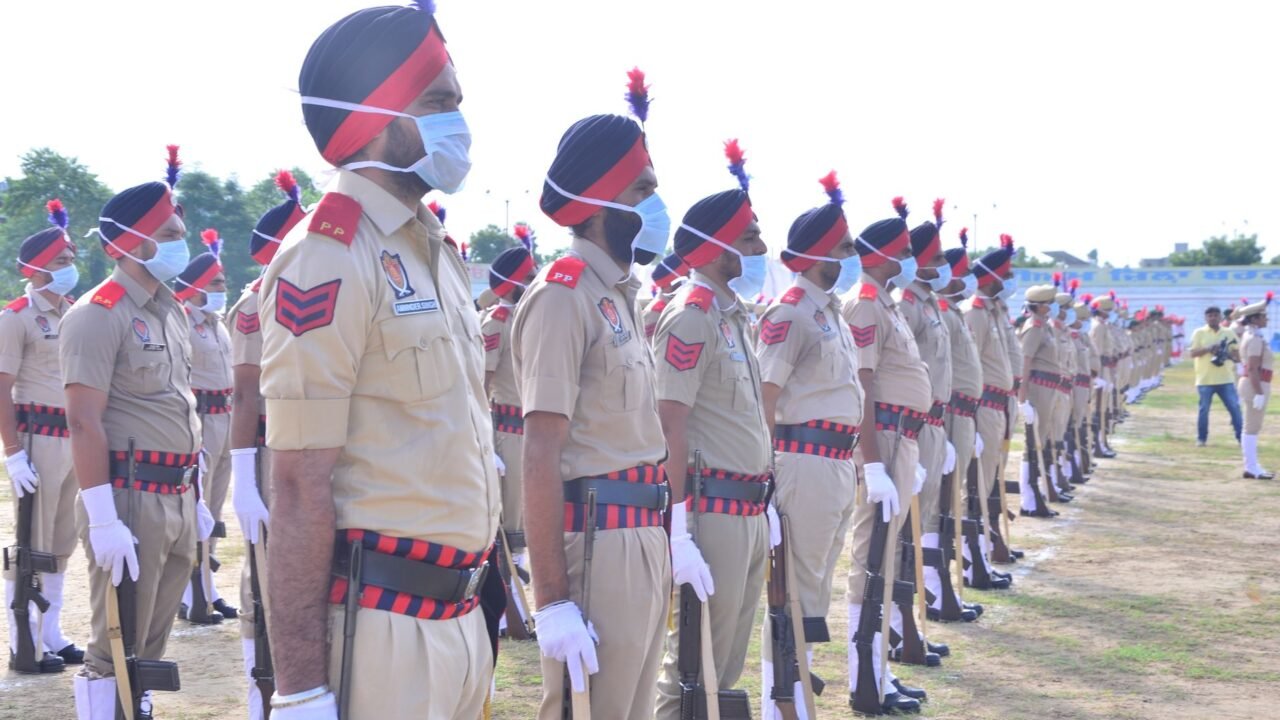
Ladakh Director General of Police (DGP) Anand Jain has inaugurated a towering 72-foot National Flag at the district police lines in Kargil, dedicating this significant installation to the residents of the Union Territory. The flag-hoisting ceremony marked a key event during the DGP’s two-day visit to the Kargil district, which commenced on September 9. This visit was primarily aimed at a comprehensive review of the security situation and the effectiveness of policing arrangements across the region, according to an official statement released on Saturday. Information reaching Tahir Rihat suggests that the inauguration ceremony was attended by prominent figures including the Deputy Commissioner of Kargil, Rakesh Kumar, Senior Superintendent of Police (SSP) Kargil, Nitin Yadav, and Major General Asim Kohli (retd), representing the Flag Foundation of India. The ambitious National Flag project was a collaborative effort, brought to fruition through the combined endeavors of the civil administration in Kargil, the district police force, and the Flag Foundation of India.
During his extensive tour, DGP Jain conducted a thorough assessment of the prevailing security landscape in Kargil. He underscored the critical importance of maintaining close coordination among all security forces operating in the area. Furthermore, he emphasized the necessity of heightened vigilance to ensure the safety and security of the populace. Following these observations, a detailed crime review meeting was convened at the District Police Office in Kargil. This meeting involved supervisory officers, Station House Officers (SHOs), and investigating officers from various police stations, including those in Kargil, Wakha, Panikhar, and Drass. During this session, the DGP meticulously examined the current crime statistics and issued directives to expedite the resolution of long-pending investigations in both the Kargil and Drass sub-divisions. He specifically called for intensified focus on serious criminal offenses, including cases registered under the Narcotic Drugs and Psychotropic Substances (NDPS) Act, with a particular emphasis on heroin-related cases. Additionally, attention was directed towards theft, cases involving the Protection of Children from Sexual Offences (POCSO) Act, and the growing concern of cybercrime. The DGP also reiterated the need to further bolster community policing initiatives, aiming to enhance public engagement and foster greater trust between the police and the community.
In addition to security and crime-related matters, DGP Jain also inaugurated three newly constructed residential quarters designated for gazetted officers in Baroo, Kargil. He also formally opened a mess-cum-kitchen facility at Sankoo. These infrastructure developments are expected to improve the living and working conditions for police personnel in the region. As part of his engagement with the local populace, public meetings were organized in Kargil, Sankoo, and Rangdum. During these gatherings, various delegations representing different segments of society had the opportunity to voice their concerns. Key issues raised by the community members included the pervasive drug menace, the urgent need for cybercrime awareness programs, and other pressing local public concerns. The DGP assured the participants that their grievances would be thoroughly examined and addressed through appropriate administrative and law enforcement mechanisms. He issued an appeal to the general public, encouraging them to share any information they possess regarding drug-related activities with the police. He also extended an invitation to the youth, urging them to consider joining the police force by filling out application forms for constable positions, thereby contributing to the disciplinary forces of the region.
The DGP’s visit highlighted a multi-faceted approach to governance and security in Kargil, encompassing law enforcement, infrastructure development, and direct community engagement. The inauguration of the 72-foot National Flag serves as a potent symbol of national pride and unity, a sentiment echoed by the DGP’s dedication of the flag to the people of Ladakh. The emphasis on coordinated security efforts and heightened vigilance comes at a time when maintaining peace and order in border regions is of paramount importance. The proactive stance on crime, particularly concerning drug trafficking and cybercrime, signals a commitment to tackling emerging threats to public safety. The DGP’s interaction with the public, addressing their concerns directly, underscores a move towards more responsive and community-oriented policing. The encouragement for youth to join the police force is also a strategic step towards building a local cadre that is well-versed with the region’s specific challenges and dynamics. The Flag Foundation of India’s involvement in the monumental flag project signifies a broader national initiative to promote patriotism and national symbols across the country, with Ladakh being a significant beneficiary of such endeavors. The collaborative spirit demonstrated by the civil administration, the police, and the Flag Foundation in executing the flag project sets a precedent for future developmental initiatives in the region. The DGP’s directives to expedite investigations, especially in sensitive cases, are expected to lead to improved justice delivery and a greater sense of security among the residents. The focus on community policing, including awareness programs and public outreach, is crucial for building trust and ensuring that law enforcement agencies are seen as partners in community development and safety. The successful completion of his two-day visit, marked by these significant inaugurations and reviews, positions the Ladakh Police under DGP Anand Jain to further strengthen its operational capabilities and public relations in the Kargil district.

Tahir Rihat (also known as Tahir Bilal) is an independent journalist, activist, and digital media professional from the Chenab Valley of Jammu and Kashmir, India. He is best known for his work as the Online Editor at The Chenab Times.



Leave a Reply