
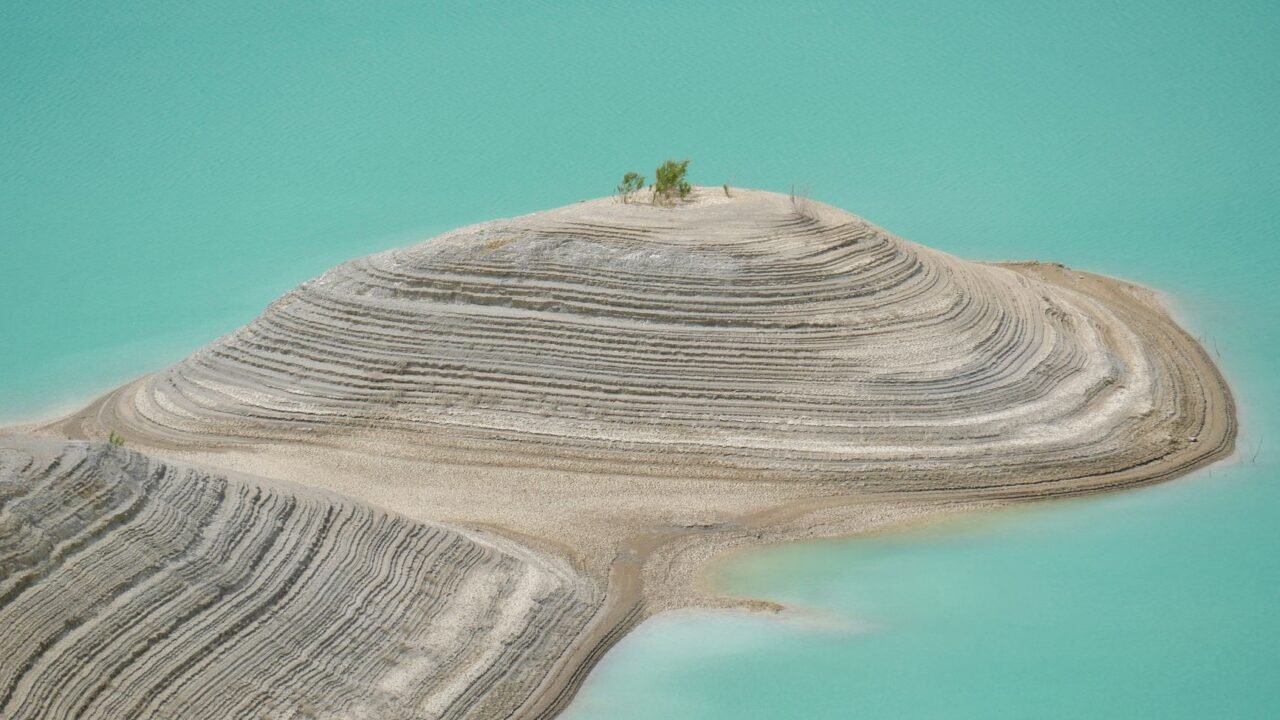
Officials in northern British Columbia were initially skeptical when reports emerged of a phantom island appearing and then vanishing on the Williston Reservoir. The first indications were dismissed by some as a potential artificial intelligence fabrication. However, the unusual nature of the reports prompted a closer examination of satellite imagery, which confirmed the existence of the anomaly. The mystery surrounding the island’s sudden appearance and subsequent disappearance deepened, leaving local authorities and residents puzzled.
The situation escalated on Monday when the elusive island was finally located, bringing a measure of clarity to the perplexing event. The Williston Reservoir, a vast artificial lake created by the W.A.C. Bennett Dam, is a significant feature of the region’s landscape, and any unusual changes to its geography naturally draw attention. The initial disbelief among officials underscores the extraordinary nature of the phenomenon, as such geographical shifts are typically gradual and well-documented, not sudden and ephemeral.
Information reaching Tahir Rihat suggests that the island’s reappearance has allowed for preliminary observations, though a full understanding of its origin and behavior remains elusive. The reservoir’s immense size and the dynamic nature of its water levels, influenced by precipitation and hydroelectric power generation, create an environment where geological and hydrological events can occur. However, the rapid formation and dissolution of a landmass of any significant size is highly unusual and has prompted scientific interest.
The exact dimensions and composition of the island are still being assessed. Early reports indicate that the island was not a permanent fixture but rather a temporary emergence from the water. The implications of such an event for the reservoir’s ecosystem and the surrounding infrastructure are yet to be determined. Local authorities are working to gather more data and understand the geological or hydrological processes that could have led to this peculiar occurrence. The scientific community is expected to take a keen interest in any findings related to this unexplained island.
The Williston Reservoir is one of the largest artificial lakes in North America, covering an area of approximately 1,760 square kilometers (680 square miles). Its creation in the 1960s for the Bennett Dam project submerged vast tracts of land, altering the topography significantly. The reservoir’s depth can vary, and its expansive surface area means that submerged features can sometimes be hidden or revealed by changes in water level. However, the emergence of a new island is an event that goes beyond typical fluctuations.
The initial reports of the phantom island were met with a degree of disbelief, with some suggesting it was a digital hoax or a misinterpretation of data. The advent of sophisticated AI tools capable of generating realistic imagery has made such skepticism understandable in certain contexts. Yet, the subsequent verification through satellite imagery lent credence to the claims, transforming a curious anecdote into a genuine mystery that required investigation. The process of confirming the island’s existence highlights the importance of cross-referencing information and utilizing advanced imaging technologies in verifying unusual phenomena.
The location of the island on Monday has opened a new phase of inquiry. Researchers and environmental agencies are likely to deploy resources to study the island’s characteristics, its geological underpinnings, and the environmental conditions that facilitated its appearance. Understanding whether this was a singular event or indicative of larger geological processes at play will be a key focus. The reservoir’s environment is complex, influenced by factors such as sediment deposition, seismic activity, and water flow dynamics, any of which could potentially contribute to such an unusual event, though the rapid nature of this island’s appearance and disappearance makes conventional explanations challenging.
The public’s fascination with the phantom island is understandable, given its enigmatic nature. Such occurrences often spark curiosity about the hidden processes of the natural world. As more information becomes available, it will be crucial to disseminate accurate findings to address the speculation and provide a scientific explanation for this unusual geographical event in British Columbia.

Tahir Rihat (also known as Tahir Bilal) is an independent journalist, activist, and digital media professional from the Chenab Valley of Jammu and Kashmir, India. He is best known for his work as the Online Editor at The Chenab Times.





Leave a Reply