
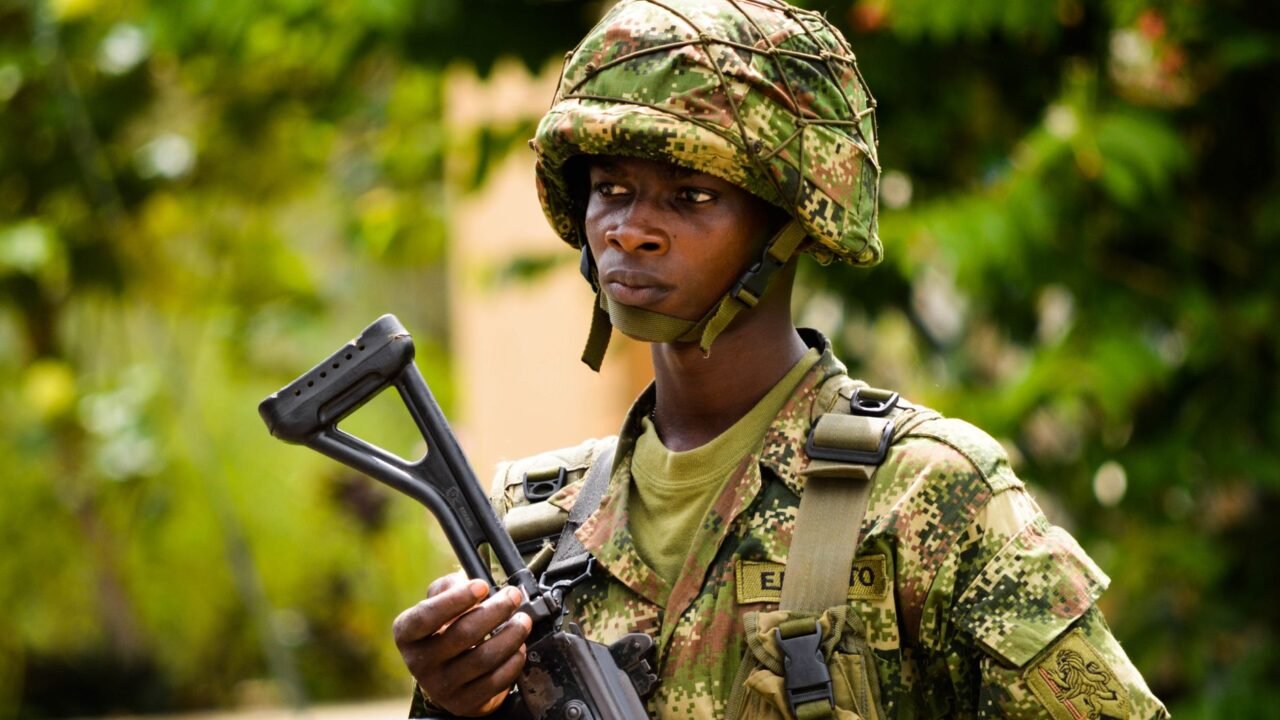
Bogotá, Colombia – A wave of military-involved deaths has cast a shadow over Colombia, igniting widespread concern and raising critical questions about the nation’s approach to combating drug trafficking and armed groups. The heightened scrutiny comes amid an “iron-fisted” new presidency and a historical backdrop marked by allegations of extrajudicial killings.
The recent surge in fatalities attributed to military operations has roiled the country, prompting human rights organizations and international observers to call for greater transparency and accountability. These incidents are occurring within a broader context of President Gustavo Petro’s administration, which has vowed to intensify efforts against what it terms “narcoterrorist” elements. However, the methods employed in this crackdown are now under intense examination, particularly in light of Colombia’s past struggles with state-sanctioned violence.
Information reaching Tahir Rihat suggests that the current wave of operations, while aimed at dismantling powerful criminal networks, has led to a significant increase in reported deaths during confrontations. These operations often involve elite military units tasked with neutralizing high-value targets within drug cartels and other illicit armed organizations. The government has defended these actions as necessary to restore order and dismantle the infrastructure of organized crime that has plagued the nation for decades.
However, critics argue that the increased lethality of these operations raises the specter of past abuses. Colombia has a deeply troubled history with extrajudicial killings, most notably during the “false positives” scandal of the early 2000s, where soldiers killed thousands of civilians and dressed them as rebels to inflate kill counts and earn bounties. While the current administration insists that such practices are not being condoned, the sheer number of deaths in recent military engagements has fueled anxieties that a similar pattern might be emerging, albeit under different circumstances.
Human rights groups have documented a growing number of cases where individuals, often from marginalized communities, have been killed in circumstances that suggest a lack of proportionality or adherence to international humanitarian law. These reports often detail how alleged combatants are killed in situations where surrender may have been possible, or where the use of lethal force appears excessive. The lack of independent verification in many of these incidents further complicates efforts to ascertain the truth and hold responsible parties accountable.
The Colombian military has stated that its forces operate under strict rules of engagement and that all deaths are investigated. However, the pace and thoroughness of these investigations have been questioned by advocacy groups. They point to a pattern where initial military reports often describe clear-cut combat scenarios, which are then challenged by witness testimonies and forensic evidence suggesting otherwise. The challenge for victims’ families and human rights defenders lies in navigating a complex legal and military system that can be slow to acknowledge wrongdoing.
President Petro’s administration has inherited a complex security landscape, with various armed groups, including remnants of paramilitary organizations and dissident FARC factions, still active in different regions. His government’s strategy has involved a dual approach: pursuing a “total peace” initiative aimed at negotiating with some groups, while simultaneously intensifying military pressure on others deemed irreconcilable. The “narcoterrorist” designation is central to this latter strategy, framing the fight against drug cartels as a war against a fundamental threat to the state.
The international community, while generally supportive of Colombia’s efforts to combat drug trafficking and armed violence, has also expressed concerns about human rights. United Nations bodies and various foreign governments have urged Colombian authorities to ensure that all operations are conducted with full respect for human rights and international law. The legacy of past abuses means that any hint of a resurgence of extrajudicial killings is met with particular sensitivity.
Legal experts and civil society organizations are calling for stronger oversight mechanisms to monitor military conduct. They advocate for independent investigations, greater access for human rights monitors to operational zones, and robust judicial processes that can effectively prosecute any individuals found to have committed abuses. The effectiveness of these measures will be crucial in rebuilding trust between the population and the security forces, and in ensuring that the pursuit of security does not come at the cost of fundamental human rights.
The ongoing debate highlights the delicate balance Colombia must strike between combating deeply entrenched criminal networks and upholding the principles of justice and human rights. As the country navigates this challenging period, the international spotlight remains fixed on its military operations and the commitment to ensuring accountability for any transgressions.

Tahir Rihat (also known as Tahir Bilal) is an independent journalist, activist, and digital media professional from the Chenab Valley of Jammu and Kashmir, India. He is best known for his work as the Online Editor at The Chenab Times.



Leave a Reply