
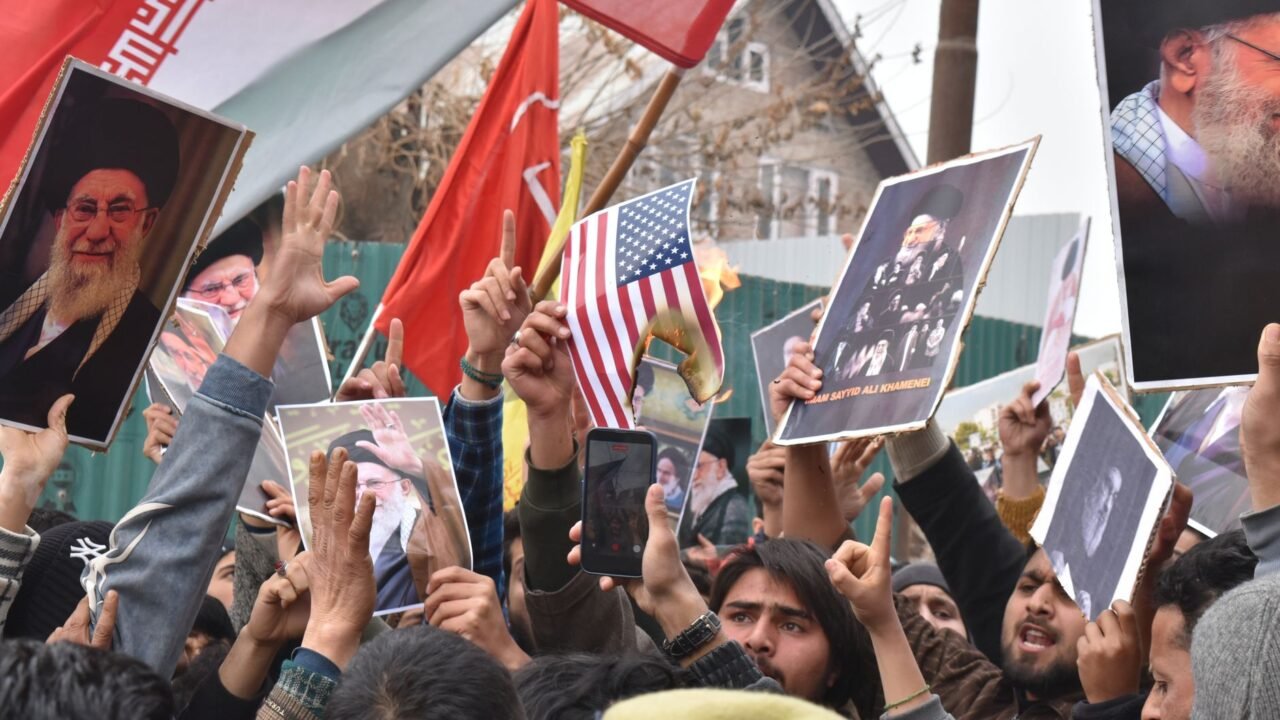
The United States government has received intelligence indicating that Iran is in the advanced stages of planning potential attacks against American individuals, prompting a series of precautionary measures across the region. U.S. officials, speaking on condition of anonymity due to the sensitive nature of the information, have conveyed that the threat is credible and requires immediate attention. The nature and specific targets of these potential attacks remain unclear, but the heightened alert underscores a significant escalation in regional tensions.
In response to the escalating threat, the U.S. Department of State has ordered non-emergency government employees and their families to depart from Saudi Arabia. This directive extends to diplomats and other federal personnel stationed in the kingdom. Furthermore, the United States is in the process of reducing staff at other diplomatic missions throughout the Middle East as a precautionary measure. Information reaching Tahir Rihat suggests that these withdrawals are intended to minimize the risk to American personnel in the face of a plausible and imminent threat.
The intelligence assessments suggest that Iran’s leadership is actively considering a range of retaliatory actions. These considerations are believed to be a response to various geopolitical factors, though the specific triggers for the current planning phase have not been detailed by U.S. authorities. The planning is described as being in its final stages, implying that a decision on whether to proceed with any attacks could be imminent. The U.S. government is reportedly working closely with allies in the region to share intelligence and coordinate responses to deter any hostile actions.
The heightened state of alert comes at a time of already considerable friction between the United States and Iran. Decades of diplomatic estrangement and a series of escalating incidents, including sanctions, alleged cyberattacks, and proxy conflicts, have created a volatile environment. The current intelligence suggests that Iran may be contemplating a direct or indirect assault on American interests or citizens, a move that would undoubtedly lead to a severe international crisis. The U.S. has not publicly disclosed the specific intelligence that led to these warnings, citing national security concerns.
The withdrawal of personnel from Saudi Arabia is a significant step, reflecting the seriousness with which the U.S. government is treating the threat. Saudi Arabia, a key U.S. ally in the Middle East, hosts a substantial American diplomatic presence. The drawdown of staff at other missions indicates a broader concern for American citizens and assets across the region. Officials are emphasizing that these actions are defensive and aimed at ensuring the safety of U.S. personnel while maintaining diplomatic functions where possible.
The international community is closely monitoring the situation. Regional powers are reportedly engaged in discussions with U.S. counterparts to understand the scope of the threat and to prevent any miscalculations that could lead to wider conflict. The potential for Iranian retaliation has been a persistent concern since the U.S. withdrawal from the Iran nuclear deal and the reimposition of stringent sanctions. However, the current intelligence points to a more immediate and specific planning phase for attacks targeting Americans.
The U.S. military has also reportedly increased its readiness in the region, although specific deployments or changes in posture have not been officially confirmed. The Pentagon has consistently maintained a strong military presence in the Middle East to deter aggression and respond to threats. The current intelligence may prompt adjustments to force protection measures and operational readiness. The focus remains on preventing any attacks from occurring and ensuring that any hostile actions are met with a swift and decisive response.
The warnings issued by U.S. officials serve as a stark reminder of the ongoing security challenges in the Middle East. The complex web of alliances, rivalries, and historical grievances makes the region a perpetual flashpoint. The potential for Iran to act on its perceived grievances through direct or indirect means remains a significant concern for U.S. foreign policy and national security planners. The coming days are expected to be critical as the U.S. and its allies work to de-escalate the situation and deter any planned attacks.
The U.S. government is urging American citizens traveling or residing in the Middle East to remain vigilant and to follow any security advisories issued by U.S. embassies and consulates. The State Department has reiterated its commitment to the safety of its citizens abroad and is working to ensure that all necessary precautions are in place. The intelligence community continues to monitor the situation closely, with efforts focused on disrupting any plots and holding accountable those responsible for planning or executing attacks.
The implications of any Iranian attack on Americans could be far-reaching, potentially leading to a significant diplomatic crisis and a further deterioration of relations between Iran and the international community. The U.S. has consistently warned Iran against pursuing actions that could destabilize the region or threaten international peace and security. The current intelligence suggests that Iran may be on the verge of crossing a critical threshold, prompting a robust response from the United States and its allies.

Tahir Rihat (also known as Tahir Bilal) is an independent journalist, activist, and digital media professional from the Chenab Valley of Jammu and Kashmir, India. He is best known for his work as the Online Editor at The Chenab Times.





Leave a Reply