
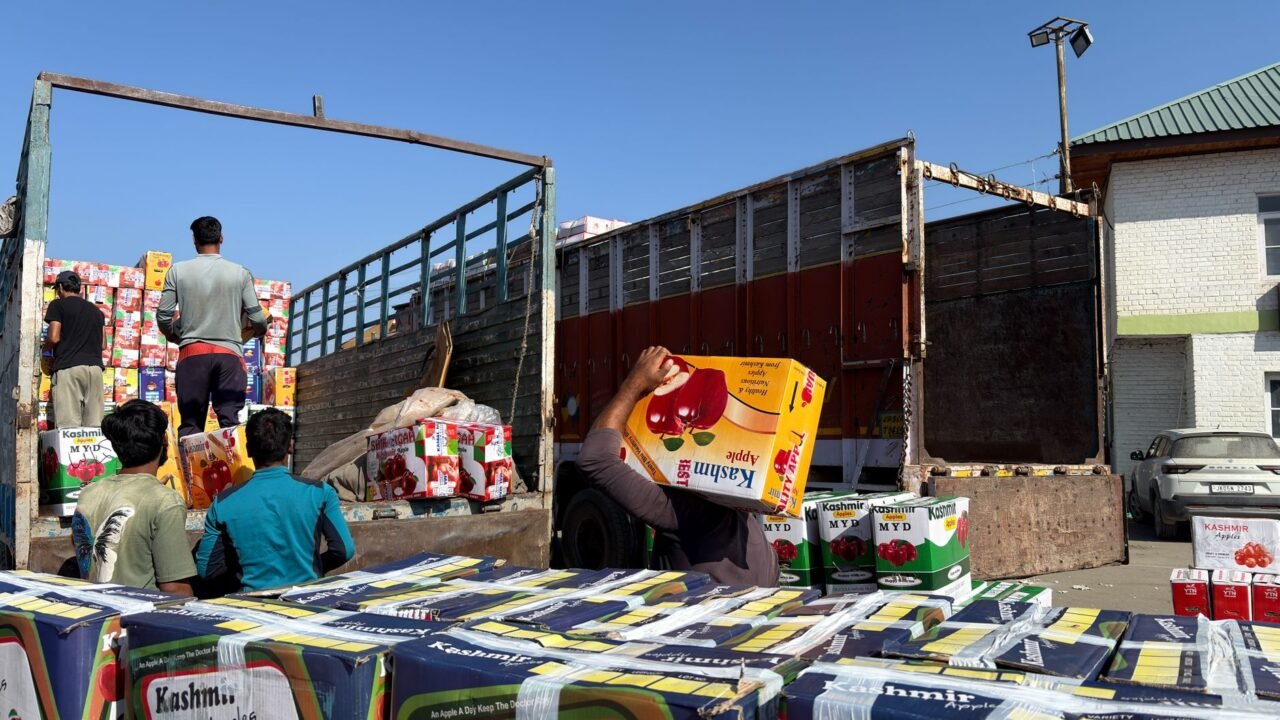
A comprehensive audit report by the Comptroller and Auditor General (CAG) has shed light on the precarious financial health of public sector enterprises (PSEs) in Jammu and Kashmir, revealing that a significant majority are either incurring losses or have become inactive. As of March 31, 2023, out of 42 PSEs under the audit jurisdiction, a concerning 26 reported either losses or were found to be inactive. Specifically, six enterprises were categorized as inactive, with four of these undergoing liquidation, representing a government and public investment of Rs 58.40 crore. Furthermore, 20 PSEs reported financial losses, and a substantial 14 had their net worth entirely depleted by accumulated losses.
Information reaching Tahir Rihat suggests that the CAG’s Composite Audit Report for the period ending March 2023, which was recently presented to the J&K assembly, detailed the composition of these 42 PSEs, comprising 39 government companies, two statutory corporations, and one other government-controlled company. The report strongly recommended that the UT government expedite decisions to wind up inactive PSEs, citing their lack of contribution to economic growth. Despite an increase in the overall turnover of J&K PSEs from Rs 10,590.68 crore in 2020-21 to Rs 12,084.74 crore in 2022-23, their contribution to the Gross State Domestic Product (GSDP) saw a decline, falling from 6.32 per cent to 5.30 per cent during the same timeframe. The Jammu and Kashmir Bank Ltd emerged as the largest contributor to the PSE turnover in 2022-23, generating Rs 9,355.11 crore, followed by the Jammu and Kashmir Power Development Corporation Ltd with Rs 1,037.85 crore, and the Jammu and Kashmir Small Scale Industries Development Corporation Ltd at Rs 629.36 crore.
The total investment across these 42 PSEs amounted to Rs 38,516.67 crore, with the power sector accounting for a dominant Rs 29,879.63 crore, or 77.58 per cent of the total. The J&K government’s direct investment stood at Rs 5,536.96 crore, encompassing Rs 3,703.02 crore in equity and Rs 1,833.94 crore in long-term loans, with a significant portion, Rs 2,593.54 crore (46.84 per cent), channeled into power sector PSEs. In the fiscal year 2022-23, the UT government provided budgetary support totaling Rs 2,169.73 crore to PSEs, which included Rs 151.20 crore in equity capital, Rs 23.05 crore in loans, and Rs 1,995.48 crore in grants and subsidies. A particularly alarming trend highlighted by the CAG was the sharp escalation in outstanding guarantee commitments, which surged to Rs 25,086.73 crore by the end of 2022-23, a substantial increase from Rs 12,522.72 crore in the preceding year. Major components of these guarantee commitments included Rs 21,613.62 crore for the Jammu and Kashmir Power Corporation Ltd, Rs 2,297.90 crore for the Jammu and Kashmir Infrastructure Development Finance Corporation, and Rs 899.99 crore for the Jammu and Kashmir Power Development Corporation Ltd.
Further discrepancies were identified by the CAG concerning the reconciliation of financial accounts. As of March 31, 2023, a significant difference of Rs 1,104.74 crore was noted in outstanding loans between the Finance Accounts and the records maintained by the PSEs, with Finance Accounts showing Rs 891.74 crore against Rs 1,996.48 crore in PSE records. The most substantial variances were reported by the Jammu and Kashmir Power Development Corporation (Rs 646.85 crore), Jammu and Kashmir Minerals Limited (Rs 167.92 crore), and Jammu and Kashmir Road Transport Corporation (Rs 302.09 crore). The audit report recommended that the UT government and the concerned PSEs undertake a time-bound reconciliation of these financial discrepancies. The report also indicated a considerable rise in long-term loans for PSEs, escalating from Rs 12,290.18 crore in 2020-21 to Rs 30,709.73 crore in 2022-23, primarily driven by increased borrowings from the Jammu and Kashmir Power Corporation Ltd and other entities within the power sector. As of March 31, 2023, outstanding interest on long-term loans provided by the J&K government to nine PSEs amounted to Rs 3,126.84 crore, with a significant portion, Rs 2,742.79 crore, representing interest overdue for more than three years.
On the profitability front, the CAG report indicated that only 11 PSEs managed to report profits in their latest available financial statements, with an aggregate profit of Rs 1,286.79 crore recorded for 2022-23, an increase from Rs 566.10 crore in the previous fiscal year. The Jammu and Kashmir Bank was the primary driver of this profit, contributing Rs 1,197.38 crore, which constituted 93.05 per cent of the total reported profit. However, a critical observation by the audit was that only three of these 11 profit-making PSEs had updated accounts for 2022-23, while the remaining eight presented financial statements from earlier years, some dating back as far as 2013-14, 2015-16, and 2016-17, raising concerns about the timeliness and accuracy of financial reporting. Conversely, 20 PSEs reported losses totaling Rs 252.53 crore in their latest finalized accounts for 2022-23, an increase from Rs 186.28 crore in 2021-22. The Jammu and Kashmir State Road Transport Corporation incurred the highest loss, amounting to Rs 117.62 crore, followed by J&K Cements Ltd with a loss of Rs 25.46 crore, J&K State Industrial Development Corporation at Rs 20.54 crore, and J&K Minerals Ltd at Rs 18.08 crore. The CAG further highlighted that 19 PSEs had accumulated losses aggregating to Rs 4,241.34 crore as of March 31, 2023. The net worth of 14 of these enterprises had been completely eroded, resulting in a combined negative net worth of Rs 3,699.38 crore against an initial equity investment of Rs 537.12 crore. These 14 PSEs collectively registered an income of Rs 728.19 crore against expenditures of Rs 976.93 crore, leading to a deficit of Rs 248.74 crore.

Tahir Rihat (also known as Tahir Bilal) is an independent journalist, activist, and digital media professional from the Chenab Valley of Jammu and Kashmir, India. He is best known for his work as the Online Editor at The Chenab Times.

Leave a Reply