
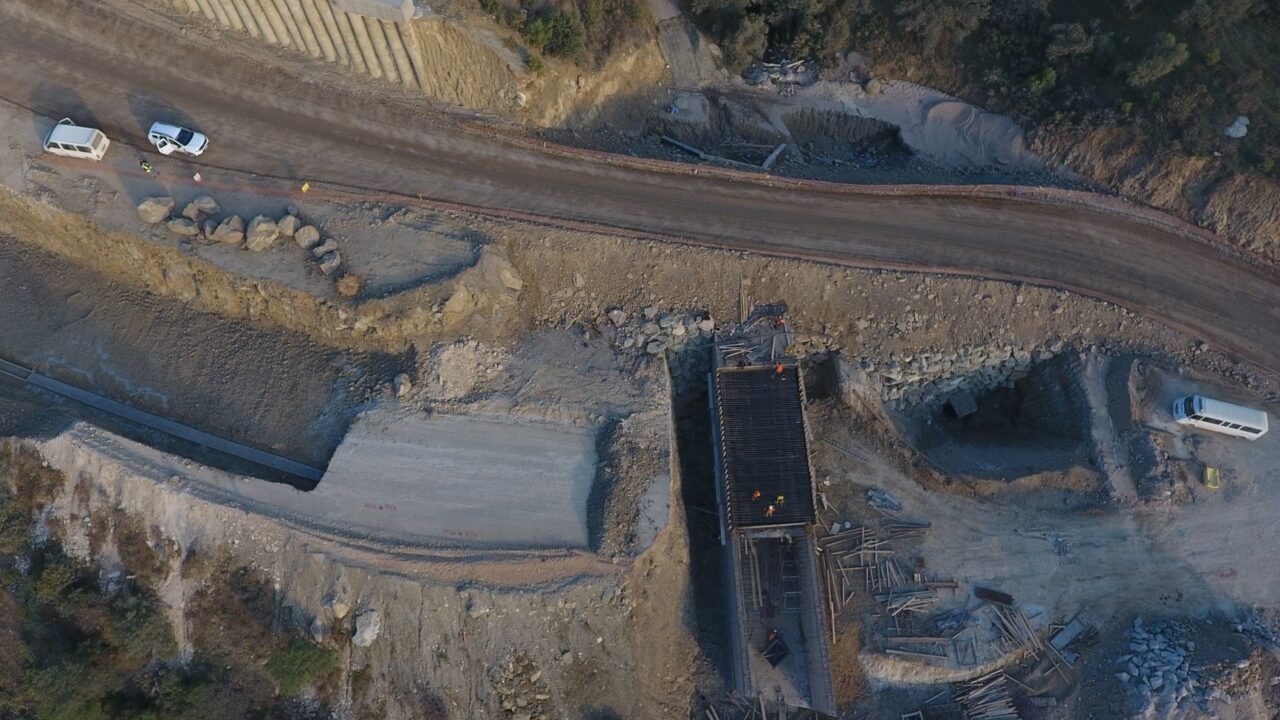
A tragic landslide incident during road construction in Jammu and Kashmir‘s Poonch district on Monday resulted in the death of one labourer and injuries to four others. The incident occurred at approximately 11:50 am near the Angan Pathri area, a hilly region within Sawajian tehsil. The labourers were engaged in the construction of the Poonch-Gulmarg road, a project overseen by the General Reserve Engineer Force (GREF), an organization that operates under the umbrella of the Border Roads Organisation (BRO).
The deceased has been identified as Mohd Bashir, a 45-year-old resident of Danna Gagrian village. The injured workers were promptly transported to a nearby medical facility to receive necessary treatment for their injuries. Officials confirmed the details of the incident, highlighting the perilous nature of road construction in challenging terrains, particularly in the mountainous regions of Jammu and Kashmir. The BRO is known for undertaking critical infrastructure projects in border areas, often in difficult geographical conditions, which can expose workers to significant risks.
Information reaching Tahir Rihat suggests that the landslide was sudden and unexpected, catching the workers off guard while they were engaged in their duties. The under-construction Poonch-Gulmarg road is a vital link intended to improve connectivity in the region. Such projects, while crucial for development and security, are inherently prone to natural hazards like landslides, especially during periods of inclement weather or seismic activity. The GREF, as part of the BRO, has a mandate to build and maintain roads in strategically important and often remote areas, contributing to national security and economic development. However, the safety of the workforce remains a paramount concern in these operations.
The incident underscores the inherent dangers faced by construction workers in challenging environments. The mountainous terrain of Poonch district, like many parts of Jammu and Kashmir, is susceptible to landslides, particularly during the monsoon season or periods of heavy rainfall. The BRO has been actively involved in numerous road construction and maintenance projects across the Union Territory, aiming to enhance connectivity and facilitate the movement of troops and civilians. These projects often involve working in close proximity to steep slopes and unstable geological formations, necessitating stringent safety protocols.
The immediate aftermath of the landslide saw rescue efforts being mobilized to assist the affected labourers. Local authorities and BRO personnel were reportedly on the scene to provide aid and ensure the safe evacuation of the injured. The injured labourers are currently receiving medical attention, and their condition is being closely monitored. The loss of life in such incidents serves as a stark reminder of the risks associated with large-scale infrastructure development in geologically sensitive areas. The investigation into the specific cause of the landslide is expected to be conducted to ascertain if any specific factors contributed to the event, beyond the general risks associated with the terrain.
The Poonch-Gulmarg road project is part of a broader initiative to improve road networks in the Union Territory, which is crucial for both economic growth and national security. The BRO has a long history of executing challenging engineering projects in India’s border regions, often in collaboration with various engineering forces. The organization’s work is vital for maintaining connectivity, enabling trade, and ensuring the swift deployment of security forces. However, the safety of the personnel involved in these high-risk operations remains a critical aspect that requires continuous attention and improvement in safety measures.
The terrain in the Angan Pathri area, where the incident occurred, is known for its steep gradients and susceptibility to geological instability. Road construction in such areas often involves extensive excavation and earthwork, which can alter the natural stability of slopes. Experts in geotechnical engineering often emphasize the importance of thorough geological surveys and the implementation of robust slope stabilization techniques to mitigate the risks of landslides. The GREF, in its operational capacity, is expected to adhere to the highest safety standards, particularly when working in areas prone to natural disasters. The current incident, however, points to a potential lapse or an unforeseen event that led to this tragic outcome.
The economic and social impact of such infrastructure projects in Jammu and Kashmir cannot be overstated. Improved road connectivity can unlock economic potential, facilitate tourism, and enhance the quality of life for residents in remote areas. However, the human cost associated with these developments, as tragically demonstrated by this landslide, necessitates a renewed focus on worker safety and risk management. The BRO and its associated forces are tasked with balancing the imperative of development with the responsibility of ensuring the well-being of their workforce. The ongoing construction of the Poonch-Gulmarg road is a significant undertaking, and the successful and safe completion of such projects depends on meticulous planning, execution, and a proactive approach to hazard mitigation.
The incident is likely to prompt a review of safety protocols and risk assessment procedures for road construction projects in similar terrains across Jammu and Kashmir. The General Reserve Engineer Force, as a key player in border infrastructure development, will undoubtedly be examining the circumstances that led to this fatality to prevent future occurrences. The well-being of the labourers, who are instrumental in building the nation’s infrastructure, must remain at the forefront of all operational considerations. The authorities are expected to provide all necessary support to the family of the deceased and ensure that the injured receive comprehensive medical care.
The broader implications of this incident extend to the ongoing development agenda in the region. While the government is committed to accelerating infrastructure development, ensuring the safety of workers engaged in these projects is a non-negotiable aspect. The challenges posed by the terrain, coupled with the potential for natural calamities, require a comprehensive and integrated approach to safety management. The BRO’s role in connecting remote areas and strengthening national security is indispensable, but it must be performed without compromising the lives and safety of its personnel. The investigation into this landslide will hopefully provide insights that can lead to enhanced safety measures for all future construction endeavors in the region.

Tahir Rihat (also known as Tahir Bilal) is an independent journalist, activist, and digital media professional from the Chenab Valley of Jammu and Kashmir, India. He is best known for his work as the Online Editor at The Chenab Times.



Leave a Reply