
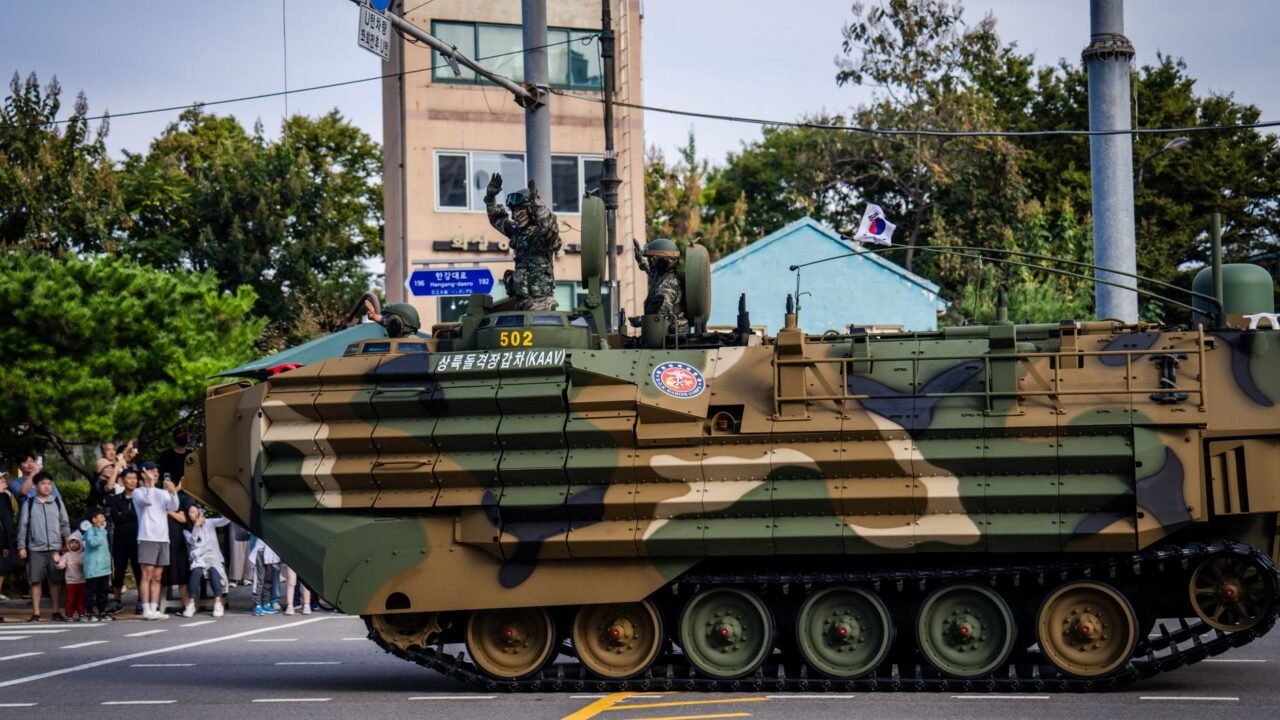
The Korean Peninsula is witnessing a significant escalation in military capabilities, with both North and South Korea bolstering their arsenals. This heightened state of readiness has been starkly illuminated by recent events, exposing the increasingly lethal weaponry being amassed along the world’s most heavily fortified border.
Information reaching Tahir Rihat suggests that North Korea’s recent actions, emboldened by its deepening alliance with Russia, have contributed to this intensifying arms race. The nature and scale of these developments point towards a more volatile security environment, raising concerns among regional and international observers. The strategic implications of this growing military buildup are multifaceted, potentially altering the balance of power and increasing the risk of miscalculation.
The exchange of fire and heightened rhetoric between the two Koreas this month served as a potent reminder of the fragile peace that has long characterized the peninsula. Analysts suggest that North Korea’s perceived security guarantees from its Russian partners may be fueling a more assertive posture, leading to a more aggressive development and display of its military assets. This includes advancements in missile technology and the proliferation of drone capabilities, which are becoming increasingly sophisticated and lethal.
South Korea, in response to these perceived threats, has been actively modernizing its own defense systems and expanding its military exercises. The alliance between Seoul and Washington remains a cornerstone of South Korea’s security strategy, and joint drills have become more frequent and complex. The objective is to maintain a credible deterrent against any potential aggression from the North. The technological advancements on both sides are not merely about quantity but also about the quality and sophistication of the weapons systems being deployed.
The international community is closely monitoring the situation, with the United Nations Security Council having previously imposed strict sanctions on North Korea due to its nuclear and ballistic missile programs. However, the evolving geopolitical landscape, particularly the strengthening ties between Pyongyang and Moscow, appears to be creating new challenges for the enforcement of these sanctions and for diplomatic efforts aimed at denuclearization. The flow of military technology and resources between Russia and North Korea, if it continues, could undermine global non-proliferation efforts.
The development of advanced drone technology by North Korea is a particular area of concern. These unmanned aerial vehicles can be used for a variety of purposes, including reconnaissance, electronic warfare, and potentially as strike platforms. Their increasing sophistication makes them a more potent threat, capable of evading existing air defense systems. The proliferation of such technology could also fall into the hands of non-state actors, further complicating regional security.
Furthermore, North Korea’s continued development of its ballistic missile program, including intercontinental ballistic missiles (ICBMs) and intermediate-range ballistic missiles (IRBMs), remains a significant threat. These weapons systems have the potential to reach targets far beyond the Korean Peninsula, impacting regional stability and posing a direct challenge to the security interests of countries like Japan and the United States. The successful testing of these missiles, even if they are not yet fully operational, demonstrates a persistent commitment to expanding its offensive capabilities.
South Korea’s defense strategy is increasingly focused on a multi-layered approach, combining advanced missile defense systems, robust conventional forces, and strong alliances. The emphasis is on deterrence through a combination of offensive and defensive capabilities. The country is also investing heavily in research and development to stay ahead of evolving threats. This includes developing its own indigenous missile defense capabilities and enhancing its intelligence, surveillance, and reconnaissance (ISR) assets to better monitor North Korean activities.
The economic implications of this arms race are also significant. Both Koreas are diverting substantial resources towards their military buildup, which could otherwise be used for economic development and improving the living standards of their citizens. For North Korea, the continued focus on military spending, especially in the face of international sanctions, highlights its strategic priorities. For South Korea, while its economy is far more robust, the ongoing security challenges necessitate significant defense expenditures.
The role of Russia in this escalating situation cannot be overstated. The strengthening of ties between Moscow and Pyongyang, particularly in the military domain, is seen by many as a direct challenge to the international order and a destabilizing factor in Northeast Asia. The extent of this cooperation, including the potential transfer of advanced military technology, remains a subject of intense scrutiny by intelligence agencies worldwide. The implications for global security are far-reaching, as such alliances can embolden states to pursue more aggressive policies without fear of significant repercussions.
The United States has consistently called for the complete, verifiable, and irreversible denuclearization of North Korea. However, the current trajectory suggests that this goal is becoming increasingly distant. The deepening military cooperation with Russia provides North Korea with a degree of diplomatic and military support that it has not had in recent years, potentially reducing its incentive to negotiate a denuclearization agreement. This dynamic complicates the diplomatic efforts of the international community and raises the specter of a prolonged period of heightened tension and potential conflict on the Korean Peninsula.
The international community faces a complex challenge in managing the escalating tensions. Diplomatic channels remain open, but the effectiveness of these efforts is contingent on the willingness of all parties to engage in good-faith negotiations. The current situation underscores the need for a comprehensive strategy that addresses both the immediate security concerns and the long-term goal of achieving lasting peace and stability on the Korean Peninsula. The potential for miscalculation or accidental escalation remains a constant threat, making de-escalation and dialogue paramount.

Tahir Rihat (also known as Tahir Bilal) is an independent journalist, activist, and digital media professional from the Chenab Valley of Jammu and Kashmir, India. He is best known for his work as the Online Editor at The Chenab Times.



Leave a Reply