
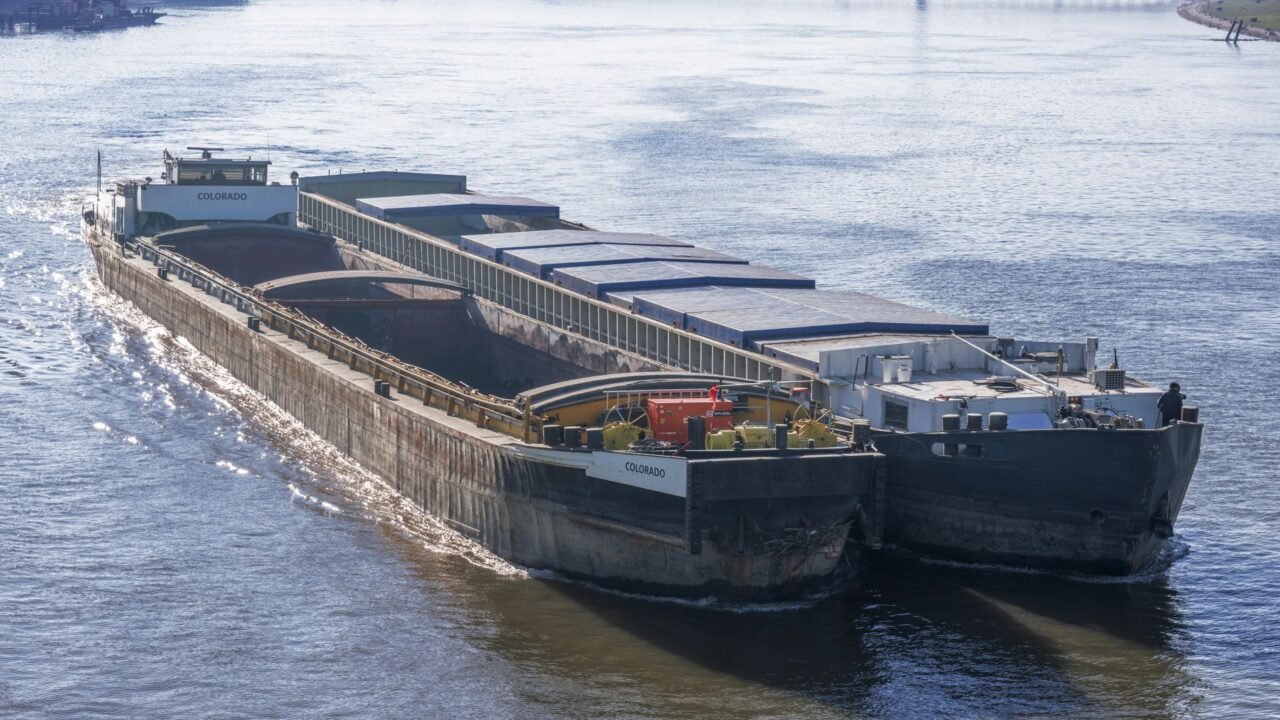
A severe lack of rainfall and the consequent shrinking of major rivers worldwide are creating significant bottlenecks in global trade, leading to increased shipping costs and delays. This environmental crisis is impacting key waterways that are crucial arteries for the movement of goods across continents.
The diminishing water levels in rivers like the Rhine in Europe and the Yangtze in China, alongside low rainfall in other critical regions, are forcing cargo ships to carry lighter loads or halt operations altogether. This situation, as reported by The New York Times, is a stark illustration of how climate change is directly disrupting established economic systems. Information reaching Tahir Rihat suggests that the ripple effects are being felt across various industries, from manufacturing to retail, as the cost of transporting raw materials and finished products escalates.
In Europe, the Rhine River, a vital transport route for commodities such as coal, chemicals, and grain, has experienced critically low water levels for extended periods. Barges are unable to navigate certain sections fully laden, necessitating multiple trips or the use of smaller vessels, thereby increasing operational expenses. This has led to a slowdown in the delivery of essential goods to industrial hubs and a surge in prices for consumers. The economic implications are substantial, with businesses facing higher input costs and potential disruptions to their supply chains. The situation is exacerbated by the fact that many of these waterways are the most cost-effective and environmentally friendly modes of transport for bulk goods.
Similarly, the Yangtze River in China, a major conduit for trade and industry, has also seen reduced navigability due to prolonged drought conditions. This impacts the movement of goods to and from major manufacturing centers and ports, affecting both domestic and international trade flows. The reliance on these river systems for transporting vast quantities of goods means that any disruption has far-reaching consequences. The New York Times report highlights that this is not an isolated incident but part of a growing global trend where climate-induced water scarcity is posing a direct threat to economic stability and global commerce.
The broader implications extend beyond immediate shipping costs. The unpredictability of water levels due to changing weather patterns makes long-term logistical planning extremely challenging for businesses. Companies are being forced to re-evaluate their reliance on riverine transport and explore alternative, often more expensive and less sustainable, methods. This could include increased use of rail or road transport, which carry their own set of environmental and economic costs, or even a shift towards air freight for time-sensitive goods, which is significantly more carbon-intensive and costly.
Experts cited in the New York Times report warn that this trend is likely to persist and potentially worsen as climate change continues to alter global precipitation patterns. The interconnectedness of the global economy means that localized environmental issues can quickly escalate into international trade crises. The current situation underscores the urgent need for greater investment in climate adaptation strategies and the development of more resilient supply chains that are less vulnerable to environmental shocks. The long-term economic health of nations and the stability of global markets may depend on how effectively these challenges are addressed.
The current disruptions are forcing a re-evaluation of infrastructure and trade routes. For decades, rivers have been the backbone of many industrial economies, providing an efficient means of moving goods. However, the changing climate is revealing the vulnerabilities of this reliance. The economic impact is not confined to the shipping industry; it permeates through the entire value chain, affecting producers, distributors, and ultimately, consumers through higher prices and reduced availability of goods. The challenge lies in finding sustainable solutions that balance economic needs with environmental realities.
The shrinking of rivers is not merely an inconvenience; it represents a fundamental challenge to the existing global trade architecture. The economic consequences are already being felt in terms of increased operational costs, delayed deliveries, and a general rise in the price of goods. As The New York Times article points out, this situation is a wake-up call for governments and industries worldwide to invest in climate resilience and diversify transportation networks. The future of global commerce may hinge on the ability to adapt to a world where natural resources, like water, are increasingly scarce and unpredictable.
The interconnectedness of global supply chains means that a problem in one region’s waterways can have cascading effects worldwide. This is evident in the current scenario where reduced navigability of key rivers is contributing to a global increase in shipping costs. The economic fallout is multifaceted, impacting everything from the cost of energy to the price of everyday consumer goods. The situation demands a comprehensive approach that addresses both the immediate logistical challenges and the underlying environmental causes. The long-term sustainability of global trade is intrinsically linked to the health of the planet’s waterways.

Tahir Rihat (also known as Tahir Bilal) is an independent journalist, activist, and digital media professional from the Chenab Valley of Jammu and Kashmir, India. He is best known for his work as the Online Editor at The Chenab Times.


Leave a Reply