
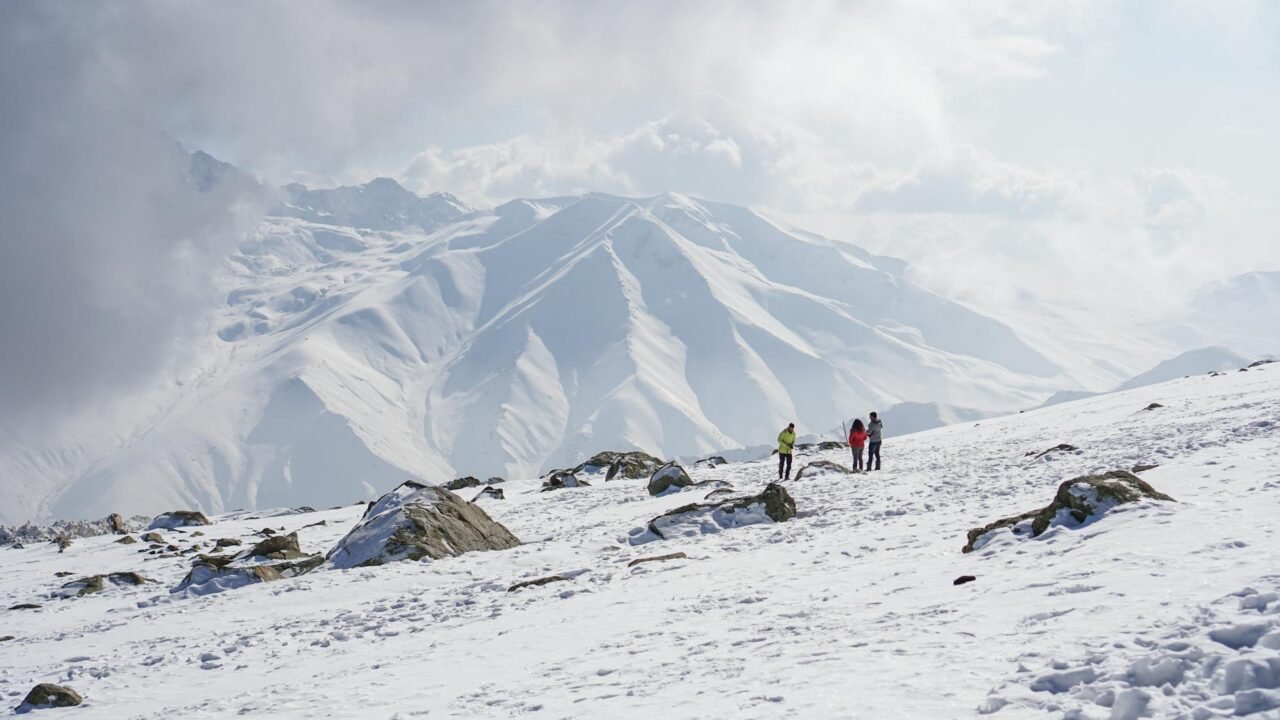
The higher elevations of Kashmir experienced fresh snowfall on Sunday, while the valley’s plains were subjected to rainfall, leading to a noticeable drop in temperatures across the region. Officials confirmed that the wintry conditions have begun to impact daily life and connectivity in several areas.
The meteorological department indicated that snow was observed in the Tulail area of the Gurez valley, situated within the Bandipora district. Significant snowfall was also reported on both sides of the Zojila pass, a crucial mountain pass in the Sonamarg area of Ganderbal district. Furthermore, the Mughal road, which serves as a vital link connecting the Shopian district to the Poonch-Rajouri region, also received snow. Information reaching TahirRihat.com suggests that this early winter precipitation has caused considerable disruption to normal life in these higher altitude zones.
In the lower-lying areas of the valley, the early hours of Sunday brought light to moderate rainfall. A spokesperson for the MET Department stated that an improvement in weather conditions was anticipated later in the day, though the immediate impact of the precipitation was a significant cooling effect. The combination of snow in the mountains and rain in the plains has resulted in a decrease of a couple of degrees Celsius in the daytime temperatures, according to official reports. This sudden dip in temperature is characteristic of the transition into winter in the Himalayan region, often bringing with it unpredictable weather patterns.
The immediate and most tangible consequence of this wintry weather has been the closure of several key transportation arteries. The Mughal road, a historically significant route, has been shut down due to the accumulation of snow, severing direct road access between Shopian and the districts of Poonch and Rajouri. Similarly, the Srinagar-Kargil road, a critical link for both civilian and military movement in the Ladakh region, has also been closed. The Bandipora-Gurez road, which connects the Bandipora district to the remote Gurez valley, is another major route that has been rendered impassable due to the snowfall. These closures highlight the vulnerability of the region’s infrastructure to extreme weather events and the challenges faced in maintaining connectivity during the winter months. The authorities are reportedly monitoring the situation closely and will reopen the roads once conditions are deemed safe for travel, a process that often depends on the rate of snow clearance and the stability of the snowpack.
The impact of these weather changes extends beyond mere inconvenience. For residents in the affected areas, particularly those in higher reaches, the closure of roads can lead to shortages of essential supplies, including food, fuel, and medicines. The economic activities in these regions, which often rely on road transport for the movement of goods and produce, are also likely to be affected. The early onset of snow and rain also signals the approaching winter season, prompting preparations for colder temperatures and potential power outages. Local administrations are expected to be on alert to manage any exigencies that may arise from the adverse weather conditions. The MET Department’s forecast for the coming days will be crucial in determining the duration of these disruptions and the extent of the impact on the region’s connectivity and daily life. The closure of these vital roads underscores the perennial challenges faced by the Jammu and Kashmir administration in ensuring seamless transportation networks, especially during the harsh winter months. Efforts to clear the snow and make the roads motorable are typically undertaken with urgency, but the volume of snowfall and the prevailing weather conditions often dictate the timeline for restoration of normal traffic flow. The Mughal road, in particular, is known for its susceptibility to closure during snowfall, impacting trade and travel between the Kashmir Valley and the Pir Panjal region. The Srinagar-Kargil road, a lifeline for many, also faces similar challenges, with frequent closures during heavy snowfalls, necessitating alternative arrangements for essential supplies and passenger movement. The Bandipora-Gurez road, leading to a relatively isolated valley, is often the first to be cut off, requiring extensive efforts for its clearance and maintenance. The current situation serves as a stark reminder of the region’s dependence on its road network and the critical need for robust infrastructure and preparedness measures to mitigate the effects of severe weather. The precipitation observed on Sunday, while a natural phenomenon, has brought into sharp focus the logistical and infrastructural challenges that persist in the region, particularly in its more remote and higher-altitude areas. The coming days will likely see continued efforts by the concerned departments to restore connectivity, but the weather’s unpredictability remains a significant factor. The impact on temperature is also a key concern, as it affects not only daily life but also agricultural activities and the overall ecosystem of the region. The early chill suggests a potentially harsh winter ahead, prompting residents to take necessary precautions and authorities to review their winter preparedness plans. The MET Department’s ongoing monitoring and dissemination of weather information will be vital for all stakeholders involved in managing the consequences of these weather events.

Tahir Rihat (also known as Tahir Bilal) is an independent journalist, activist, and digital media professional from the Chenab Valley of Jammu and Kashmir, India. He is best known for his work as the Online Editor at The Chenab Times.



Leave a Reply