
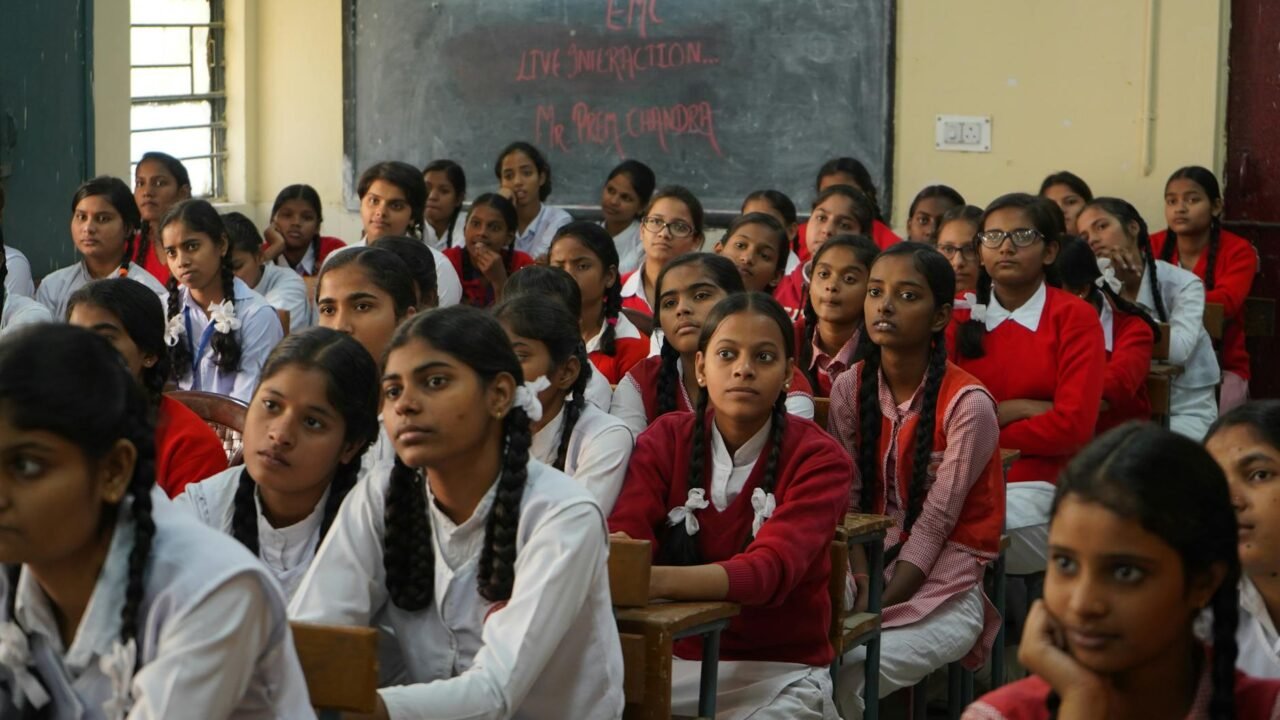
India‘s educational framework is poised for a significant overhaul, with the Central Board of Secondary Education (CBSE) introducing a comprehensive roadmap designed to steer secondary education away from rote learning towards a more holistic and globally competitive model. This transformative initiative, set to be implemented in phases from the 2026-27 academic session through to 2030-31, is deeply rooted in the principles of the National Education Policy (NEP) 2020 and the National Curriculum Framework for School Education (NCF-SE) 2023. The overarching goal is to cultivate students who are not only academically proficient but also possess critical thinking skills, creativity, and a compassionate outlook, preparing them effectively for the demands of a globalized economy. Information reaching TahirRihat.com indicates that this strategic shift aims to foster well-rounded individuals equipped for the challenges and opportunities of the 21st century.
At the core of this educational restructuring is a profound emphasis on holistic development, moving beyond traditional academic silos. The curriculum has been thoughtfully reorganized to encompass a broader spectrum of learning domains. These now include languages, mathematics, science, social science, art education, physical education, vocational education, and interdisciplinary studies. This reorganisation is not merely a superficial adjustment; it signifies a deeper commitment to nurturing resilience, instilling values, and ensuring learners are prepared for real-world applications. For school administrators, this necessitates a critical re-evaluation and redesign of timetables, school culture, and learning environments to foster a more inclusive and expansive educational experience. Teachers, in turn, are called upon to forge interdisciplinary connections, transitioning from teaching isolated subjects to facilitating integrated and meaningful learning experiences that resonate with students’ lives and future aspirations.
A cornerstone of this reform is the implementation of a sophisticated, tiered approach to language acquisition, designed to enhance multilingualism and cultural understanding. This framework categorizes language proficiency into three levels: R1, R2, and R3. The R3 requirement, specifically for the third language, is envisioned not just as an academic hurdle but as a vital conduit to cultural rootedness and a deeper appreciation of India’s diverse linguistic heritage. The phased introduction begins in the 2026-27 session for Class VI, with the R3 requirement scaling annually. It is slated to become a mandatory component for Class IX by the 2029-30 academic year and will be a prerequisite for the Class X Board Examination by 2030-31. To ensure both breadth and depth in language learning, the framework mandates that students select three different languages, with the crucial stipulation that at least two of these must be indigenous to India. This policy aims to ensure that every graduating student emerges as a multilingual thinker, capable of navigating the rich tapestry of Indian languages while maintaining high-level proficiency in their primary mediums of instruction, thereby fostering a more connected and culturally aware citizenry.
In a move set to benefit learners with diverse aptitudes and career aspirations, CBSE is introducing a dual-level examination structure in Mathematics and Science, referred to as STEM 2.0. This reform replaces the previous ‘Basic’ and ‘Standard’ labels with a more nuanced ‘Standard’ and ‘Advanced’ framework. All students will continue to engage with a common prescribed syllabus and will sit for a Common Standard Examination, comprising 80 marks to be completed within three hours. However, for students demonstrating a high aptitude or a keen interest in technical fields, an optional Advanced level paper will be available. This supplementary examination, designed to be completed in one hour and carrying 25 marks, will exclusively feature Higher-Order Thinking Skills (HOTS) questions. Importantly, achieving a score of 50% or more in this Advanced paper will be recognized on the marksheet as ‘successfully cleared.’ However, these marks will not be factored into the student’s overall aggregate score. This innovative approach is intended to provide an avenue for deeper exploration and intellectual challenge without imposing additional pressure or negatively impacting a student’s core academic standing, thereby respecting and accommodating diverse learning needs while simultaneously encouraging excellence.
The integration of Computational Thinking (CT) and Artificial Intelligence (AI) as foundational skills marks another significant stride in preparing students for a technologically driven future. Recognizing the increasing importance of logical reasoning and digital literacy, the CBSE is embedding these concepts into the curriculum from an early age. Starting in the 2026-27 academic session, schools will introduce CT and AI concepts to students in Classes III to VIII in an age-appropriate and developmentally sensitive manner. By the time students reach the secondary stage, with AI and CT emerging as formal subjects for Class IX in 2027-28 and Class X in 2028-29, they will have a solid grounding. The pedagogical approach for younger students will be deliberately low-tech and activity-driven, focusing on mastering the underlying algorithms and ethical considerations before engaging with complex coding. This ensures that students are not merely passive consumers of technology but are empowered to become creators and innovators, equipped with the fundamental understanding necessary to navigate and shape the digital landscape responsibly.
Perhaps the most profound transformation lies in the elevation of vocational education through the ‘Kaushal Bodh’ (Skill Awareness) framework. Vocational skills are no longer relegated to the periphery as optional electives; they are now being integrated as a compulsory subject for the Board Examination. The curriculum for Classes VI to VIII is structured around three broad categories of work: ‘Work with Life Forms,’ encompassing agriculture and environmental sustainability; ‘Work with Machines and Materials,’ covering engineering and textiles; and ‘Work with Human Services,’ which includes health, hospitality, and social services. By the 2027-28 academic session, Vocational Education is set to become a mandatory Board subject for Class X. This represents a significant shift in assessment philosophy, prioritizing the demonstration of competencies and the cultivation of work-related values over traditional theoretical memorization. The emphasis will be on practical application and the development of tangible skills, ensuring that students graduate with a broader skill set that enhances their employability and adaptability in a dynamic job market.

Tahir Rihat (also known as Tahir Bilal) is an independent journalist, activist, and digital media professional from the Chenab Valley of Jammu and Kashmir, India. He is best known for his work as the Online Editor at The Chenab Times.



Leave a Reply