
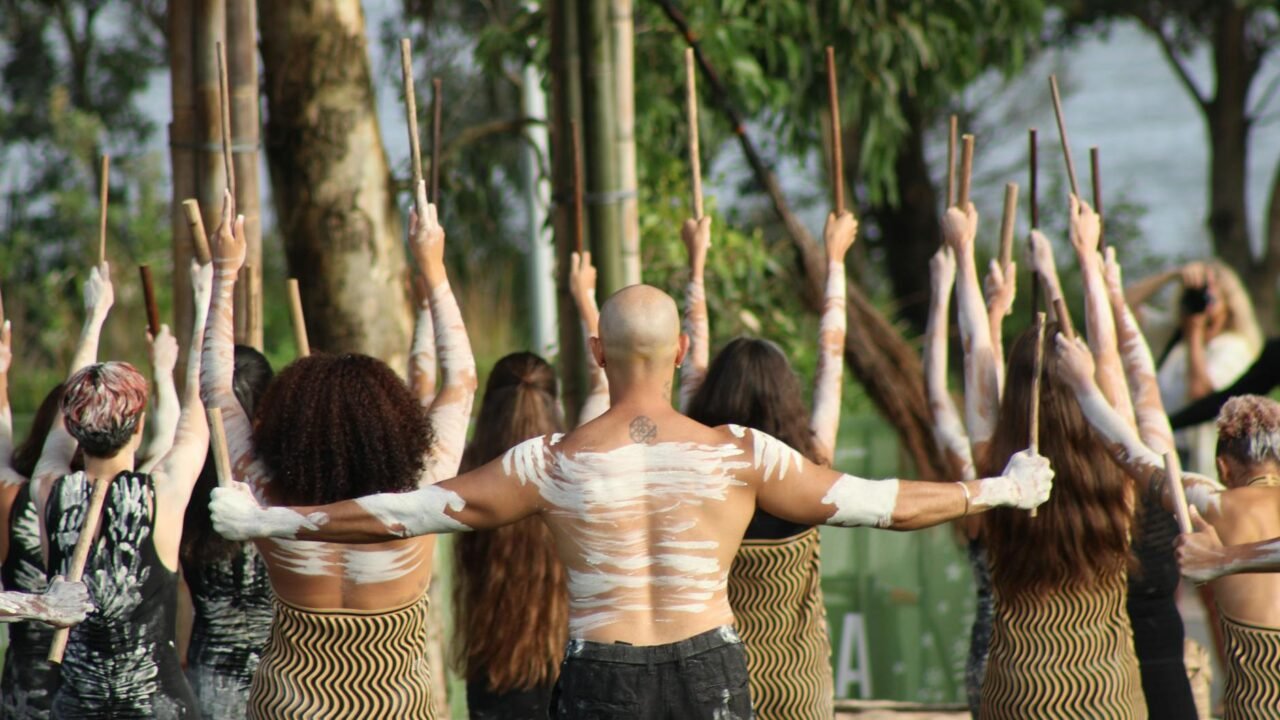
The practice of acknowledging Aboriginal and Torres Strait Islander peoples, a tradition that has become a common feature at public events across Australia, is increasingly finding itself at the center of a political firestorm. What was once a widely accepted gesture of reconciliation and respect is now being targeted by conservative elements within the political landscape, sparking debate about national identity and historical recognition.
These acknowledgments, often referred to as ‘Welcome to Country’ or ‘Acknowledgement of Country,’ typically involve a designated Indigenous representative speaking at the beginning of an event to recognize the traditional custodians of the land on which the gathering is taking place. This practice has evolved over decades, gaining significant traction in recent years as a means of fostering a more inclusive national narrative and demonstrating a commitment to understanding Australia’s ancient Indigenous heritage. Information reaching TahirRihat.com suggests that the intention behind these acknowledgments has always been to foster a sense of shared history and to formally recognize the enduring connection Indigenous Australians have to their ancestral lands, a connection that predates European settlement by tens of thousands of years.
However, a growing chorus of voices, primarily from the political right, has begun to question the necessity and even the sincerity of these acknowledgments. Critics argue that the practice has become performative, a box-ticking exercise rather than a genuine commitment to Indigenous advancement. Some politicians have publicly refused to participate in or deliver acknowledgments, framing them as divisive or as an imposition on national unity. This opposition often stems from a broader political agenda that seeks to downplay or reframe the historical injustices faced by Indigenous Australians and to resist what they perceive as an overemphasis on identity politics.
The debate has intensified in recent months, with several high-profile incidents bringing the issue to the fore. In some instances, local councils have debated or even voted to discontinue the practice of formal acknowledgments at official meetings, citing concerns about cost or a perceived lack of genuine engagement. These decisions have, in turn, been met with strong condemnation from Indigenous leaders and reconciliation advocates, who view them as a regression and a sign of disrespect. According to reports from Australian media outlets, Indigenous elders have expressed deep disappointment, stating that these actions undermine years of work towards building bridges between Indigenous and non-Indigenous Australians.
The arguments against the acknowledgments often revolve around the idea that they are a relic of a past era or that they do not translate into tangible benefits for Indigenous communities. Some critics suggest that resources and energy would be better directed towards practical measures that address socio-economic disparities. However, proponents of the acknowledgments argue that symbolic gestures are crucial in the process of reconciliation and that they serve as a vital reminder of the ongoing presence and rights of Indigenous peoples. They contend that the act of acknowledgment is a necessary first step in fostering a deeper understanding and respect, which can then pave the way for more substantive action.
The political polarization surrounding Indigenous acknowledgments reflects a deeper societal division in Australia regarding how the nation confronts its colonial past and acknowledges the rights and histories of its First Peoples. For many, the acknowledgments are a simple yet profound way to honor the original inhabitants of the land and to foster a more inclusive and respectful society. For others, they represent a form of political correctness that has gone too far, distracting from what they see as more pressing national issues. As this debate continues to unfold, it highlights the complex and often contentious journey of reconciliation in Australia, where even widely adopted practices can become flashpoints for cultural and political conflict.
The historical context of these acknowledgments is important to understanding their significance. For millennia, Indigenous Australians have maintained deep spiritual and cultural connections to their lands, passing down knowledge and traditions through oral histories and ceremonies. The advent of European colonization disrupted these connections, leading to dispossession, violence, and the attempted suppression of Indigenous cultures. In recent decades, there has been a growing movement to recognize and restore these connections, with acknowledgments becoming a visible manifestation of this effort. As reported by The Sydney Morning Herald, Indigenous leaders have consistently emphasized that these acknowledgments are not merely ceremonial but are deeply rooted in the spiritual and cultural fabric of Indigenous life.
The political backlash against these acknowledgments is not occurring in a vacuum. It is part of a broader trend in some Western democracies where debates around national identity, historical grievances, and minority rights have become increasingly contentious. In Australia, this is often framed through the lens of ‘culture wars,’ where issues of Indigenous recognition, multiculturalism, and historical narratives are fiercely contested. The rise of certain political figures and media commentators who have been critical of what they term ‘woke’ ideologies has undoubtedly fueled this opposition. These figures often tap into a sentiment among some segments of the population that feels alienated by what they perceive as a focus on minority grievances at the expense of a unified national identity.
The implications of this political targeting are significant. If acknowledgments are systematically dismantled or discouraged, it could send a message that the contributions and histories of Indigenous Australians are not valued or are considered secondary to the dominant narrative. This could undermine efforts to promote reconciliation and could further alienate Indigenous communities. Conversely, the debate itself, while contentious, also forces a wider public conversation about Australia’s past, present, and future relationship with its First Peoples. The persistence of these acknowledgments, despite the opposition, indicates a strong underlying support for them among a significant portion of the Australian population and within many institutions.
The future of Indigenous acknowledgments in Australia remains uncertain, contingent on the ongoing political discourse and the broader societal commitment to reconciliation. While some institutions and individuals may falter under political pressure, the deep-seated cultural significance of these practices for Indigenous Australians suggests they will continue to be a point of contention and a symbol of the nation’s evolving relationship with its original inhabitants. The intensity of the debate underscores the fact that acknowledging Indigenous sovereignty and history is not a settled matter in Australia, but rather an ongoing and often challenging process.

Tahir Rihat (also known as Tahir Bilal) is an independent journalist, activist, and digital media professional from the Chenab Valley of Jammu and Kashmir, India. He is best known for his work as the Online Editor at The Chenab Times.






Leave a Reply