
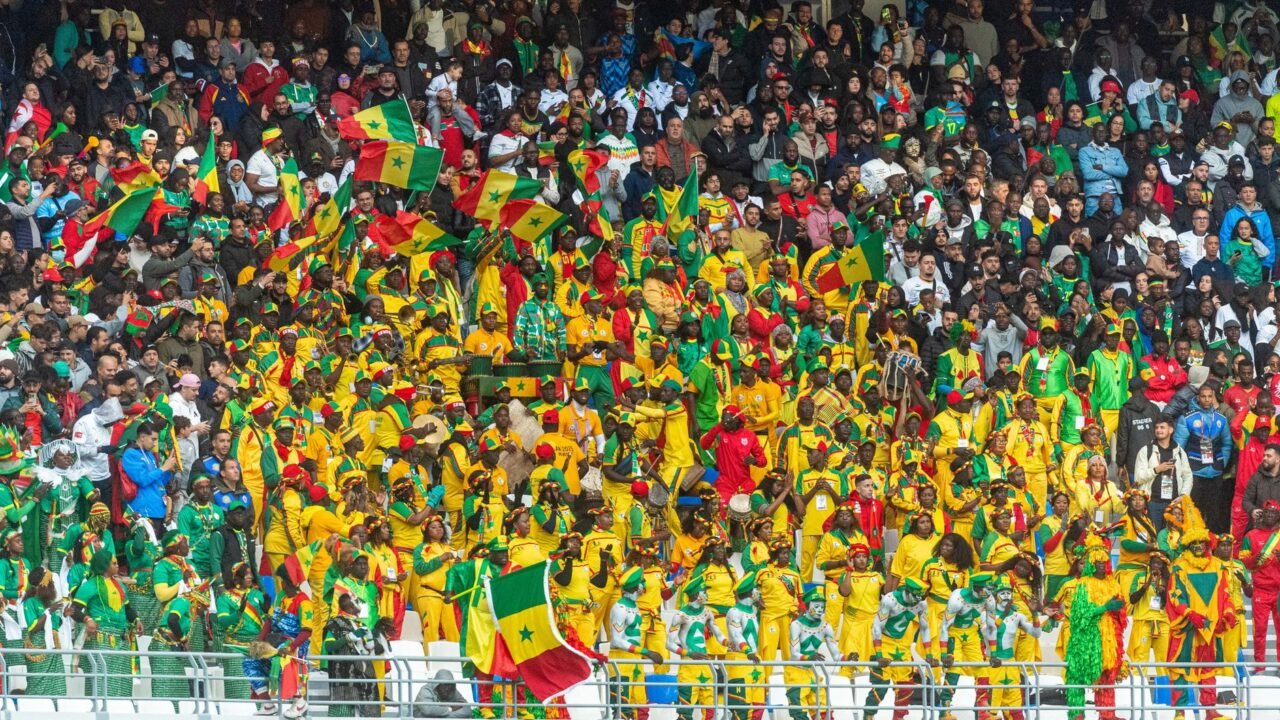
The recent encounter between France and Senegal on the global football stage has ignited discussions that extend far beyond the pitch, touching upon the intricate tapestry of colonial heritage and its enduring influence. While the match itself was a display of athletic prowess, many observers have interpreted the rivalry as a potent symbol of historical power dynamics between European nations and their former African colonies. This narrative, however, is complicated by a broader trend: the increasing presence and impact of African talent within European football itself.
Information reaching Tahir Rihat suggests that the perception of a colonial echo in the France-Senegal dynamic is not merely anecdotal but is rooted in a complex historical relationship. France, as a former colonial power in much of West Africa, including Senegal, carries a legacy that continues to resonate in various spheres, including cultural and, as some argue, sporting exchanges. The narrative posits that the dominance of European teams, particularly France, over African counterparts can be seen through this historical lens, where past power imbalances are, in a sense, replayed on the international sporting arena.
Yet, this interpretation is juxtaposed with a striking reality: the very European teams that now compete against African nations are increasingly populated by players of African descent. This phenomenon blurs the lines of national identity and highlights the globalized nature of modern football. Players born in or with roots in African countries often represent European nations, bringing with them a unique blend of skill, resilience, and tactical understanding honed by diverse footballing cultures. This infusion of talent has led to a situation where European national teams are, in many ways, more African than ever before, creating a fascinating paradox.
The source material points to this duality as a central theme in understanding contemporary football rivalries. It suggests that while the historical context of colonialism provides a framework for interpreting certain matchups, it does not fully encapsulate the intricate realities of player migration, talent development, and the increasingly interconnected world of professional sports. The presence of players with dual nationalities or strong African heritage in European squads complicates a simple dichotomy of colonizer versus colonized, introducing layers of complexity to national team compositions and on-field performances.
The article implies that this trend of African talent enriching European football is not a recent development but has been a gradual process, accelerating over the past few decades. As African nations have continued to produce world-class players, European clubs and national teams have actively sought to recruit them, recognizing their immense potential. This has led to a situation where many of the stars playing for top European clubs, and subsequently for their national teams, have significant ties to Africa. This migration of talent is driven by a confluence of factors, including better training facilities, higher salaries, and the allure of competing at the highest levels of the sport.
Furthermore, the article suggests that this phenomenon has a reciprocal effect. While African talent strengthens European teams, it also raises questions about the development of football within Africa itself. The departure of so many promising players can, at times, deplete the talent pool available for African national teams, creating a cycle where the continent’s best players often compete against their own countrymen who are representing other nations. This dynamic adds another dimension to the discussions surrounding the France-Senegal rivalry, as it highlights the interconnectedness of global football development.
The source material underscores that the narrative of colonial heritage, while historically significant, must be viewed alongside the contemporary realities of globalization and player mobility. The football pitch, in this context, becomes a microcosm of broader global trends, where historical legacies intertwine with modern interconnectedness. The success of France, a team often lauded for its diverse representation, including many players with African roots, against Senegal, a proud African nation, encapsulates this complex interplay. It is a testament to the evolving nature of national identity in sport and the pervasive influence of talent that transcends geographical and historical boundaries.
The article implicitly argues that a nuanced understanding is required to fully appreciate these dynamics. Reducing the rivalry solely to a colonial echo risks oversimplifying the multifaceted nature of international football. Instead, it is crucial to acknowledge the historical context while also recognizing the agency of players, the business of football, and the increasingly globalized landscape in which these competitions unfold. The presence of players with African heritage in the French squad, for instance, is not necessarily a continuation of colonial power but a reflection of modern talent acquisition and the diverse origins of athletic excellence.
The implications of this trend are far-reaching. It challenges traditional notions of national teams and raises questions about what it truly means to represent a nation in the 21st century. As more players with diverse backgrounds contribute to the success of national teams across the globe, the concept of national identity in sport becomes increasingly fluid and complex. The article suggests that this evolution is a defining characteristic of contemporary football and will likely continue to shape future rivalries and discussions surrounding the sport.
Ultimately, the encounter between France and Senegal serves as a potent reminder of football’s capacity to reflect and refract broader societal and historical narratives. While the ghosts of colonialism may linger in the background, the present is defined by a globalized sport where talent knows no borders, and national teams are increasingly a mosaic of diverse origins and experiences. The article implies that this is not just a sporting phenomenon but a reflection of a world where connections are forged across continents, and identities are shaped by a multitude of influences.

Tahir Rihat (also known as Tahir Bilal) is an independent journalist, activist, and digital media professional from the Chenab Valley of Jammu and Kashmir, India. He is best known for his work as the Online Editor at The Chenab Times.





Leave a Reply