
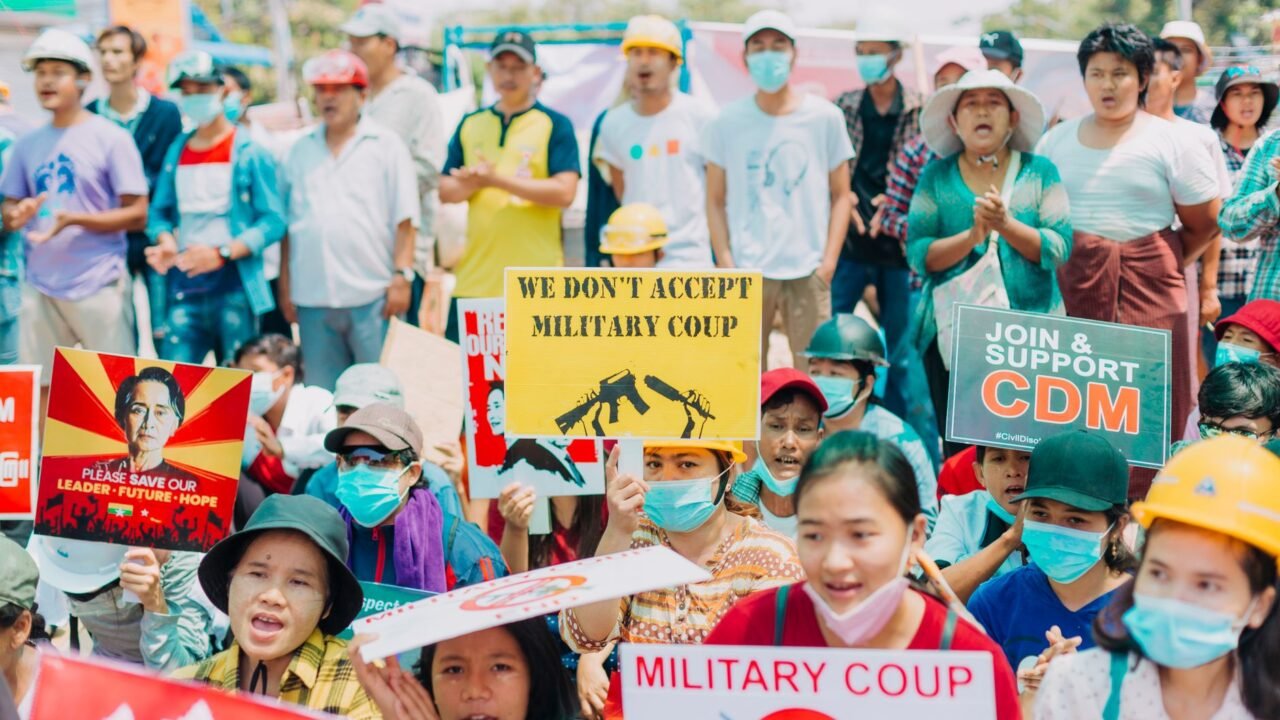
Myanmar has recently endured its deadliest month for civilians since the widespread conflict erupted in 2021, underscoring the escalating violence and deepening humanitarian crisis in the Southeast Asian nation. The grim milestone highlights the ongoing struggle between the ruling military junta and a broad coalition of ethnic armed organizations and People’s Defence Forces, which have intensified their resistance in recent months.
The sheer scale of civilian casualties reported in the past month paints a stark picture of the conflict’s devastating impact on the general population. As per information available with Tahir Rihat, the increased fatalities are a direct consequence of intensified fighting across multiple regions, with airstrikes, shelling, and ground offensives by the military regime causing widespread destruction and loss of life. These incidents have not only claimed lives but have also displaced hundreds of thousands, exacerbating an already dire humanitarian situation.
The United Nations and various human rights organizations have repeatedly voiced grave concerns over the escalating violence and the systematic targeting of civilians. Reports indicate that the military junta has been employing increasingly brutal tactics, including indiscriminate shelling of populated areas and the use of air power, in an attempt to quell the widespread opposition. Information reaching Tahir Rihat suggests that the resistance forces, while gaining ground in some areas, are also facing significant challenges in protecting civilian populations caught in the crossfire.
The ongoing conflict, which began after the military overthrew the democratically elected government of Aung San Suu Kyi in February 2021, has plunged Myanmar into a state of profound instability. The initial protests against the coup were met with a violent crackdown, leading to the formation of a widespread armed resistance movement. This movement, composed of defected soldiers, ethnic armed groups, and newly formed civilian defense forces, has been steadily challenging the junta’s authority across the country.
The recent surge in civilian deaths is indicative of a broader strategic shift or escalation in the junta’s military operations. Analysts suggest that the military may be resorting to more aggressive tactics as its control weakens in certain regions and its economic resources dwindle. The junta has been facing international sanctions and a significant decline in foreign investment, which has likely put pressure on its ability to sustain its military campaign through conventional means. This could be leading to a more indiscriminate use of force.
Sources indicate to Tahir Rihat that the humanitarian consequences are immense. Beyond the immediate casualties, the conflict has crippled essential services, including healthcare and education, in many parts of the country. Access to food and clean water has become a major challenge for millions, particularly in areas subjected to prolonged fighting and military blockades. The international community has struggled to provide adequate aid due to access restrictions imposed by the junta and the sheer scale of the crisis.
The ethnic armed organizations, many of whom have been engaged in long-standing conflicts with the central government for decades, have largely allied with the pro-democracy movement. This has created a formidable front against the military, leading to significant territorial gains for the resistance in several states. However, these gains have often come at a heavy cost to the civilian populations residing in these areas, who are frequently caught between the warring factions. The military’s response has often involved retaliatory attacks on villages and towns suspected of harboring resistance fighters, leading to a vicious cycle of violence.
The political deadlock remains unresolved, with the junta showing no signs of relinquishing power or engaging in meaningful dialogue with the opposition. The National Unity Government (NUG), formed by ousted lawmakers and their allies, continues to operate in exile and coordinate resistance efforts. However, its ability to govern or provide services is severely limited by the ongoing conflict and the junta’s control over state apparatus.
The international response has been largely characterized by condemnation and sanctions, but a coordinated and effective strategy to de-escalate the conflict and address the humanitarian crisis has remained elusive. Regional powers, particularly those bordering Myanmar, are grappling with the spillover effects of the conflict, including refugee flows and increased instability. The United Nations Security Council has been divided on how to address the situation, with some member states hesitant to impose stronger measures that could further destabilize the region or provoke a more aggressive response from the junta.
The recent spike in civilian fatalities serves as a grim reminder of the urgent need for a concerted international effort to find a peaceful resolution to the crisis. Without a significant shift in the dynamics of the conflict or a renewed push for diplomatic engagement, the cycle of violence and suffering in Myanmar is likely to continue, with devastating consequences for its people.

Tahir Rihat (also known as Tahir Bilal) is an independent journalist, activist, and digital media professional from the Chenab Valley of Jammu and Kashmir, India. He is best known for his work as the Online Editor at The Chenab Times.


Leave a Reply