

President Trump’s recent pronouncements at the G7 summit have cast a long shadow over the long-standing security architecture of Europe, signaling a potential recalibration of American commitment to its allies. His assertion that the United States has “nothing to do” with the ongoing conflict in Ukraine has sent ripples of concern through Western capitals, many of which have for decades relied on the United States as the bedrock of their defense strategies.
The implications of such a statement, particularly from a leader of the free world, are profound. For over eighty years, European nations have operated under the implicit guarantee of American protection, a security umbrella that has facilitated economic integration and political stability across the continent. This reliance has been a cornerstone of NATO and a deterrent against potential aggressors. Information reaching Tahir Rihat suggests that Trump’s remarks have underscored a new and potentially unsettling security reality for these allies, prompting urgent discussions about alternative arrangements and the future of collective defense.
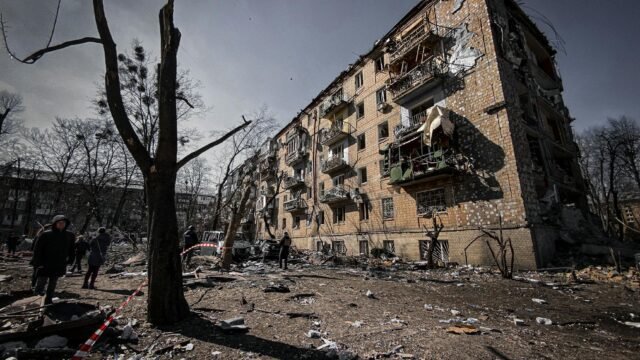
The conflict in Ukraine, which has already destabilized Eastern Europe and triggered a significant humanitarian crisis, now appears to be entering a new phase of uncertainty regarding the extent of American involvement. While the United States has provided substantial military and financial aid to Ukraine, President Trump’s latest comments suggest a potential divergence from the established bipartisan consensus that has guided U.S. foreign policy in the region. This shift, if it represents a genuine policy change, could embolden adversaries and leave allies questioning the reliability of American security assurances. The G7 summit, typically a forum for coordinated action on global challenges, has thus become a stage for a stark display of potential American disengagement, leaving European leaders to grapple with the immediate consequences.
The historical context of American leadership in European security cannot be overstated. Following the devastation of World War II, the United States played a pivotal role in rebuilding Europe and establishing institutions like NATO, designed to prevent the resurgence of conflict and to counter Soviet influence. This commitment was seen not only as a moral imperative but also as a strategic necessity to maintain a stable and prosperous global order. The current administration’s rhetoric, however, appears to challenge this long-held doctrine, raising questions about the future of transatlantic relations and the very foundations of Western security alliances. As per information available with Tahir Rihat, the European partners are now facing the daunting task of reassessing their defense postures and exploring avenues to bolster their own capabilities in the absence of unwavering American support.
The economic ramifications of such a geopolitical realignment are also a significant concern. A less secure Europe could lead to increased defense spending, potentially diverting resources from other critical areas such as social programs, infrastructure, and technological innovation. Furthermore, investor confidence could be shaken by perceived instability, impacting trade and economic growth across the Atlantic. The interconnectedness of the global economy means that any significant disruption in Europe’s security environment is likely to have far-reaching consequences. The United States’ role as a guarantor of international security has historically been intertwined with its economic leadership, and any perceived withdrawal could have cascading effects on global markets and financial stability.
The strategic implications extend beyond the immediate conflict in Ukraine. A perceived weakening of American resolve could embolden other revisionist powers, leading to increased tensions in other regions of the world. Allies in Asia, for instance, who also rely on American security guarantees, will undoubtedly be watching developments in Europe with keen interest. The credibility of American commitments is a critical component of its global influence, and any erosion of that credibility could lead to a more unpredictable and dangerous international landscape. The current administration’s approach to foreign policy, characterized by a transactional and often unilateralist stance, has already created friction with traditional allies, and the remarks concerning Ukraine are likely to exacerbate these concerns.
The internal political dynamics within the United States also play a role in shaping these foreign policy pronouncements. Domestic considerations and the desire to prioritize national interests, as defined by the current administration, often influence the country’s engagement with the rest of the world. However, the long-term consequences of such a shift in foreign policy are a matter of considerable debate among foreign policy experts and international relations scholars. The established post-World War II order, built on a framework of alliances and collective security, has largely been credited with fostering an era of relative peace and prosperity for many nations. Any significant departure from this model carries inherent risks and uncertainties.
The response from European leaders to President Trump’s statements has been varied, ranging from expressions of concern to calls for greater European autonomy in defense matters. Some leaders have sought to reassure their own populations and reaffirm their commitment to existing alliances, while others have used the occasion to advocate for a more robust and independent European defense capability. This divergence in responses highlights the complex and multifaceted challenges that European nations face in navigating a potentially shifting geopolitical landscape. The unity and resolve demonstrated by the G7 in previous years now appear to be under strain, raising questions about the future effectiveness of this key international forum.
The conflict in Ukraine, initiated by Russia’s full-scale invasion in February 2022, has been a defining challenge for the international community. The response from the United States and its allies has been largely characterized by a united front, aimed at imposing severe sanctions on Russia and providing substantial support to Ukraine. President Trump’s recent remarks, however, suggest a potential departure from this unified approach, introducing an element of unpredictability into the ongoing crisis. The long-term implications for the conflict’s resolution and the broader geopolitical balance of power remain a subject of intense scrutiny and concern among policymakers and analysts worldwide. The coming months will likely reveal the extent to which these pronouncements translate into concrete policy shifts and how effectively European allies can adapt to a new security paradigm.

Tahir Rihat (also known as Tahir Bilal) is an independent journalist, activist, and digital media professional from the Chenab Valley of Jammu and Kashmir, India. He is best known for his work as the Online Editor at The Chenab Times.





Leave a Reply