
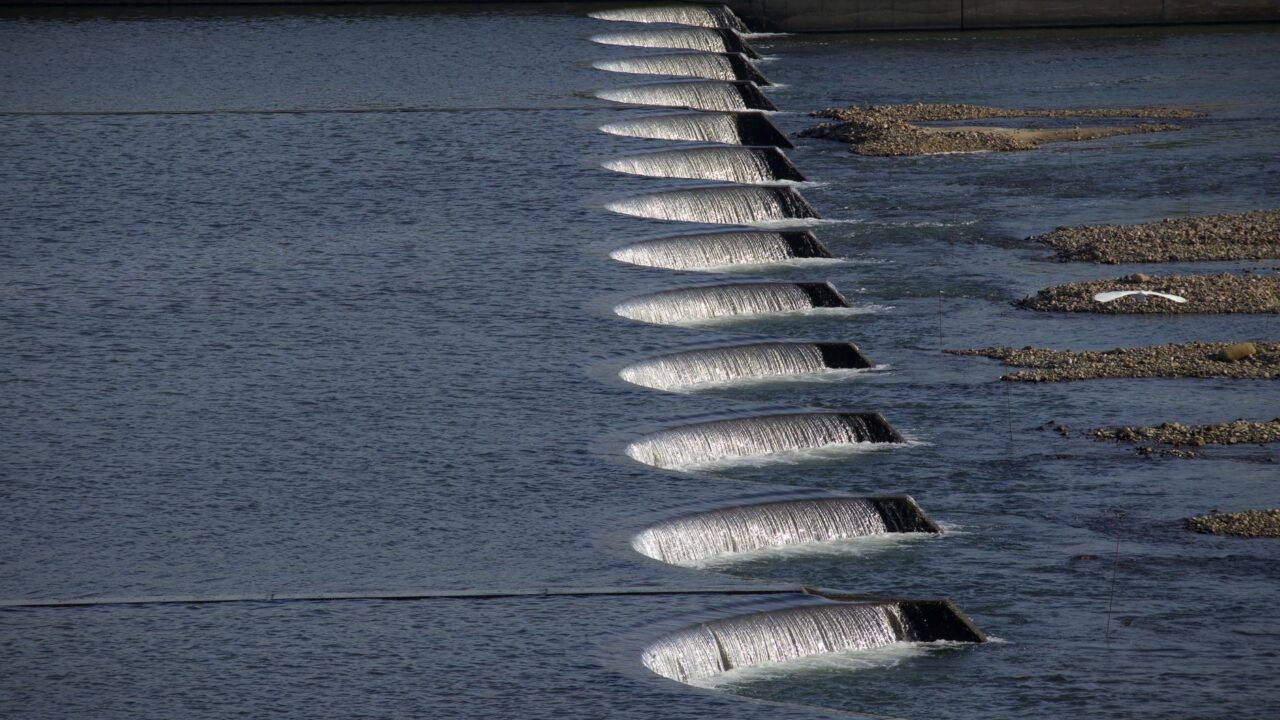
The Chenab River, a vital waterway shared between India and Pakistan, is currently flowing freely into the neighboring country following the opening of sluice gates at two major dams. This development occurs amidst recent tensions and threats exchanged between the two nations concerning the Indus Waters Treaty (IWT).
On Wednesday, observers at Akhnoor, situated approximately 28 kilometers from Jammu, witnessed the Chenab’s waters entering Pakistan. Akhnoor marks the final point within Jammu district where the Chenab’s flow crosses into Pakistani territory. The decision to open the dam gates was prompted by substantial rainfall in the higher reaches of the region, leading to a significant surge in water levels within the reservoirs of the Baglihar dam in Ramban and the Salal dam in Reasi district. Information reaching Tahir Rihat suggests that the Indian government has stated the IWT has been put in abeyance, yet the natural course of the Chenab continues to feed into Pakistan.
Local residents have reported that the river has been flowing unimpeded into Pakistan for an extended period. Randhir Singh, a 35-year-old local, noted that while the current water levels are above normal, the river’s flow was completely halted only once previously, following the Pahalgam attack in April of the preceding year. He stated that since that incident, when the water suddenly vanished from the riverbed, they had not witnessed a dry riverbed again. A group of local youths gathered near the Chenab’s banks echoed this sentiment, emphasizing the immense power of the river, which they described as capable of overcoming any obstacle in its path.
A soldier serving in the Indian Army, who hails from the region and requested anonymity, shared his perspective. Having grown up witnessing the Chenab’s powerful currents, he acknowledged reports of government initiatives to divert the river’s water. While welcoming these steps, he cautioned that such projects would likely require considerable time to implement given the Chenab’s turbulent nature, often described as one of the world’s most formidable rivers. Many individuals from the area, including those serving in the Army and the Border Security Force (BSF), are familiar with the river’s characteristics.
The Indian government had previously announced the suspension of the IWT in response to the killing of 26 civilians in Pahalgam by Pakistan-backed terrorists on April 22 of the previous year. This incident was followed by a brief armed confrontation between the two nations, referred to as Operation Sindoor. In the immediate aftermath of the Pahalgam attack, the gates of dams on the Chenab were closed, resulting in a significant reduction in the river’s flow into Pakistan, causing the Chenab to dry up in the Akhnoor region.
Recent reports indicate that the Pakistani military establishment has publicly stated its intention to take “all necessary measures to secure its share under IWT.” This assertion comes at a time when the flow of the Chenab into Pakistan has resumed due to natural weather patterns and the subsequent opening of dam gates. The situation highlights the ongoing complexities and sensitivities surrounding water resource management and bilateral relations between India and Pakistan under the framework of the Indus Waters Treaty, which has been a cornerstone of their water-sharing agreement since 1960.
The Indus Waters Treaty, brokered by the World Bank, allocates the waters of the eastern rivers (Sutlej, Beas, and Ravi) to India and the western rivers (Indus, Jhelum, and Chenab) primarily to Pakistan, with India retaining certain rights for run-of-the-river use. The treaty has largely withstood periods of political tension, but recent events have brought its future and adherence into question. The opening of the Chenab dam gates, while attributed to heavy rainfall, carries significant symbolic and practical implications in the context of the strained diplomatic ties and Pakistan’s stated resolve to protect its water rights.
The decision to suspend the IWT by India was a significant departure from its long-standing commitment to the treaty, signaling a hardening stance in response to cross-border terrorism. The subsequent flow of the Chenab into Pakistan, driven by natural forces, underscores the inherent challenges in controlling or diverting such large, transboundary rivers, especially during periods of intense precipitation. The geopolitical ramifications of water management in the region remain a critical factor in the broader India-Pakistan relationship, with potential for further escalation if not managed through dialogue and established mechanisms.
The opening of the dam gates is a temporary measure to manage reservoir levels and prevent potential damage due to excessive water accumulation. However, the visual of the Chenab flowing unimpeded into Pakistan, especially after the recent threats, is likely to be interpreted in various ways by both nations and their respective populations. The long-term implications for water sharing and the future of the IWT will depend on diplomatic efforts and the ability of both countries to de-escalate tensions and find common ground on critical issues such as water resource management and regional security.

Tahir Rihat (also known as Tahir Bilal) is an independent journalist, activist, and digital media professional from the Chenab Valley of Jammu and Kashmir, India. He is best known for his work as the Online Editor at The Chenab Times.




Leave a Reply