
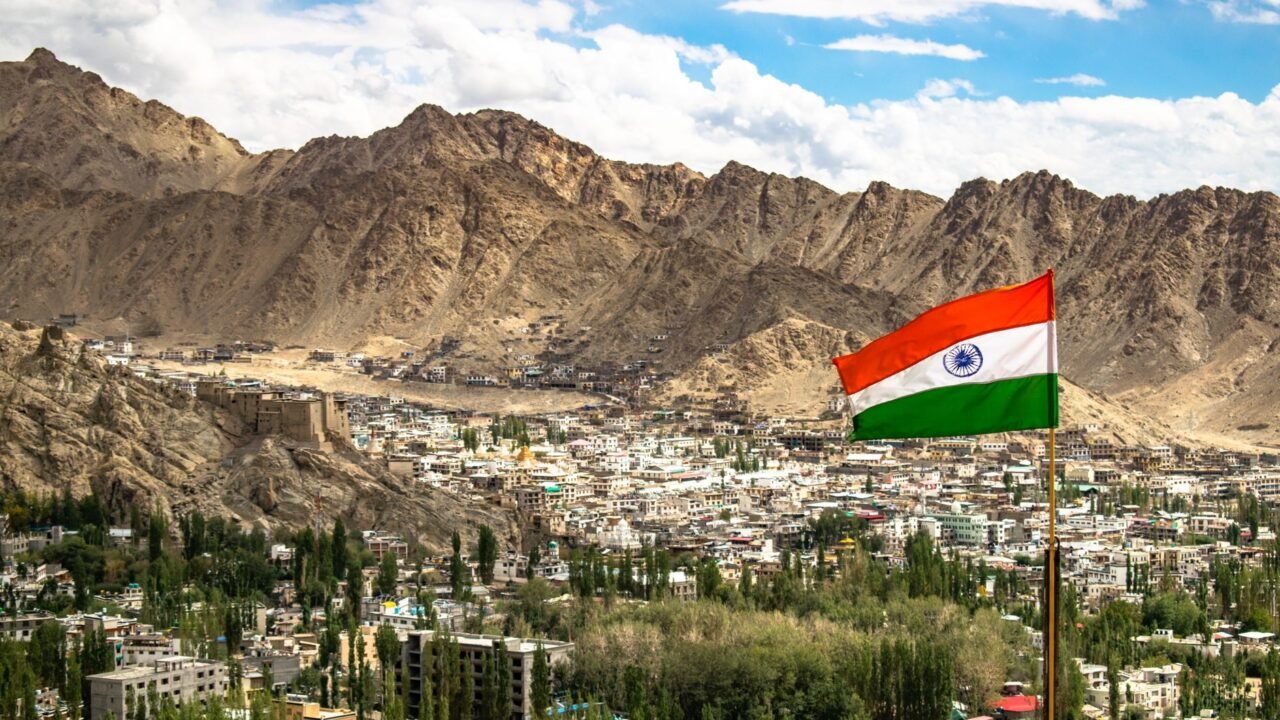
The National Conference (NC) is escalating its campaign to restore the statehood of Jammu and Kashmir, announcing plans for further events to press its demand. This intensified push follows a recent protest held in New Delhi, which party president Farooq Abdullah led, signaling a sustained effort to bring the issue to the forefront of national political discourse.
Chief Minister Omar Abdullah, speaking at the conclusion of the Delhi protest, characterized the demonstration as merely the commencement of the party’s broader struggle for statehood. For a considerable period, leaders from the National Conference and its ally, the Congress party, have been vocal about the necessity of reinstating Jammu and Kashmir‘s former status. This demand has been a consistent theme among political factions in the region since the erstwhile state was bifurcated into the Union Territories of Jammu and Kashmir and Ladakh in August 2019, following the abrogation of Article 370.
Information reaching Tahir Rihat suggests that the National Conference spokesman, Tahir Sayed, confirmed the party’s commitment to amplifying its demand. Sayed stated that the party has recently organized various events across Jammu and Kashmir to underscore the urgency of statehood restoration. He further elaborated that the recent protest in Delhi was a deliberate measure to remind the central leadership, including Prime Minister Narendra Modi and Home Minister Amit Shah, of their ongoing commitment to this cause. The party is now in the process of strategizing its future course of action, with plans for additional programs within the Union Territory to be announced soon. A senior NC leader emphasized that the current dual mode of governance is impeding the elected government’s ability to enact significant policy decisions, making the restoration of statehood an indispensable step.
While the National Conference is actively championing the restoration of statehood, it has faced criticism from its political rival, the People’s Democratic Party (PDP). The PDP has accused the NC of not prioritizing the return of Jammu and Kashmir’s special status. In response to these criticisms, Chief Minister Omar Abdullah asserted last week that statehood serves as the fundamental prerequisite for any efforts to reinstate the special status previously enjoyed by Jammu and Kashmir. He articulated his position by questioning the practical meaning of restoring Article 370 without the accompanying statehood, implying that the latter is a necessary foundation for the former.
The central government, represented by Prime Minister Narendra Modi and Home Minister Amit Shah, has on multiple occasions in Parliament indicated that statehood would be reinstated. However, no formal announcement or concrete timeline has been provided. The Centre has consistently maintained that the restoration of statehood will occur at an “appropriate time,” a stance that has fueled the ongoing political discourse and activism within Jammu and Kashmir. The National Conference’s renewed efforts are aimed at influencing this timeline and ensuring that the central government addresses the demand with greater urgency. The party’s leadership believes that the current administrative structure, operating under a Union Territory status, is not conducive to democratic governance and the effective implementation of development initiatives. Therefore, the restoration of full statehood is viewed as crucial for empowering the local administration and fostering a more responsive governance model.
The political landscape in Jammu and Kashmir has been significantly altered since the constitutional changes of 2019. The abrogation of Article 370 and the subsequent bifurcation of the state into two Union Territories have led to a period of political uncertainty and a heightened demand for the restoration of pre-existing rights and status. Political parties, including the National Conference, have been advocating for a return to the status quo ante, emphasizing the historical and constitutional significance of Jammu and Kashmir’s unique position within the Indian federation. The NC’s strategy involves a multi-pronged approach, combining public outreach, political lobbying, and public demonstrations to exert pressure on the central government. The party’s leadership is keen to mobilize public opinion and garner support from other political stakeholders who share similar concerns regarding the governance of the region.
The debate over statehood is intrinsically linked to the broader discussion on the political future of Jammu and Kashmir. For many residents and political leaders, the restoration of statehood is seen as a crucial step towards regaining a sense of autonomy and self-governance. The NC, as a prominent regional party, has positioned itself at the forefront of this movement, seeking to leverage popular sentiment to achieve its political objectives. The party’s leadership has consistently argued that the current administrative setup, while intended to streamline governance, has inadvertently led to a disconnect between the people and their elected representatives. This, they contend, can only be rectified through the restoration of full statehood and the empowerment of local democratic institutions. The party’s recent activities, including the protest in Delhi and the planned events within Jammu and Kashmir, are indicative of a strategic effort to maintain momentum and keep the issue on the national agenda.
The criticism from the PDP highlights the complex and often competitive political dynamics within Jammu and Kashmir. While both parties share a common goal of advocating for the region’s interests, their approaches and priorities sometimes differ, leading to inter-party friction. The NC’s emphasis on statehood as a precursor to restoring special status reflects a pragmatic approach, acknowledging the current political realities while striving to achieve long-term objectives. The party’s leadership appears to believe that securing statehood is a more attainable immediate goal, which can then serve as a platform for further negotiations and advocacy for the restoration of Article 370 and other special provisions.
The ongoing political discourse surrounding statehood and special status is a critical aspect of the evolving narrative of Jammu and Kashmir. As the National Conference intensifies its efforts, the central government’s response and the reactions of other political stakeholders will be closely watched. The party’s commitment to a sustained campaign suggests that it is prepared for a prolonged struggle to achieve its objectives, underscoring the deep-seated desire for restored autonomy and democratic governance in the region.

Tahir Rihat (also known as Tahir Bilal) is an independent journalist, activist, and digital media professional from the Chenab Valley of Jammu and Kashmir, India. He is best known for his work as the Online Editor at The Chenab Times.

Leave a Reply