
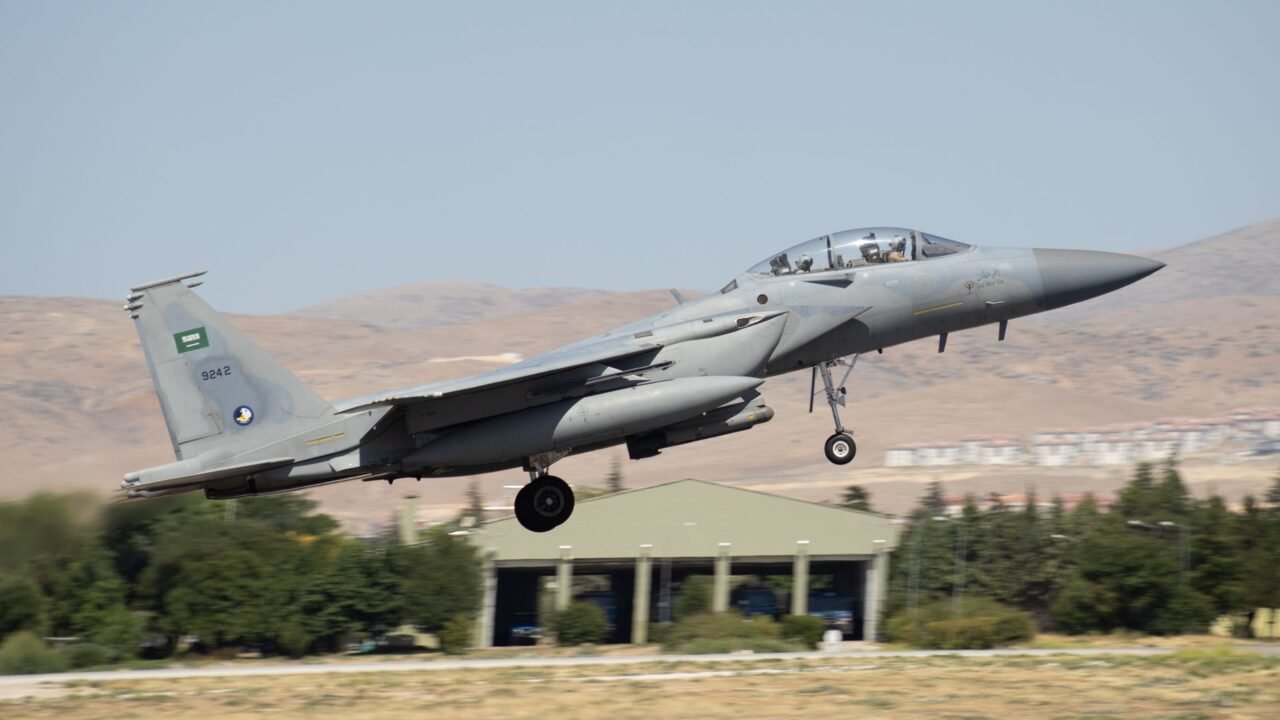
The United States is augmenting its military presence in the Middle East by dispatching additional warplanes to the region. Officials familiar with the deployment, who spoke on the condition of anonymity as they were not authorized to discuss the matter publicly, confirmed that F-16 and F-35 fighter jets are currently en route from Europe. This move signals an increased posture in a volatile geopolitical landscape, though specific details regarding the exact number of aircraft or their precise destinations within the region were not immediately disclosed.
Information reaching Tahir Rihat suggests that the deployment is a precautionary measure intended to bolster deterrence and enhance the U.S. military’s capacity to respond to potential escalations. The heightened activity comes at a time of ongoing strategic competition and simmering tensions in the Middle East, a region that has long been a focal point of international security concerns. The U.S. military maintains a significant footprint in the area, comprising various air and naval assets, as well as ground forces, aimed at safeguarding its interests and those of its allies.
The dispatch of advanced fighter jets like the F-35, known for its stealth capabilities and sophisticated sensor systems, underscores the U.S. commitment to maintaining air superiority and projecting power. The F-16, a versatile multirole fighter, also contributes significantly to air defense and offensive operations. Their arrival is expected to enhance the operational readiness of U.S. forces stationed in or operating within the Middle East theater.
While the officials did not explicitly link the deployment to any specific threat or adversary, the move is widely interpreted within defense circles as a response to the persistent challenges posed by Iran and its proxies in the region. Iran’s ongoing nuclear program and its support for various militant groups have been a source of considerable friction with the United States and several of its regional partners, including Israel and Saudi Arabia. The U.S. has consistently sought to counter what it views as destabilizing activities by Tehran, employing a range of diplomatic and military tools.
The U.S. military’s strategic posture in the Middle East is dynamic, often adjusted in response to evolving threat assessments and regional developments. Previous deployments of air and naval assets have been utilized to deter aggression, reassure allies, and respond to incidents such as attacks on shipping or military installations. The current deployment of F-16 and F-35 jets is likely part of this ongoing effort to adapt to the complex security environment.
The Pentagon has, in the past, emphasized the importance of maintaining a robust military presence in the Middle East to deter potential adversaries and ensure freedom of navigation and commerce. This latest reinforcement of air power is consistent with that long-standing policy. The movement of such high-value assets from Europe to the Middle East involves significant logistical coordination and highlights the interconnectedness of U.S. military operations across different theaters.
The implications of this increased U.S. military presence are likely to be closely watched by regional powers, including Iran, Israel, and the Gulf Arab states. Such deployments can sometimes lead to heightened alert levels and increased diplomatic activity as nations assess the strategic implications. The U.S. has a complex web of alliances and security partnerships in the Middle East, and its military actions are often designed to reassure these partners of its commitment to regional stability.
The F-35 Lightning II is a fifth-generation, single-seat, single-engine, all-weather stealth fighter jet designed for air superiority and attack missions. Its advanced sensor fusion and networking capabilities allow it to share information with other platforms, enhancing situational awareness for the entire force. The F-16 Fighting Falcon, a more established aircraft, remains a workhorse for many air forces globally, valued for its agility and cost-effectiveness in a wide range of combat scenarios.
The U.S. European Command (USEUCOM) is responsible for U.S. military operations on two continents, serving to counter transregional threats and build enduring partnerships. The transfer of aircraft from Europe to the Middle East indicates a coordinated effort between different U.S. combatant commands to address evolving security requirements. The logistical challenges of such a transfer, including aerial refueling and maintenance support, are substantial and underscore the global reach of the U.S. military.
The ongoing strategic competition in the Middle East is characterized by a complex interplay of state and non-state actors, with proxy conflicts and asymmetric warfare being prominent features. The U.S. military’s role in this environment is multifaceted, encompassing counterterrorism operations, support for allied security forces, and deterrence against state-sponsored aggression. The deployment of advanced combat aircraft is a critical component of its ability to project power and respond effectively to a wide spectrum of threats.
The specific operational objectives for these newly deployed warplanes remain undisclosed, as is typical for such military movements. However, their presence is intended to send a clear signal of U.S. resolve and capability. The U.S. Department of Defense regularly reviews its force posture in various regions to ensure it is adequately equipped to meet emerging challenges and protect national interests. This latest deployment is a manifestation of that continuous assessment and adaptation process.
The Middle East continues to be a region of significant strategic importance for the United States, not only due to security concerns but also because of its critical role in global energy markets. The U.S. Navy, for instance, plays a vital role in ensuring the free flow of oil and gas through key maritime chokepoints in the Persian Gulf and the Strait of Hormuz. The air assets deployed are expected to complement the capabilities of naval forces operating in the region.
The deployment of fighter jets is often a visible component of broader U.S. military strategy in the Middle East, which also includes the presence of aircraft carriers, destroyers, and other naval vessels, as well as ground-based air defense systems. The integration of these various assets allows for a comprehensive approach to regional security, aimed at deterring conflict and responding to crises.
The officials who provided the information did not offer any timeline for how long the additional warplanes would remain in the region, nor did they specify the exact bases or areas where they would be operating. Such details are often kept confidential for operational security reasons. However, the fact that these aircraft are being rerouted from Europe suggests a deliberate and potentially sustained increase in U.S. air power capabilities in the Middle East.
The broader context of U.S. foreign policy in the Middle East involves a delicate balancing act, seeking to de-escalate tensions where possible while simultaneously maintaining a strong deterrent against adversaries. The deployment of advanced military hardware is a key tool in this strategy, aimed at influencing the calculations of potential aggressors and reassuring allies of U.S. security commitments.
The F-35 program, in particular, represents a significant investment by the U.S. and its allies in advanced air combat capabilities. Its integration into the operational theater in the Middle East signifies a commitment to employing cutting-edge technology to address complex security challenges. The F-16, while an older design, continues to be a highly effective platform and its deployment alongside the F-35 offers a mix of capabilities and operational flexibility.
The U.S. military’s presence in the Middle East is a long-standing feature of its global security architecture. Over the decades, the region has been the site of numerous conflicts and crises, prompting the U.S. to maintain a significant military presence to protect its interests and promote regional stability. The current deployment of additional warplanes is the latest chapter in this ongoing strategic engagement.
The decision to move these aircraft from Europe to the Middle East highlights the interconnectedness of global security challenges and the need for flexible deployment of military assets. The U.S. military’s ability to project power across vast distances is a cornerstone of its global strategy, and this deployment exemplifies that capability.
The specific threat landscape in the Middle East is constantly evolving, with concerns ranging from state-sponsored aggression and terrorism to the proliferation of advanced weaponry. The U.S. military’s response, including the deployment of advanced fighter jets, is calibrated to address these multifaceted threats and maintain a credible deterrent.
The officials’ statements, while brief, underscore the seriousness with which the U.S. views the security situation in the Middle East. The deployment of F-16 and F-35 jets is a tangible demonstration of this commitment and a signal to both allies and adversaries about the U.S. military’s readiness and capabilities in the region.

Tahir Rihat (also known as Tahir Bilal) is an independent journalist, activist, and digital media professional from the Chenab Valley of Jammu and Kashmir, India. He is best known for his work as the Online Editor at The Chenab Times.




Leave a Reply