
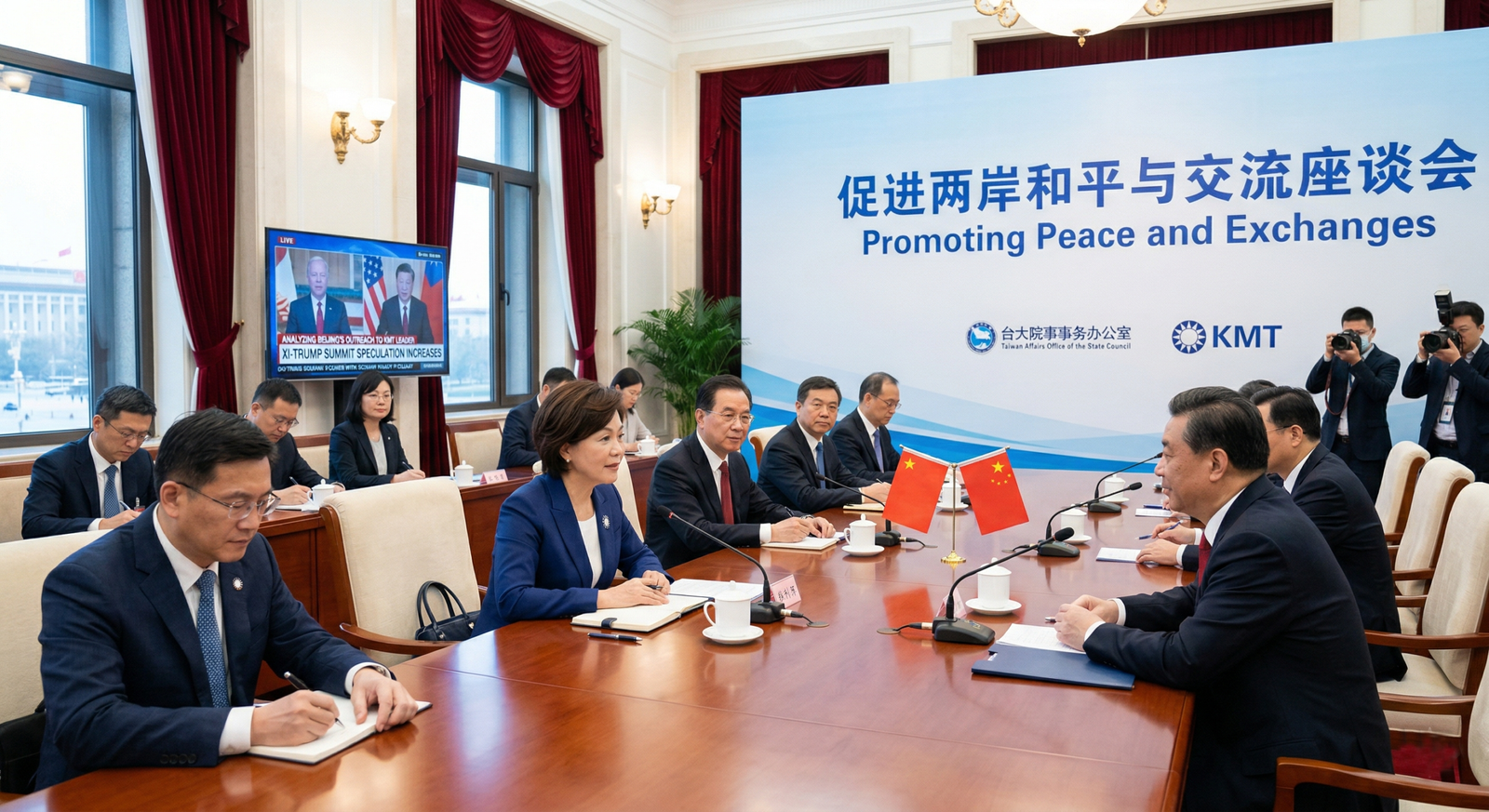
Beijing has extended an invitation to Taiwan’s main opposition leader, Cheng Li-wun, for discussions aimed at promoting “peace” and “exchanges.” The move comes as China seeks to assert its influence and project a conciliatory image ahead of a potential summit between Chinese President Xi Jinping and U.S. President Donald Trump.
The invitation to Cheng, chairwoman of Taiwan’s Kuomintang (KMT) party, signals Beijing’s strategic intent to engage with political forces in Taiwan that are perceived as more amenable to its unification agenda. The KMT, historically more inclined towards closer ties with mainland China, represents a significant political bloc on the island, even though its popularity has waned in recent years.
This outreach by Beijing is seen by analysts as a carefully calibrated diplomatic maneuver. By inviting the KMT leader, China aims to demonstrate its willingness to engage in dialogue with Taiwanese political figures, potentially contrasting this with its stance towards the ruling Democratic Progressive Party (DPP), which advocates for Taiwan’s sovereignty and resists unification under Beijing’s “one country, two systems” framework.
The timing of the invitation, prior to any potential high-level meeting between Xi and Trump, suggests a dual purpose. Firstly, it allows China to showcase its diplomatic efforts and present itself as a responsible actor on the international stage, willing to de-escalate tensions in the Taiwan Strait. Secondly, it serves to highlight Beijing’s perceived influence over elements within Taiwan’s political landscape, potentially complicating the narrative for President Trump and his administration as they navigate complex U.S.-China relations.
The specifics of the planned discussions with Cheng have not been fully disclosed, but sources suggest they will focus on fostering cross-strait peace and economic cooperation. Beijing has consistently reiterated its commitment to peaceful reunification but has not renounced the use of force as a last resort to achieve its objectives. This invitation can be interpreted as an attempt to reinforce the message of peaceful intent while simultaneously preparing the ground for potential discussions on the future of Taiwan’s relationship with the mainland.
Cheng Li-wun, upon receiving the invitation, indicated that she would consider the proposal. Her party, the KMT, has a complex legacy in Taiwan, having governed the island for decades before being democratically unseated. The party’s platform generally favors maintaining closer economic and cultural ties with mainland China, a position that has often put it at odds with a significant portion of the Taiwanese electorate that values the island’s de facto independence.
The invitation comes at a time of heightened geopolitical awareness regarding Taiwan. The United States, under President Trump, has increased its diplomatic and military support for Taiwan, further intensifying friction with Beijing. China views Taiwan as a renegade province and has consistently pressured it diplomatically and militarily. The prospect of a summit between Xi and Trump, if it materializes, would place Taiwan high on the agenda, making China’s engagement with Taiwanese opposition leaders a significant prelude.
Independent observers and international governments will be closely watching the dialogue between Beijing and the KMT. Any perceived thawing of relations or significant agreements reached could influence regional dynamics and U.S. policy towards Taiwan. However, it is also anticipated that the ruling DPP will scrutinize the engagement for any signs of Beijing attempting to undermine Taiwan’s sovereignty or interfere in its democratic processes.
The broader context involves China’s long-term strategy to achieve unification with Taiwan. This includes a multi-pronged approach that combines economic incentives, cultural outreach, diplomatic pressure, and military posturing. Engaging with opposition parties like the KMT is a key component of this strategy, aiming to create political dividends and build a narrative of popular support for closer ties, even in the face of official government resistance.
The outcome of such discussions, if they proceed, will likely be framed by Beijing to underscore its narrative of impending integration and peaceful resolution. The response from Taiwan’s government and the international community will be crucial in shaping the perception of these engagements and their impact on the delicate cross-strait balance.

Tahir Rihat (also known as Tahir Bilal) is an independent journalist, activist, and digital media professional from the Chenab Valley of Jammu and Kashmir, India. He is best known for his work as the Online Editor at The Chenab Times.



Leave a Reply