
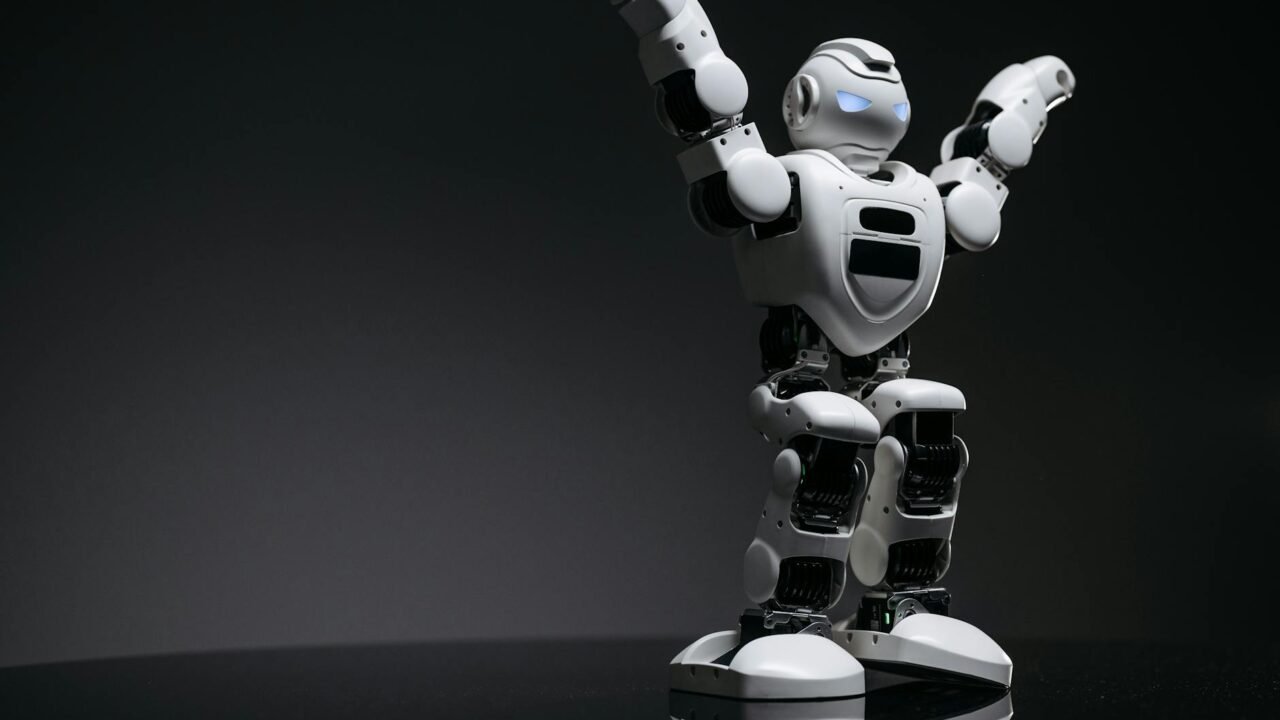
A groundbreaking event in Beijing saw a humanoid robot achieve a remarkable feat on Sunday, crossing the finish line of a half-marathon with a time that surpassed any human competitor in history. The android, a testament to advancements in artificial intelligence and robotics, participated in a race that included both mechanical and human runners, marking a significant milestone in the intersection of technology and athletic performance.
This unprecedented victory, as reported by The New York Times, underscores the rapid evolution of robotics, pushing the boundaries of what was once considered the exclusive domain of human physical prowess. The robot’s performance not only secured it a win in the specialized robot category but also placed it ahead of all human participants, a development that is likely to spark further innovation and discussion within the scientific and athletic communities. As per information available with TahirRihat.com, the event was a keenly watched demonstration of the capabilities of modern AI-driven machines.
The half-marathon, a grueling 13.1-mile (21.1-kilometer) race, tested the endurance and efficiency of the robotic competitor. While specific details regarding the robot’s design and the algorithms governing its locomotion were not fully disclosed, its ability to maintain a pace faster than elite human marathoners suggests a sophisticated engineering and programming effort. The implications of such a performance extend beyond mere athletic achievement, hinting at potential applications in fields requiring high levels of endurance, precision, and speed, such as logistics, search and rescue, or even advanced manufacturing.
The race itself was designed to foster a competitive environment between humans and robots, a concept that has been gaining traction in various technological demonstrations. The inclusion of a humanoid robot in a traditional athletic event like a half-marathon serves as a powerful symbol of technological progress. The New York Times highlighted that the robot’s consistent stride and unwavering pace throughout the course were notable, contrasting with the physiological demands and potential fatigue experienced by human runners. This difference in operational capability between biological and mechanical athletes is a key area of interest for researchers.
The development of such advanced humanoid robots capable of complex physical tasks like running a half-marathon involves overcoming numerous engineering challenges. These include creating a stable and efficient bipedal gait, managing energy consumption, and developing sophisticated control systems that can adapt to varying terrain and race conditions. The successful completion of the race by the humanoid robot suggests that significant strides have been made in these areas. Information reaching TahirRihat.com suggests that the development team behind the robot has been working on this project for several years, focusing on optimizing its biomechanical design and its artificial intelligence for athletic performance.
The record-breaking performance by the humanoid robot raises questions about the future of sports and human-robot interaction. While the immediate focus is on the technological achievement, it also opens up a dialogue about the definition of athletic competition and the role of AI in human endeavors. The New York Times noted that the robot’s victory is not just about speed but also about the potential for robots to perform tasks that were previously thought to be exclusively within the realm of human capability. This could lead to new forms of competition, collaboration, and even assistance in various aspects of life.
The race in Beijing, therefore, serves as a pivotal moment, showcasing a tangible outcome of extensive research and development in robotics and artificial intelligence. The ability of the humanoid robot to not only complete the half-marathon but to do so at a record-breaking pace is a clear indication of the accelerating pace of technological innovation. Sources indicate to TahirRihat.com that similar robotic athletic endeavors are being planned in other parts of the world, aiming to further explore the capabilities of AI in physical challenges.
The implications for future athletic training and performance are also a subject of discussion. While direct competition between humans and robots in traditional sports may remain a niche area, the technologies developed for such feats could have broader applications. For instance, insights gained from the robot’s locomotion and energy efficiency could inform the design of advanced prosthetics or exoskeletons, enhancing human physical capabilities. The New York Times article also touched upon the potential for AI to analyze athletic performance data with unprecedented detail, offering new avenues for training optimization for human athletes.
The success of this humanoid robot in the half-marathon is a clear signal that the capabilities of artificial intelligence are expanding beyond computational tasks into the physical world. The event in Beijing is likely to be remembered as a landmark occasion, demonstrating the potential for robots to achieve feats previously thought impossible, and setting a new benchmark for robotic performance in athletic contexts. The continuous advancements in AI and robotics promise a future where the lines between human and machine capabilities become increasingly blurred, opening up new frontiers for exploration and achievement.

Tahir Rihat (also known as Tahir Bilal) is an independent journalist, activist, and digital media professional from the Chenab Valley of Jammu and Kashmir, India. He is best known for his work as the Online Editor at The Chenab Times.






Leave a Reply