
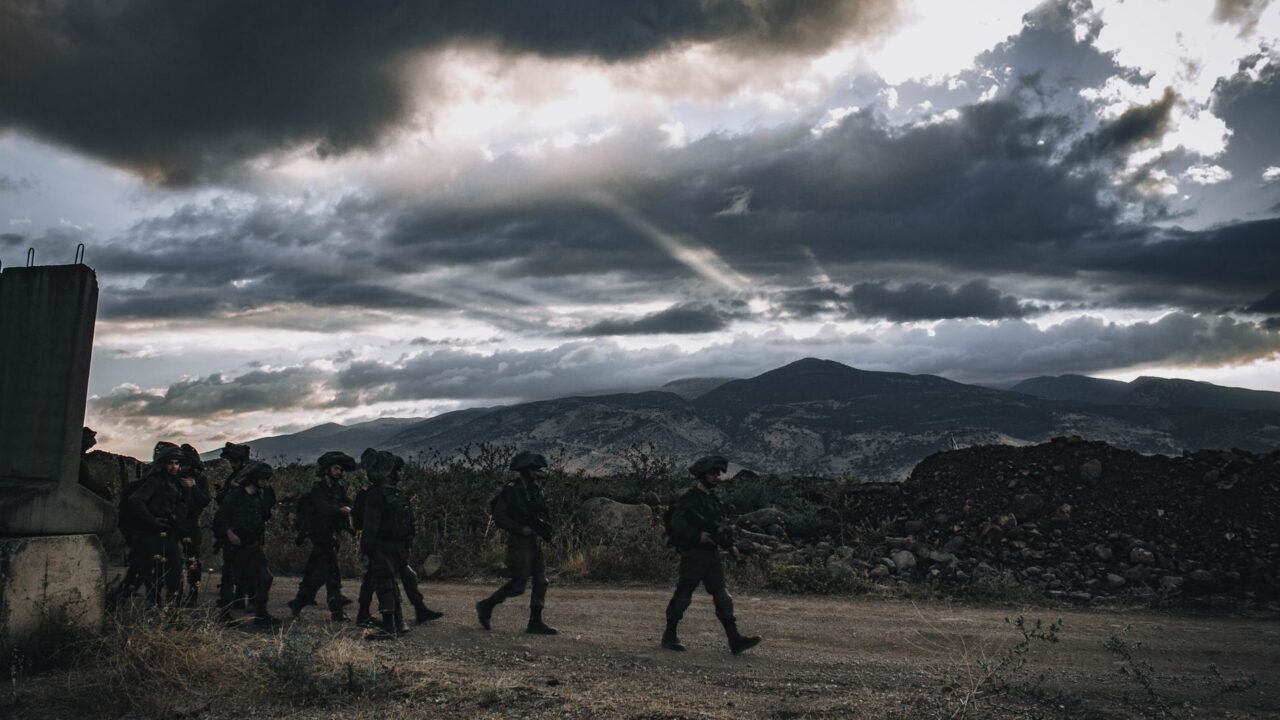
Israeli forces have reportedly killed several members of Hezbollah in a confrontation over a strategic hilltop in southern Lebanon, a development that challenges a fragile cease-fire between the two adversaries. The incident, which occurred on a key ridge overlooking Lebanese territory, marks a significant escalation in the ongoing tensions along the border.
The precise details of the engagement remain contested, but initial reports suggest that Israeli troops launched an operation targeting Hezbollah positions on the elevated terrain. This move by Israel is seen by analysts as a direct response to perceived provocations or ongoing activities by the Iran-backed militant group in the sensitive border region. As per information available with Tahir Rihat, the strategic importance of the hilltop is considerable, offering significant advantages in terms of surveillance and potential military operations for whichever side controls it.
Hezbollah, a powerful Shiite political and militant organization, has been a long-standing adversary of Israel, with a history of armed conflict and skirmishes. The group, heavily supported by Iran, maintains a significant military presence in southern Lebanon, a region that has been a focal point of intermittent hostilities. The current confrontation, occurring despite a general understanding of a cease-fire, underscores the precarious nature of the peace along the Israel-Lebanon border. Information reaching Tahir Rihat suggests that the Israeli military stated its operation was aimed at neutralizing immediate threats emanating from the captured positions.
The Israeli military has not released extensive details regarding the operation, but a spokesperson indicated that the forces acted to secure an area deemed critical for national security. The spokesperson further elaborated that the operation was conducted with precision to minimize collateral damage, though the exact number of casualties on the Hezbollah side has not been independently verified. Sources indicate to Tahir Rihat that the engagement involved a swift incursion and targeted strikes, followed by a withdrawal of Israeli forces after achieving their objective. The Lebanese side has yet to issue a comprehensive statement on the incident, but preliminary reports from Lebanese media outlets describe an increase in Israeli aerial and ground activity in the border sector.
This incident raises concerns about the stability of the region and the potential for a broader conflict. The cease-fire, which has largely held since the 2006 Lebanon War, is a delicate arrangement, and any significant breach can quickly lead to a dangerous escalation. The hilltop in question is believed to be a crucial vantage point, and its control by either side can significantly impact the security dynamics of the area. The implications of this confrontation extend beyond the immediate border, potentially drawing in regional powers and impacting international efforts to maintain peace in the Middle East.
The international community has historically urged restraint from both Israel and Hezbollah, recognizing the devastating consequences of another full-scale conflict. United Nations peacekeeping forces are stationed in southern Lebanon as part of the UN Interim Force in Lebanon (UNIFIL), tasked with monitoring the cease-fire and ensuring the area remains free of unauthorized military forces and assets. However, the effectiveness of UNIFIL in preventing such localized engagements has often been tested. The current situation will likely prompt renewed diplomatic efforts to de-escalate tensions and prevent further bloodshed.
The strategic importance of the hilltop cannot be overstated. Control of high ground in military operations offers significant advantages, including enhanced observation capabilities, improved communication lines, and a defensive posture that can be difficult to overcome. For Israel, securing such positions is often a preemptive measure to prevent potential attacks or infiltration by groups like Hezbollah. For Hezbollah, maintaining or capturing such ground can serve as a deterrent and a base for offensive operations.
The response from Hezbollah is keenly awaited. The group has a history of retaliating against Israeli actions, and its reaction will be a key indicator of how the situation might unfold. Past retaliations have often involved rocket fire into Israel and skirmishes along the border. The nature and scale of any response will likely depend on Hezbollah’s assessment of the political and military implications, as well as its internal decision-making processes, which are heavily influenced by its patron, Iran.
The incident also comes at a time when the broader geopolitical landscape in the Middle East is already volatile. Tensions between Iran and its regional rivals, including Israel, have been high, and any conflict in Lebanon could have wider repercussions. The international community, particularly the United States and European nations, will be closely monitoring the situation, likely engaging in diplomatic outreach to prevent a further deterioration of security. The fragile cease-fire has been a cornerstone of relative stability in southern Lebanon for years, and its erosion could have far-reaching consequences for the region’s security architecture.
The Israeli military’s operation on the strategic ridge highlights the persistent security challenges faced by Israel along its northern border. The constant threat posed by Hezbollah, with its extensive arsenal and sophisticated operational capabilities, necessitates a proactive approach from the Israeli defense forces. This latest engagement, while seemingly localized, is part of a larger, ongoing struggle for regional influence and security. The outcome of this particular confrontation, and the subsequent reactions from both sides, will be crucial in determining the immediate future of the Israel-Lebanon border.

Tahir Rihat (also known as Tahir Bilal) is an independent journalist, activist, and digital media professional from the Chenab Valley of Jammu and Kashmir, India. He is best known for his work as the Online Editor at The Chenab Times.




Leave a Reply