
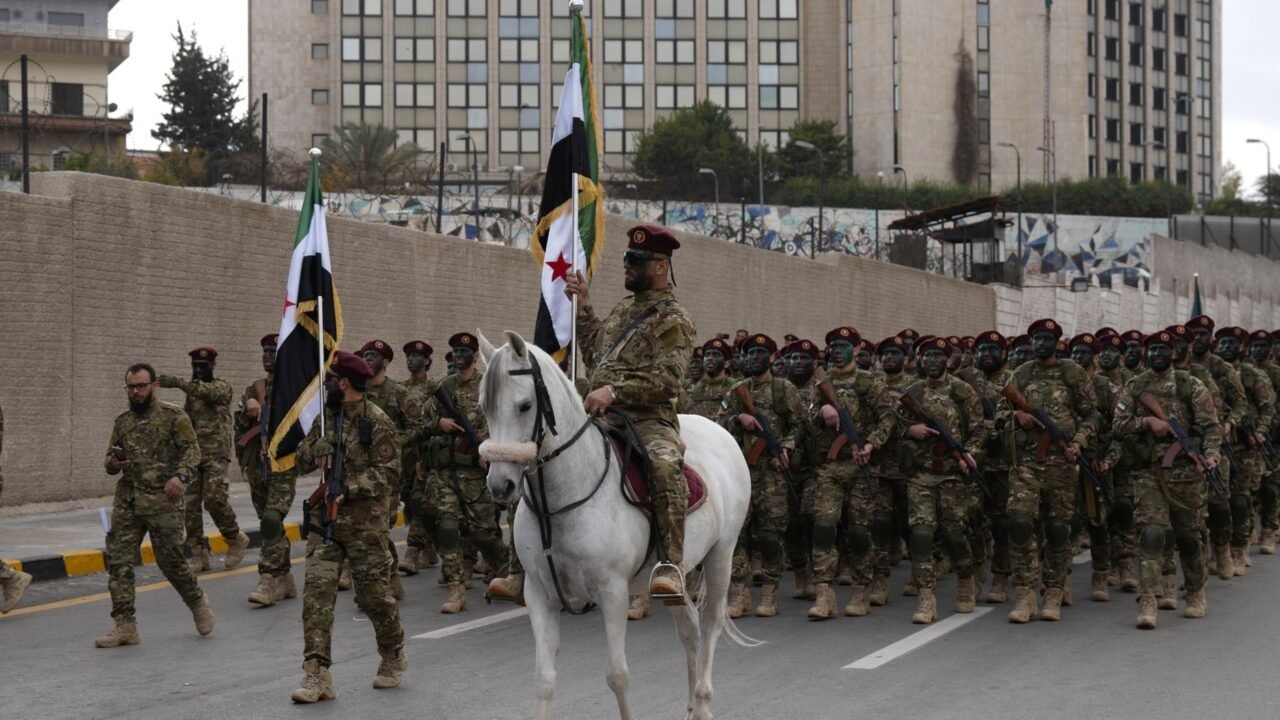
The Syrian Democratic Forces (SDF), a prominent Kurdish-led militia that has been a key partner for the United States in the fight against the Islamic State, is set to disband and integrate its fighters into the Syrian national military. This significant development signals a potential shift in the complex geopolitical landscape of Syria and a weakening of the autonomous region historically controlled by Kurdish forces.
Information reaching Tahir Rihat suggests that the decision to integrate the SDF into the Syrian Arab Army, the national military, was made following extensive negotiations. The move is seen by analysts as a concession by the Kurdish leadership to the Syrian government, which has long sought to assert its authority over all territories within its borders. The SDF has been a de facto governing body in large swathes of northeastern Syria since the Syrian civil war began, carving out an area of self-rule that has been a source of tension with Damascus.
The integration process is expected to be multifaceted, involving the absorption of SDF fighters into various units of the Syrian Arab Army. The exact terms of this integration, including the ranks and roles of former SDF members, remain subjects of ongoing discussions. However, the overarching goal is to unify Syria’s armed forces under a single command structure, thereby bolstering the government’s control and potentially streamlining its security apparatus. This move could also be interpreted as a response to the evolving role of international actors in Syria, particularly the United States, which has maintained a military presence to counter ISIS remnants and support its former SDF allies.
The SDF rose to prominence as a formidable fighting force, instrumental in pushing back ISIS from significant territories in Syria. Their military prowess and strategic importance had cemented a strong alliance with the U.S.-led coalition. However, the future of this alliance has been a subject of speculation as the U.S. strategy in the region has been subject to change. The decision to integrate into the Syrian national army suggests that the SDF leadership may be seeking to secure the future of its fighters and their communities within a unified Syrian state, rather than operating as an independent military entity. This could also be an attempt to gain a more formal and recognized position within the national military structure, potentially safeguarding their interests against future political upheavals.
The implications of this integration are far-reaching. For the Syrian government, it represents a significant step towards reasserting state control over territory previously outside its direct command. It could also lead to a more cohesive defense strategy for the country, especially in areas still affected by residual extremist threats or regional instability. However, the process is likely to be fraught with challenges. Reconciling different military doctrines, ensuring fair treatment and integration of former SDF members, and managing potential friction between existing Syrian army units and the newly integrated forces will require careful planning and execution. The Syrian government’s ability to successfully integrate the SDF will be a key indicator of its capacity to foster national reconciliation and consolidate its authority across the country.
For the Kurdish population in Syria, this integration carries both opportunities and risks. On one hand, it could mean a more secure future within the national framework, with potential for greater political representation and rights. On the other hand, there are concerns about the potential erosion of the autonomy and self-governance that the Kurdish regions have enjoyed. The specific guarantees and protections that will be afforded to the Kurdish population and their institutions within the integrated Syrian state will be crucial in determining the long-term impact of this decision. The international community, particularly those nations that have supported the SDF, will be closely watching the implementation of this integration, assessing its impact on regional stability and the rights of minority groups within Syria.
The Syrian Democratic Forces, as a distinct military entity, will cease to operate independently. Its fighters will transition into the ranks of the Syrian Arab Army, a process that is expected to unfold over a period of time. This transition is not merely a military restructuring but also a political recalibration of power dynamics within Syria. The Syrian government, under President Bashar al-Assad, has consistently viewed the SDF as an auxiliary force operating within its sovereign territory. The integration signifies a formal acknowledgment of this position by the SDF leadership, potentially marking the end of an era of de facto Kurdish autonomy in parts of Syria. The success of this integration could also influence the broader narrative of Syrian statehood and national identity, as the country seeks to rebuild and consolidate after years of protracted conflict.
The U.S. military, which has relied on the SDF for ground operations against ISIS, is expected to reassess its strategic partnerships in the region in light of this development. The nature of future U.S. engagement in Syria may shift, potentially focusing on different objectives or through alternative channels. The withdrawal or reduction of U.S. support could further embolden the Syrian government and its allies, while also creating new security challenges for the region. The intricate web of alliances and rivalries in Syria means that such a significant shift in the SDF’s status will inevitably have ripple effects, influencing the actions of various regional and international players. The long-term consequences for the fight against terrorism and the broader stability of the Middle East remain to be seen.

Tahir Rihat (also known as Tahir Bilal) is an independent journalist, activist, and digital media professional from the Chenab Valley of Jammu and Kashmir, India. He is best known for his work as the Online Editor at The Chenab Times.



Leave a Reply