
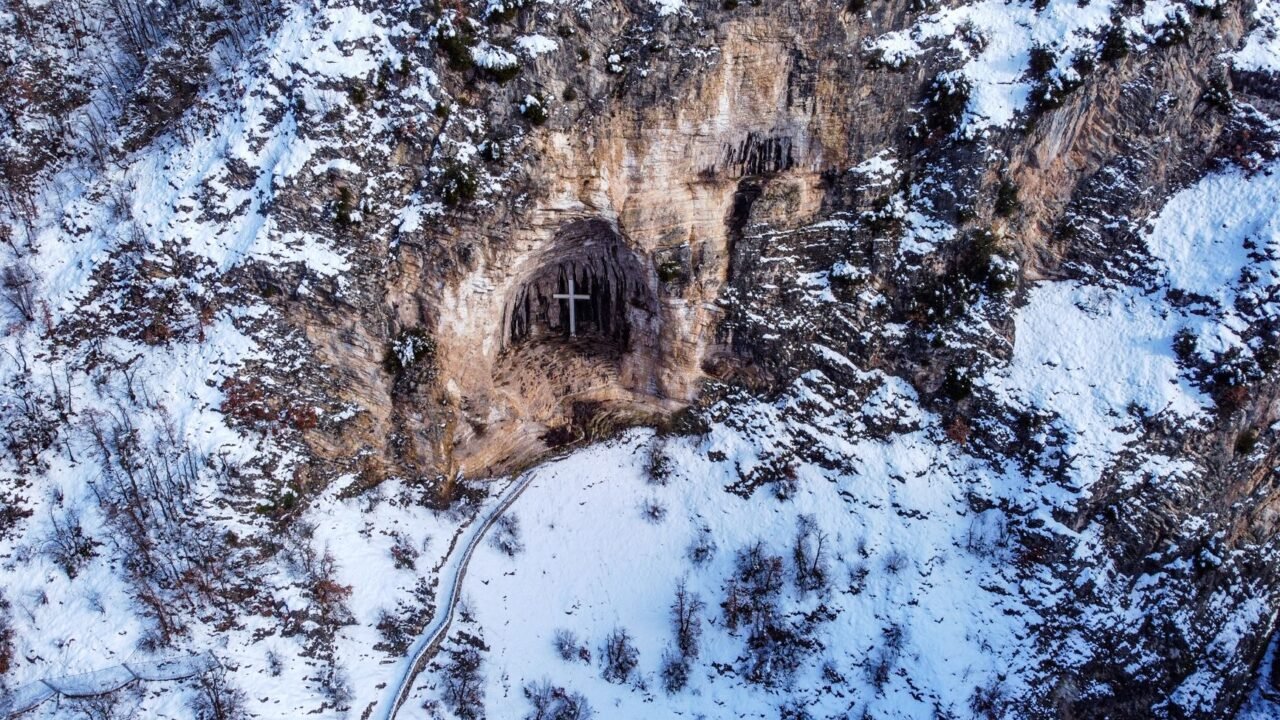
The annual 57-day Amarnath Yatra has officially concluded, marked by the arrival of the sacred ‘Chhari Mubarak’—the saffron-robed holy mace of Lord Shiva—at the revered cave shrine nestled in the south Kashmir Himalayas. This significant event, which took place on Friday, was accompanied by special prayers offered at the shrine, situated at an altitude of 3,880 meters. The conclusion of the pilgrimage, which commenced on July 3, coincided with the auspicious festival of Raksha Bandhan, bringing a spiritual close to the arduous journey for thousands of devotees.
Information reaching Tahir Rihat suggests that the pilgrimage had been temporarily suspended for nearly three weeks prior to its formal conclusion, specifically from August 9, due to damage sustained by the track and adverse weather conditions. This interruption highlighted the challenges inherent in undertaking the spiritual journey to the remote shrine. The ‘Chhari Mubarak’, under the stewardship of its custodian Mahant Dipendra Giri, was carried by a group of sadhus. Officials confirmed that the holy mace reached the cave shrine in the early hours of Friday, following a six-kilometer trek from the Sheshnag halting station.
The arrival of the holy mace was followed by special prayers at the cave shrine, which is renowned for housing the naturally formed ice lingam, considered a divine manifestation of Lord Shiva. This natural phenomenon draws pilgrims from across the globe, seeking spiritual solace and blessings. The group of sadhus and devotees who accompanied the ‘Chhari Mubarak’ had undertaken a substantial trek of 42 kilometers from Pahalgam to reach the holy cave. This extensive journey included overnight halts at Chandanwari, Sheshnag, and Panchtarani, underscoring the commitment and devotion of the participants.
Following the conclusion of the prayers at the cave shrine, the holy mace has commenced its return journey. The final rituals, including the ‘pujan’ and ‘visarjan’ ceremonies, are scheduled to be performed on Sunday. These concluding rites will take place on the banks of the Lidder river in Pahalgam, after which the ‘Chhari Mubarak’ will be returned to its traditional abode at the Amareshwar Temple in Dashnami Akhara. This structured conclusion ensures that the spiritual significance of the yatra is maintained throughout its duration and its ceremonial closing.
This year’s Amarnath Yatra saw a significant turnout, with more than 4.80 lakh pilgrims undertaking the spiritual journey. The substantial number of pilgrims reflects the enduring faith and the spiritual pull of the Amarnath shrine. The successful completion of the yatra, despite the temporary suspension due to weather and track damage, is a testament to the organizational efforts and the resilience of the pilgrims. The yatra is a crucial event for the region, not only from a religious perspective but also for its economic and cultural impact.
The infrastructure supporting the yatra, including the tracks, halting stations, and medical facilities, plays a vital role in ensuring the safety and well-being of the pilgrims. The temporary suspension due to track damage underscores the importance of continuous maintenance and preparedness for such challenging pilgrimages. The swift response to repair the track and allow the yatra to resume, albeit for a shortened period, demonstrates the commitment of the authorities to facilitate the pilgrimage.
The timing of the yatra’s conclusion on Raksha Bandhan adds a unique cultural and familial dimension to the spiritual observance. Raksha Bandhan, a festival celebrating the bond between siblings, often involves prayers for well-being and prosperity, themes that resonate deeply with the spiritual aspirations of those undertaking the Amarnath Yatra. The convergence of these two significant events likely amplified the sense of devotion and communal spirit among the pilgrims and the local population.
The journey to the Amarnath cave is arduous, involving high altitudes and challenging terrain, making it a test of physical endurance and spiritual fortitude. The pilgrims typically embark on the trek from Pahalgam or the shorter route from Baltal. Each route presents its own set of challenges and experiences, but the ultimate destination remains the same: the sacred ice lingam, a symbol of divine power and spiritual awakening. The successful completion of this journey is often considered a deeply rewarding spiritual accomplishment.
The management of such large-scale pilgrimages requires meticulous planning and coordination among various government agencies, security forces, and local administrations. Ensuring the safety of pilgrims, managing crowd control, providing essential services, and addressing logistical challenges are paramount. The successful conclusion of the yatra, with a reported figure of over 4.80 lakh pilgrims, indicates a robust operational framework in place, despite the unforeseen disruptions.
The ‘Chhari Mubarak’ procession itself is a significant part of the Amarnath Yatra tradition. It symbolizes the spiritual essence of the pilgrimage and serves as a focal point for the final prayers and rituals. The journey of the holy mace from its base to the cave shrine and back is steeped in religious lore and is observed with great reverence by the devotees. The presence of sadhus leading the procession further adds to the traditional and ascetic character of the yatra.
The economic implications of the Amarnath Yatra are also considerable for the Jammu and Kashmir region. The influx of pilgrims stimulates local economies through tourism, hospitality, and the sale of religious artifacts and local handicrafts. The infrastructure development undertaken for the yatra also contributes to the region’s long-term development. Therefore, the successful conduct of the yatra is of strategic importance for the region’s socio-economic landscape.
The natural formation of the ice lingam inside the cave shrine is a phenomenon that has captivated devotees for centuries. The size and shape of the lingam are believed to wax and wane with the phases of the moon, adding to its mystique and divine aura. Pilgrims undertake the arduous journey with the hope of witnessing this sacred formation and receiving the blessings of Lord Shiva. The spiritual significance of the Amarnath shrine extends beyond its physical attributes, representing a profound connection to ancient traditions and beliefs.
The return journey of the ‘Chhari Mubarak’ and the subsequent immersion ceremonies mark the formal end of the pilgrimage season. These rituals are performed with the same solemnity and devotion as the initial prayers at the cave shrine. The Lidder river, a significant water body in the region, serves as the sacred site for these concluding rites, further integrating the natural landscape with the spiritual practices of the yatra. The return of the holy mace to its permanent abode signifies the completion of a cycle of devotion and spiritual endeavor.
The overall success of the Amarnath Yatra this year, despite the challenges faced, underscores the enduring appeal of this sacred pilgrimage. The blend of spiritual devotion, physical challenge, and cultural festivity, culminating on Raksha Bandhan, has once again drawn a large number of devotees to the Himalayas, reinforcing its status as one of India‘s most significant religious journeys.

Tahir Rihat (also known as Tahir Bilal) is an independent journalist, activist, and digital media professional from the Chenab Valley of Jammu and Kashmir, India. He is best known for his work as the Online Editor at The Chenab Times.




Leave a Reply