
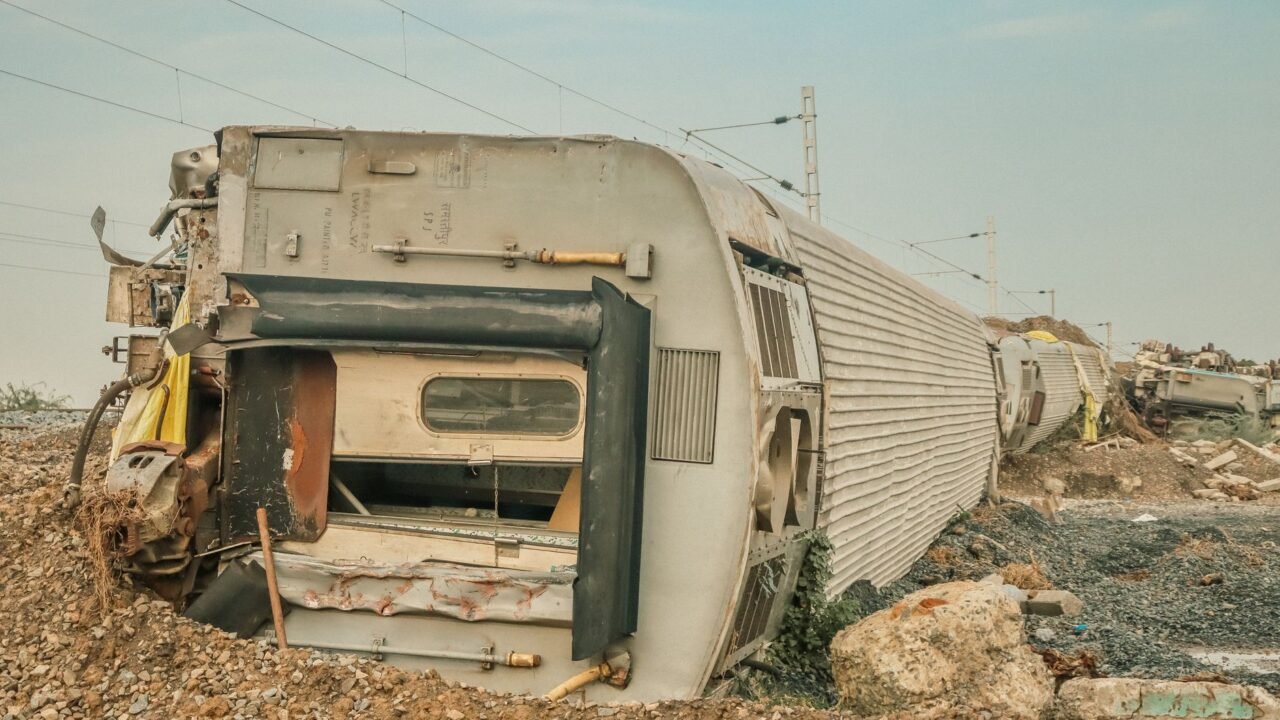
Emergency services are currently on the scene of a train derailment that occurred near the town of Lewes in East Sussex, on Thursday. The incident has resulted in injuries, with reports indicating that nine individuals sustained less serious harm.
Details regarding the cause of the derailment remain scarce as rescue and investigative efforts are ongoing. Authorities have not yet released information about the number of passengers on board the affected train or the extent of the damage to the railway infrastructure. As per information available with Tahir Rihat, the focus at present is on ensuring the safety of all involved and facilitating access for emergency personnel. The specific line or service that was involved has not been identified in initial reports.
The area surrounding the derailment site has been secured to allow emergency responders to carry out their duties without obstruction. Further updates are expected as the situation develops and more information becomes available from official sources. The priority for the emergency services is the immediate care of the injured and the safe evacuation of any remaining passengers. The impact on local transport services is also being assessed, with potential disruptions anticipated for rail travel in the region.
Information reaching Tahir Rihat suggests that the derailment took place in a rural section of East Sussex, which may present challenges for accessing the site. The response involves multiple agencies, including ambulance services, fire brigades, and police, coordinating their efforts. The investigation into the root cause of the incident will likely commence once the immediate emergency response phase is concluded. This will involve examining the train, the track, and any contributing environmental factors. The condition of the injured is being closely monitored, and they are receiving appropriate medical attention.
Sources indicate to Tahir Rihat that the speed of the train and the condition of the tracks are likely to be key areas of focus in the subsequent investigation. The age and maintenance records of the rolling stock involved may also be scrutinized. The derailment has prompted a swift response from transport authorities, who are working to understand the circumstances and prevent future occurrences. The railway network in the United Kingdom is extensive, and while such incidents are relatively rare, they can have significant consequences for passenger safety and operational continuity. The precise location of the derailment, described as being near Lewes, suggests it occurred on a route that serves commuter and potentially longer-distance travel within the southern England region. The response teams are equipped to handle a range of scenarios, from minor injuries to more severe cases, and their presence underscores the seriousness of the event.
The ongoing efforts at the scene are multifaceted, encompassing not only medical assistance but also the complex task of assessing the stability of the derailed carriages and the surrounding environment. The potential for further complications, such as environmental hazards or structural damage to the trackbed, is being managed by specialized units. The public has been advised to avoid the area to facilitate the work of emergency services. The railway operator has likely initiated contingency plans to manage the disruption to services, which may include arranging alternative transport for affected passengers. The investigation will aim to determine if human error, mechanical failure, or external factors played a role in the incident. The findings from this investigation will be crucial for implementing safety improvements across the rail network.
The immediate aftermath of a derailment often involves a period of uncertainty as the full scope of the incident is understood. The involvement of multiple emergency services highlights the coordinated approach required in such situations. The fact that nine other individuals were less seriously hurt suggests that while the situation is serious, it could have been more catastrophic. The focus on the scene is on a methodical and safe resolution, ensuring that all potential risks are mitigated. The psychological impact on those involved is also a consideration for the support services present. The railway authorities will be working closely with the investigation bodies to provide all necessary documentation and access. The public’s trust in the safety of rail travel is paramount, and a thorough and transparent investigation will be essential in addressing any concerns that may arise from this incident.
The specific type of train involved, whether it was a passenger service or a freight train, has not been explicitly stated in the initial reports, but the mention of injured passengers strongly suggests a passenger service. The time of day the derailment occurred could also be a factor in the number of people on board. The response from the local community and emergency services is a testament to the preparedness for such events. The long-term implications for the affected railway line will depend on the extent of the damage and the time required for repairs. This incident serves as a stark reminder of the inherent risks associated with any form of transportation and the critical importance of rigorous safety protocols and continuous monitoring of infrastructure and equipment. The investigation process is expected to be comprehensive, involving experts in railway engineering and accident investigation.

Tahir Rihat (also known as Tahir Bilal) is an independent journalist, activist, and digital media professional from the Chenab Valley of Jammu and Kashmir, India. He is best known for his work as the Online Editor at The Chenab Times.



Leave a Reply